


Pakistan announces $10 million clean-air startup fund
- Malik said the government had decided to establish the fund from its own limited resources
Pakistan's Federal Minister for Climate Change announced a $10 million fund for clean-air startups, emphasizing the government's commitment to tackling air pollution, which costs 6.5% of the nation's GDP.
- Government's commitment to clean-air measures and future generations.
- Economic cost of air pollution, equivalent to 6.5% of Pakistan's GDP.
- Need for engineering solutions, effective policies, and financial commitments.

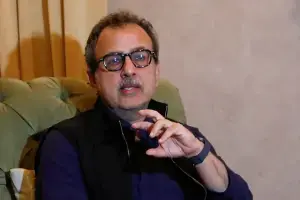
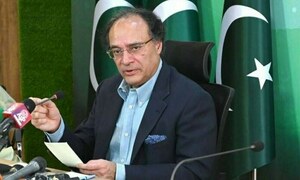
Federal Minister for Climate Change Musadik Malik on Wednesday announced a planned $10 million fund for clean-air startups.
Addressing the Pakistan National Clean Air Conference 2026, Malik said the government had decided to establish the fund from its own limited resources after seeking support from development partners. He said approval of the fund’s board was expected the following day.
He described the proposed initiative as an obligation to future generations rather than a grant or loan, reaffirming the government’s commitment to pursuing clean-air measures with or without external support.
The minister acknowledged the contributions of development partners, including the World Bank, Asian Development Bank, UNICEF and German development agency GIZ, in supporting climate-related initiatives.
The minister described air pollution as a human-induced crisis driven by policy choices and economic activities, stressing that its health and economic consequences were borne most heavily by those with limited resources to protect themselves.
Malik said air pollution imposed an economic cost equivalent to 6.5 per cent of Pakistan’s gross domestic product (GDP), reflecting the burden of illness, hospitalisation and related financial pressures on affected families.
The minister stressed the need to recognise that communities contributing to pollution through agricultural practices were themselves suffering its consequences, underscoring the importance of practical solutions that addressed both environmental challenges and the livelihoods of affected populations.
Emphasising the need to move beyond declarations, Malik said the clean-air agenda required engineering solutions, effective policies and financial commitments rather than slogans.
He reiterated the government’s resolve to work with development partners to implement practical measures aimed at improving air quality, reducing pollution and protecting public health.














Comments