


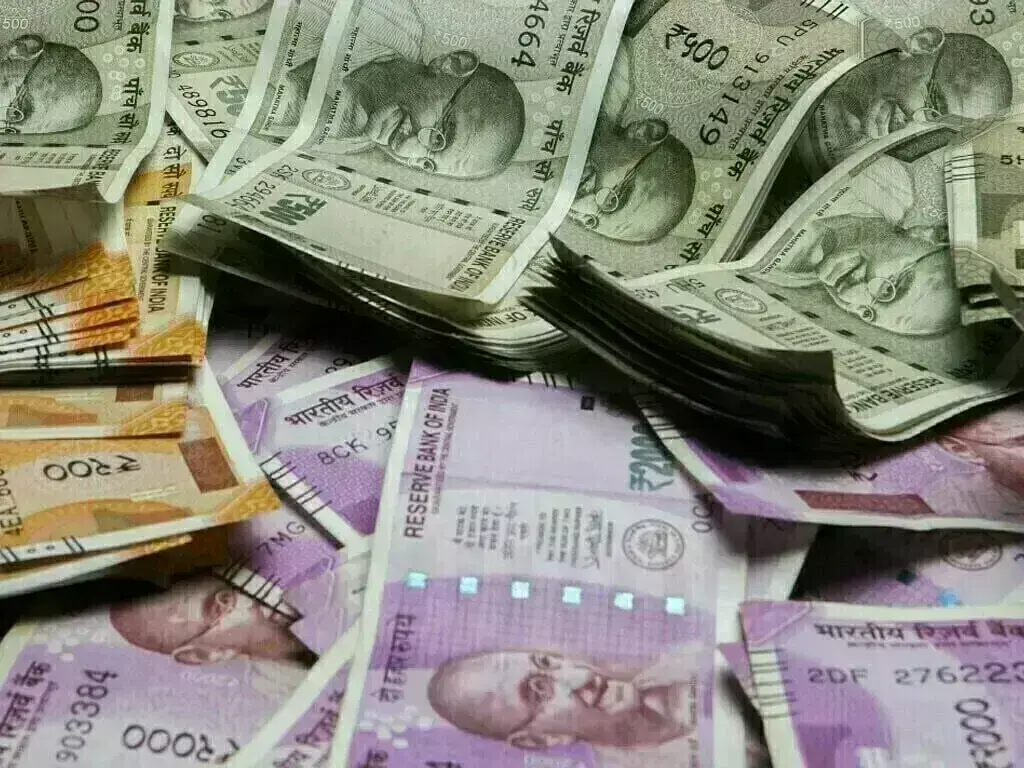
MUMBAI: Leaving the rupee to play the role of an automatic stabiliser amid global disruptions can have real economy consequences, a former top official of the central bank said, adding that exchange rates can overshoot and lead to financial stability risks.
The Indian rupee has come under pressure this year, hitting multiple record lows as oil prices rose and foreign investors sold local equity holdings at a record pace. The local currency threatened to breach 97 per dollar for the first time earlier this month, but has rebounded around 2percent after the RBI allowed oil companies to access dollars from its reserves and imposed reserve requirements on large FX hedging transactions, curbing demand for the greenback. The Reserve Bank of India (RBI)’s interventions have drawn mixed views from economists.
On Wednesday, the IMF said India should let the exchange rate move as the first line of defence. “Since the advent of floating exchange rates, the experience has been quite the opposite of the exchange rate acting as an automatic stabiliser,” former RBI Deputy Governor Michael Debabrata Patra told Reuters in an emailed interview.
His comments were not directly in response to the IMF’s call.
Exchange rate behaviour has been characterised by overshoots, self-fulfilling expectations and band-wagon effects, Patra said. Patra, who was deputy governor at the central bank and oversaw monetary policy from 2020 to 2025 — a period in which the rupee traded in a range of 73-91 per dollar — added thatthe rupee’s volatility has been relatively contained and its movements should be viewed over time.
The rupee’s one-year realised volatility stands at around 5percent, broadly in line with Asian peers. The roughly 5percent depreciation against the dollar it has registered so far this year places it in the middle of the pack.
Patra said policymakers could help cushion the impact of global disruptions on markets through effective communication. “What could possibly help in promoting orderly market activity and bolstering market confidence is perhaps timely and patient communication to shape expectations,” he said.













Comments