


PTC urges PM to direct all concerned for fresh GSP+ status

ISLAMABAD: The Pakistan Textile Council (PTC) has urged Prime Minister Shehbaz Sharif to direct all relevant federal ministries, divisions and provincial governments to take immediate measures to secure Pakistan’s GSP+ status under the European Union’s new Generalised Scheme of Preferences (GSP), warning that the country’s textile and apparel exports face mounting competitive pressure in the European market.
In a letter dated October 22, 2026, addressed to the Prime Minister, PTC Chairman Fawad Anwar called for coordinated government action to ensure Pakistan meets the European Commission’s requirements, particularly regarding the effective implementation of commitments relating to human rights, the rule of law, labour rights and environmental protection.
The council stressed that Pakistan’s preferential access to the EU market was critical for sustaining export growth, protecting employment and maintaining the competitiveness of the country’s value-added textile and apparel sector.
According to the letter, under the new GSP Regulation approved by the European Parliament on April 28, 2026, Pakistan is listed in Annex I as a Standard GSP country and will be considered a GSP+ beneficiary only until December 31, 2028.
To continue benefiting from January 1, 2029, Pakistan must submit a written request before the deadline, providing comprehensive information on the ratification of relevant international conventions, binding undertakings and a credible plan of action.
The proposed plan must identify priority areas, specify indicative implementation timelines and designate responsible institutions. The European Commission may grant GSP+ benefits only where it has not identified a serious failure to effectively implement any of the relevant conventions.
The new GSP framework will remain in force until December 31, 2036, making Pakistan’s application crucial for securing preferential access to the European market for the remainder of the scheme’s duration.
The PTC warned that the stakes were particularly high for Pakistan’s textile and apparel industry, given its heavy reliance on European buyers.
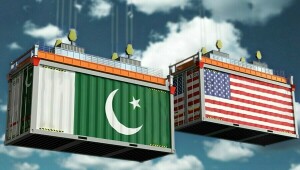
During FY2025-26, the EU-27 remained Pakistan’s largest market for textile and apparel exports, absorbing goods worth USD 7.103 billion, equivalent to 39.5 percent of total sector exports of USD 18.004 billion.
The European market was larger than the combined markets of the United States, where Pakistan’s textile and apparel exports stood at USD 4.853 billion, and the United Kingdom, which accounted for USD 1.730 billion.
Over the past five fiscal years, the EU’s share of Pakistan’s textile and apparel exports remained between 36.1 percent and 40.4 percent, underlining the importance of continued preferential access.
The letter noted that Pakistan’s exports to the EU declined by 2 percent in FY2025-26, with six of the sector’s ten leading products recording a fall.
However, exports showed signs of recovery during the first quarter of FY2026-27. Shipments to the EU increased by 3 percent to USD 1.954 billion during July-September 2026, compared with USD 1.897 billion in the corresponding period last year.
The EU market continued to exceed Pakistan’s combined textile and apparel exports to the United States, at USD 1.451 billion, and the United Kingdom, at USD 501 million, during the period.
Growth was led by value-added products, including cotton towels, exports of which increased by 11.2 percent to USD 109 million; men’s cotton trousers, up 12.6 percent to USD 104 million; and cotton bed covers, which rose by 13.4 percent to USD 76 million.
Across all markets, Pakistan’s value-added exports under Chapters 61-63 increased by 6.9 percent to USD 4.166 billion, the letter stated.
The PTC maintained that the importance of GSP+ extended beyond export earnings, as the textile and apparel industry supports employment, tax revenues and a wide network of businesses and livelihoods.
The council also cautioned that Pakistan’s principal competitors were securing or pursuing preferential access to European markets, potentially intensifying competition even if Pakistan retained its existing benefits.
It cited the conclusion of negotiations on the EU-India Free Trade Agreement on January 27, 2026, and the European Commission’s September 11 request for the EU Council to authorise its signing and conclusion. The agreement’s signature was expected in December 2026, with entry into force anticipated in early 2027.
The letter also referred to the European Union’s stated readiness to explore a free trade agreement with Bangladesh as the country approaches graduation from Least Developed Country status.
Meanwhile, the European Free Trade Association—comprising Iceland, Liechtenstein, Norway and Switzerland—signed a comprehensive free trade agreement with Vietnam on October 18, 2026. Footwear and apparel are among the leading EFTA imports from Vietnam, with average annual growth exceeding 10 percent over the past decade.
The PTC argued that the EU-India trade agreement would increase competitive pressure on Pakistani exporters, making the continuation of GSP+ benefits essential to protecting Pakistan’s position in its largest export market.
The council further informed the Prime Minister that, during meetings with EU officials on October 20 and 21, the European side had emphasised the need for substantial improvements in human rights and rule-of-law commitments identified in the EU’s assessment of July 16, 2026.
According to the letter, EU officials clarified that the bloc was not introducing new standards but expected Pakistan to implement its existing commitments under relevant United Nations conventions effectively.
The European Commission is expected to enhance engagement with the Government of Pakistan, with an immediate focus on demonstrable short-term improvements in areas of concern, followed by a credible action plan containing concrete measures, implementation timelines and measurable performance indicators.
The new framework places greater emphasis on effective implementation than on the mere ratification of conventions or adoption of legislation, the council stated.
The EU Ambassador to Pakistan also acknowledged the government’s stated willingness to cooperate at the highest level but stressed that sustained coordination would be required at ministerial and working levels.
In its recommendations, the PTC called for active engagement by the Ministries of Foreign Affairs, Commerce, Law and Justice, Human Rights, Interior, and Overseas Pakistanis and Human Resource Development, alongside provincial governments, with the European Commission and the EU Delegation in Islamabad.
It urged the government to demonstrate short-term improvements in the areas highlighted in the EU’s assessment, particularly human rights and the rule of law, before submitting Pakistan’s application.
The council also stressed the importance of timely reporting to monitoring bodies under the relevant UN and International Labour Organisation conventions and taking action on their latest conclusions, which would form part of the European Commission’s assessment.
It proposed that a complete application under Article 10(2) of the new regulation, supported by a time-bound plan of action, measurable performance indicators and clearly identified responsible institutions, be finalised well before the December 31, 2028 deadline.
To strengthen coordination, the PTC recommended appointing a dedicated senior focal person to oversee the GSP+ process across federal and provincial institutions and serve as a point of contact for the council and the export sector.
It also called for regular reviews by the Special Committee on EU GSP+, constituted by the Prime Minister in February 2025, with periodic progress reports submitted to the Prime Minister’s Office.
The council further urged the government to involve the private sector in consultations on the proposed action plan so that evidence of labour, social and environmental practices in export manufacturing could be reflected in Pakistan’s submissions to the European Commission.
The PTC reaffirmed its commitment to supporting the government in safeguarding Pakistan’s preferential access to the European market and maintaining the competitiveness of its textile and apparel exports.
Copyright Business Recorder, 2026


















Comments