


Service tribunal must correct unlawful actions, not replace administrative decisions, according to SC

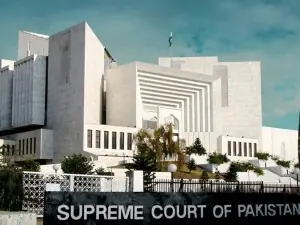
ISLAMABAD: The Supreme Court ruled that the effectiveness of service adjudication by the Service Tribunal lies in correcting unlawful administrative actions, not substituting its own decisions for those of the administration.
An apex court’s judgment, authored by Justice Ayesha A. Malik, said that the exercise of jurisdiction by the Service Tribunal must be understood in the broader context of the administration of service laws and the requirements of good governance. “While the Executive bears the primary responsibility for framing and implementing service laws, rules and regulations, the Tribunal performs a complementary function by ensuring that decisions affecting the rights of civil servants conform to the law.”
She wrote that both institutions contribute to effective governance, but within their own respective domain.
The Tribunal serves as a check on the exercise of administrative power by ensuring that such power is lawfully exercised within the bounds of law and while doing so it cannot substitute its own judgment for that of the Executive or assume the functions of the competent authority in matters entrusted to them.
A two-member SC bench, comprising Justice Ayesha A. Malik and Justice Shahid Waheed, set aside the Federal Service Tribunal, Islamabad, verdict and restored the Recruitment Rules, 2014.
The Controller General of Accounts (CGA), Islamabad, the Accountant General Balochistan, Quetta, and the Federal Public Service Commission, Islamabad (FPSC) have challenged the Tribunal’s judgment, dated 17.10.2022, whereby the amendment to the Recruitment Rules, 2014, effected through CGA Notification dated 15.07.2014 was set aside.
According to the facts, the respondent (Tariq Khan) filed a departmental appeal on 22.09.2017 seeking amendment of the Recruitment Rules, 2014 by way of insertion of a provision enabling promotion from Junior Auditor (BS-11) to Assistant Accounts Officer (BS-17) upon passing the PIPFA examination. This representation was dismissed on 02.03.2018. He, therefore, filed an appeal before the Tribunal.
The Tribunal considered the case of the Respondent and concluded that the Recruitment Rules, 2014, notified on 15.07.2014, had not been approved by the Establishment Division.
As a result, it struck down the Recruitment Rules, 2014 in their entirety and directed compliance with the procedure prescribed under the Rules of Business, 1973 (RoB). It further directed that the Recruitment Rules, 2014 be redrafted so as to eliminate any discriminatory provisions and ensure their harmonization with the various Office Memorandums issued by the Finance Division and the Establishment Division from time to time.
The SC judgment said that the Tribunal should have been mindful of its jurisdictional limitations while examining the vires of the Recruitment Rules, 2014 and should have been aware that the government retains the authority to revise service structures and recruitment rules in accordance with administrative needs, that promotion is not itself a vested right and a policy decision restricting promotional opportunities for a particular category of employees is not, by itself, ultra vires.
The Tribunal could, therefore, neither strike down the Recruitment Rules, 2014 nor direct the Government to frame rules according to a particular promotional avenue, qualification or eligibility criterion, or substitute its own view for that of the Executive.
The Court noted that the respondent’s grievance was not that the Recruitment Rules, 2014 deprived him of a promotional avenue altogether, but they altered the promotional structure to his disadvantage in two material aspects.
Deputy Attorney General informed the Court that the respondent was promoted from the post of Junior Auditor (BS-11) to Senior Auditor (BS-16) on 01.01.2021, well before the pronouncement of the impugned judgment in 2022. Hence, there was no justification in setting aside the Recruitment Rules, 2014.
Copyright Business Recorder, 2026

























Comments