


Major cities: Untreated sewage, industrial wastewater posing risks to rivers, canals
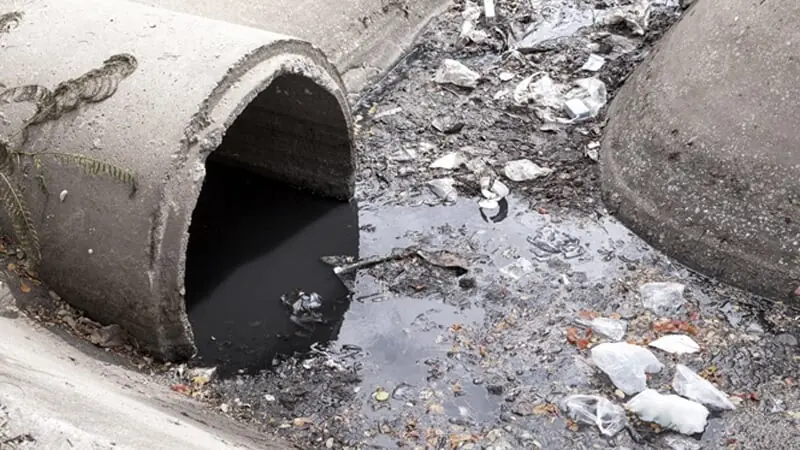
HYDERABAD: Untreated domestic sewage and industrial wastewater from Pakistan’s major cities are posing serious risks to rivers, canals, groundwater and coastal ecosystems, threatening public health, aquatic life and water security in Sindh, water experts warned at a seminar held at Sindh Agriculture University (SAU), Tandojam, on Wednesday.
The seminar was organized by the Department of Energy and Environment, Faculty of Agricultural Engineering and Technology, SAU, under a Sindh Higher Education Commission (SHEC)-funded research project titled “Efficient Water Use and Localized Wastewater Treatment”: A Pilot Initiative for Rural Communities in Sindh.” The initiative aims to develop affordable, locally adaptable wastewater treatment solutions for rural communities and promote the safe reuse of treated water.
Presiding over the seminar, SAU Vice-Chancellor Prof. Dr Altaf Ali Siyal said the discharge of untreated domestic sewage and industrial effluents into freshwater sources was exposing communities, particularly those living downstream along rivers and canals, to contaminated water and waterborne diseases. He emphasized the need for scientific research, effective wastewater management and coordinated measures to protect public health and the environment.
Dr Siyal expressed concern over reports of total dissolved solids (TDS) in Indus water reaching around 1,000, stressing that the causes and implications required further scientific investigation. He also referred to the deterioration of Manchar Lake, once an important freshwater resource, and highlighted environmental challenges associated with drainage systems in Sindh.
Highlighting coastal environmental degradation, the Vice Chancellor said mangrove forests along the Karachi coast were disappearing, while mangrove coverage had increased in the Thatta and Sujawal areas.
He also expressed concern over reports that sugar mills in Thatta, Badin and Sujawal were discharging black and reddish wastewater into Nareri Lake through drainage channels, causing severe environmental damage and threatening the lake’s ecosystem.
He warned that the discharge of untreated industrial effluents could damage aquatic ecosystems and threaten aquatic life.
Dean of the Faculty of Agricultural Engineering and Technology, Dr Muneer Ahmed Mangrio, said Sindh had more than 10,000 industries, while around 360 industrial units in Hyderabad were reportedly discharging wastewater without treatment into the Phuleli and Akram Wah canals and the Indus River.
He stressed the importance of effective industrial wastewater management to prevent further contamination of water resources.
Principal Investigator of the research project and Chairman of the Department of Energy and Environment, Prof. Dr Mahmood Leghari, said many rural communities in Sindh lacked centralized wastewater collection and treatment facilities. This made decentralized, low-cost treatment systems based on locally available materials particularly important for improving sanitation and protecting community health.
He said the ongoing research was examining filter substrates, including gravel and biomass, in combination with biochar, to improve the treatment of domestic wastewater through decentralized systems. The approach could offer practical solutions for rural settlements where conventional wastewater infrastructure was limited or unavailable.
Presenting data on wastewater generation in major cities, PCRWR Deputy Director Dr Nazar Gul said estimates cited in his presentation placed the annual volume of wastewater generated by 10 major Pakistani cities at approximately 1.334 billion cubic metres, with Karachi, Lahore and Faisalabad among the leading contributors.
He said wastewater from these cities entered various receiving environments, including rivers, canals, drainage channels, agricultural lands and the Arabian Sea.
Copyright Business Recorder, 2026























Comments