


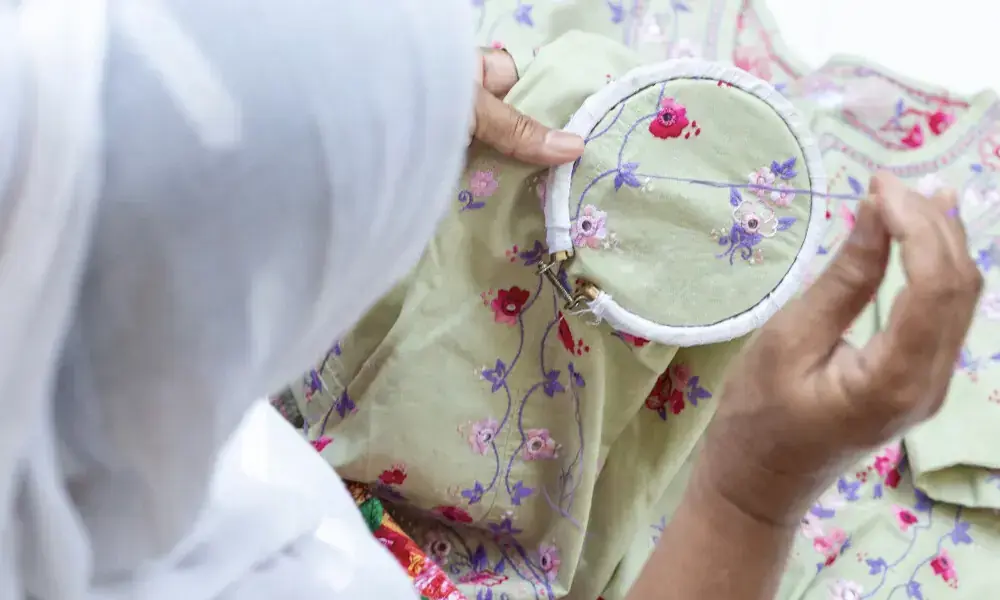
LAHORE: Home-based workers in Pakistan continue to face severe economic exploitation, with some earning as little as Rs50 an hour despite years of inflation and rising electricity bills, speakers said at an event marking International Home-Based Workers Day.
Trade union representatives and grassroots workers highlighted stagnant piece-rate wages, unpaid labour, occupational health hazards, gender-based pay discrimination, workplace harassment and the lack of social protection for women working in the informal sector.
Speakers said workers’ earnings had remained unchanged for three years despite a sharp increase in the cost of living, leaving many families struggling to meet their basic needs. Jalvat Ali opened the event by explaining the history and significance of International Home-Based Workers Day, while Kaneez Fatima said soaring inflation and electricity bills had severely eroded household purchasing power as wages remained stagnant.
Jamila, vice president of the Home-Based Workers Union, said prolonged working hours and repetitive tasks performed in fixed postures were causing serious physical ailments. She urged workers to establish local union units to collectively demand better wages and working conditions.
Sharing their experiences, workers described extremely low payments for labour-intensive tasks. One lace worker said she earned Rs200 for four hours of continuous work, equivalent to Rs50 an hour, while others received as little as Rs16 for stitching intricate lace onto shirt necklines, hems and cuffs.
Saima, a toy maker, said assembling 144 toy units took between eight and 12 hours, earning her only Rs60 to Rs100. She also alleged that factory owners paid men higher rates than women, citing family and childcare responsibilities as a justification for lower wages for female workers.
Muqaddas said she received Rs100 for attaching 1,444 small pearls, while Shamim reported earning the same amount for stitching a shirt over two full days. Sughran said her daily earnings generally ranged between Rs50 and Rs100, adding that contractors often told workers to quit if they complained about low wages.
Participants also raised concerns about workplace harassment and the vulnerability of women employed in informal industries. Aneeqa highlighted the harassment faced by female workers and cited the case of a Christian worker earning Rs22,000 a month who received only Rs20 per shirt while completing two shirts daily.
Ashra, president of the union, said she had joined hands with 10 women workers to address a workplace harassment incident. She stressed that individual workers could not secure justice on their own and urged them to approach the government collectively to demand their rights.
Sabira, the union’s general secretary, acknowledged internal organisational challenges, including a lack of coordination among members. She said unity was essential to secure social security coverage and improved wages.
Niaz Khan, general secretary of the Textile Power-loom Garment Workers Federation, urged union leaders to strengthen workers’ trust by delivering tangible results at the local level, saying effective representation would encourage greater participation in collective efforts.
Concluding the event, LEF Programme Manager Irfan Elahi urged workers to view union activism as an investment in their own welfare. He said overcoming poverty and exploitation required solidarity, collective strength and organised action.
Copyright Business Recorder, 2026


















Comments