



ISLAMABAD: Lotte Chemical Pakistan Limited (LCPL), which is set to become the country’s largest industrial consumer of grid electricity following its acquisition of Engro Polymer and Chemicals Limited (EPCL), has urged the Power Division to urgently notify a proposed two-part industrial tariff to sustain industrial competitiveness and encourage greater reliance on the national grid.
In a communication to the Power Division, Chief Executive Officer (CEO) Adnan Afridi said the combined electricity consumption of the two companies was projected to rise from the existing 26 megawatts (MW) to as much as 80 MW by July 2027, representing an almost threefold increase.
The company has requested the Ministry to finalise and notify the proposed optional multi-tariff, time-of-use mechanism, commonly referred to as the Two-Part Tariff (TPT), at the earliest, arguing that a predictable and competitive electricity tariff would encourage industrial expansion and help utilise surplus power generation capacity.
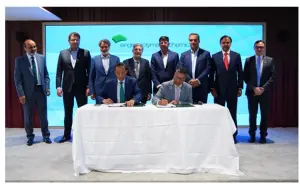
READ ALSO: Engro exits EPCL after three decades, sells stake to Lotte Chemical Pakistan for $71mn
Afridi also requested a meeting with the Minister for Power to present the company’s case and sought the Ministry’s assistance in arranging a briefing for the International Monetary Fund (IMF) to demonstrate how shifting industrial consumption to the national grid could support grid stability and the government’s broader power-sector reform objectives.
According to the communication, Lotte and EPCL were entirely dependent on captive power generation in early 2025. However, following the introduction of the Off the Grid (Captive Power Plants) Levy Act, 2025, and the subsequent industrial electricity relief measures, Lotte shifted its entire 26 MW load to K-Electric in March 2025.
EPCL, which requires up to 54 MW, has remained dependent on captive gas generation because its industrial facility was not originally constructed with a grid connection.
The company stated that Lotte already owns two 220-kilovolt transmission lines running past EPCL’s boundary, providing an opportunity to connect the facility to the grid much earlier than would otherwise have been possible.
Under the proposed transition plan, 28 MW of EPCL’s load would be transferred to the grid by January 2027, followed by the transfer of its full 54 MW requirement by July 2027.
Once completed, the combined industrial platform would draw up to 80 MW from the national grid, making it the country’s single largest grid electricity off-taker, the CEO stated.
Both companies represent a combined investment exceeding USD1 billion and have contributed more than USD3.2 billion in import substitution, according to the communication.
Lotte is Pakistan’s sole producer of purified terephthalic acid (PTA), a key raw material for the polyester and polyethylene terephthalate (PET) industries, while EPCL is the country’s only producer of polyvinyl chloride (PVC) and a leading manufacturer of caustic soda and hydrogen peroxide.
The company argued that the combined industrial platform could provide a practical example of how competitive electricity tariffs can encourage industrial consumers to abandon captive generation, increase grid demand and invest in productive capacity.
Afridi noted that electricity was a major determinant of international competitiveness for process industries. In caustic soda manufacturing, energy accounts for as much as 80 per cent of conversion costs, making electricity prices a critical factor in determining production costs and export viability.
He said Lotte had previously invested USD50 million in a 48 MW captive gas turbine after grid instability prompted the company to move away from K-Electric. However, following the introduction of the captive power levy in February 2025, the company shut down the turbine and restored its entire 26 MW requirement to the grid within three weeks.
The company said two subsequent policy measures had reinforced its decision to remain connected to the grid: the incremental-consumption rate of Rs22.98 per kilowatt-hour (kWh), effective from December 2025, and the Prime Minister’s relief package announced in February 2026.
It maintained, however, that a durable and predictable tariff framework was necessary to sustain industrial grid consumption and support future investment decisions.
The Power Division announced in March 2026 that it was evaluating an optional multi-tariff, time-of-use arrangement for industrial consumers. Lotte described the proposed TPT as a potentially transformative measure that could influence investment decisions across its PTA, PVC, caustic soda and specialised PET product lines.
The company operates on a B5 electricity connection, the highest industrial voltage category, and argued that additional consumption by large industrial users would help spread fixed power-sector costs over a larger volume of electricity sales.
Afridi cautioned that the proposed tariff structure should reward efficiency and economies of scale rather than require high-voltage industrial consumers, including B4 and B5 users, to cross-subsidise lower-voltage B1 and B2 consumers.
According to the company, high-voltage industrial connections generally involve lower technical losses, while lower-voltage distribution networks incur comparatively higher losses. It argued that the tariff mechanism should reflect these differences and provide incentives for efficient industrial operations.
The proposed tariff has also influenced the company’s investment decisions regarding renewable energy. Afridi disclosed that Lotte had deferred plans to develop 22.5 megawatts-peak (MWp) of wind power and 30 MWp of solar capacity on approximately 50 acres of surplus land within its plant.
The company would prefer to allocate the land and capital to expanding industrial production rather than developing its own power generation facilities, provided the proposed TPT was introduced within a reasonable timeframe.
However, Afridi warned that the company might have to reconsider its renewable energy plans if the government failed to provide clarity on the tariff’s implementation schedule or designed a mechanism that did not adequately reward industrial efficiency.
He said the energy cost of PTA production had increased sharply from $17 to $60 per metric tonne between 2022 and 2026, a rise of approximately 250 per cent, raising concerns about the company’s international competitiveness.
The CEO maintained that an appropriately structured industrial tariff could help reverse this trend by encouraging companies to increase grid consumption and direct investment towards productive capacity, output expansion and employment generation.
He said the proposed expansion could serve as a case study for the government’s incremental-consumption policy by demonstrating how electricity tariff reforms could redirect investment away from off-grid generation and towards industrial growth.
The communication further stated that the acquisition of EPCL was part of the shareholders’ broader ambition to establish Pakistan’s largest petrochemical platform, capable of competing with international producers on cost, scale and product diversity.
The company is 75 per cent owned by a consortium of AsiaPak Investments and Montage Commodities FZCO, which acquired Lotte and EPCL with the stated objective of building an integrated petrochemical business.
Afridi said the company was prepared to share additional data and analysis with the Ministry to support the proposed tariff framework, adding that bringing both facilities fully onto the national grid would serve the interests of industrial competitiveness as well as the wider power sector.
He requested the Power Division’s guidance and intervention to ensure the proposed mechanism was finalised without undue delay, warning that uncertainty over its implementation could affect decisions on future industrial expansion and energy investments.
Copyright Business Recorder, 2026















Comments