


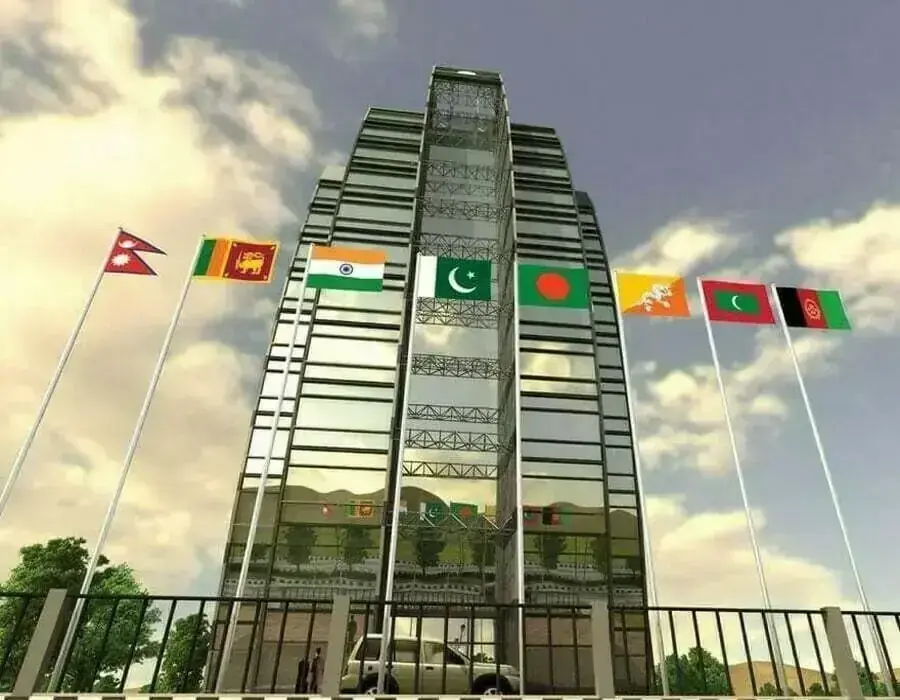
ISLAMABAD: Experts at an ISSI seminar on Thursday called for issue-based regional cooperation in South Asia, urging regional nations to revive SAARC and address shared challenges, including poverty, climate change, water scarcity, trade and economic development, through practical cooperation.
The Institute of Strategic Studies Islamabad (ISSI) hosted the seminar titled “Reimagining Regionalism in South Asia” here on Thursday.
The discussion ended with a clear message: the world’s most populous and strategically significant region cannot remain disintegrated in the face of looming traditional and non-traditional challenges and ever-increasing vulnerabilities. The regional countries need to revive cooperation by adapting existing institutional mechanisms with the present-day challenges and realities.
The India Study Centre (ISC) at the ISSI organised the seminar. Ambassador Jalil Abbas Jilani, former Foreign Minister of Pakistan, joined the event as the chief guest. The other speakers included Ambassador Masood Khalid, Pakistan’s former Ambassador to China; Fazle Lohani Babu, Bangladesh’s Deputy High Commissioner to Pakistan; Professor Maneesha Wanasinghe-Pasqual, Executive Director, SASSRI Sri Lanka; Ambassador Moinul Haque, Director General ISSI; and Ambassador Khalid Mahmood, Chairman BoG ISSI.
The speakers were of the view that, given its landmass, huge populace, economic potential, and ever-increasing challenges, South Asia could not advance the objectives of human development, economic prosperity, and lasting peace without practical cooperation among regional countries.
SAARC, which remains dormant for over a decade, can be the most suitable platform to revive cooperation, albeit with a more issue-based approach and practical cooperative mechanisms.
In his remarks, the Chief Guest emphasized that success of regional cooperation requires political commitment, mutual confidence, and a willingness to treat all countries as sovereign equals. He hoped that the leadership of all the member countries would demonstrate statesmanship in the greater interest of more than two billion people of South Asian.
Despite its practical limitations, SAARC remains the most viable forum for regional cooperation in South Asia.
All members, however, must be treated as sovereign equals without the forum being used at the whims of selected few.
The more pragmatic approach for the South Asian countries is to separate political contestations from practical issues. Adopting a people-centric approach, speakers said the region should integrate focusing on issues of poverty, climate change, water scarcity, disruptive technologies, migration, trade facilitation, economic development, maritime cooperation, and public health.
Alongside efforts to revive SAARC, countries in the region should explore the potential for cooperation through mini lateral arrangements. China could also be invited to participate in such initiatives, given its interest in promoting stability and cooperation in South Asia.
Copyright Business Recorder, 2026






















Comments