


Pakistan targets 4% growth in FY27 as reforms gather pace: Aurangzeb
- Says external shocks had weighed on economic activity during final quarter of FY26
Pakistan anticipates 4% economic growth in FY27, driven by industrial and agricultural recovery, focusing on sustainable, investment- and export-led development and fiscal reforms.
- Pakistan's shift to investment and export-led growth.
- Government reforms in tax collection and privatization.
- Social welfare programs and external financing strategies.
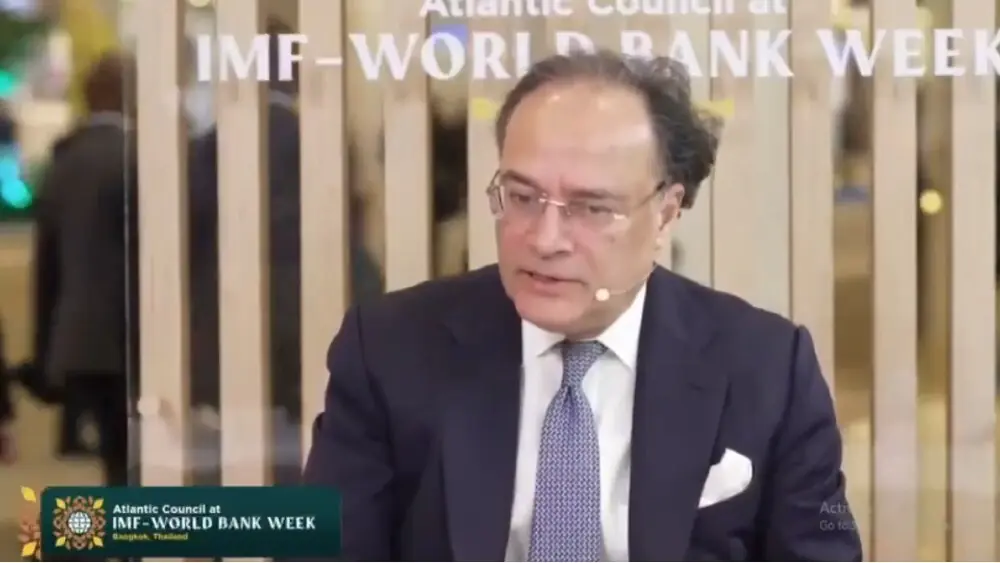
Pakistan expects its economy to grow around 4% in fiscal year 2026-27, supported by a recovery in industry and agriculture, as the government seeks to move beyond macroeconomic stabilisation towards sustainable, investment- and export-led growth, Finance Minister Muhammad Aurangzeb has said.
Speaking with Michael Kugelman of the Atlantic Council on the sidelines of the IMF-World Bank Annual Meetings 2026 in Bangkok, Aurangzeb said Pakistan’s gross domestic product (GDP) grew 3.7% in FY26, compared with 3.2% in the preceding fiscal year.
He said the State Bank of Pakistan had projected growth in a range of 3.5% to 4.5% for the current fiscal year, citing a rebound in large-scale manufacturing and improving performance in agriculture, particularly livestock.
Aurangzeb said the government was closely monitoring the impact of the continuing conflict in the Middle East on inflation and economic growth, noting that external shocks had weighed on economic activity during the final quarter of the previous fiscal year.
He said Pakistan’s twin deficits had declined from 12.5% of GDP to 2.6% over the past three years, while foreign exchange reserves had improved. The government expected the current account balance to remain between zero and 1% of GDP, he added.
Focus on exports, investment
Aurangzeb said Pakistan wanted to avoid the boom-and-bust cycles of the past, when consumption-led growth increased import demand and eventually created balance-of-payments pressures.
“This time the focus is very much on sustainable,” he said, describing investment- and export-led growth as essential to maintaining economic stability.
He said the government had introduced measures to improve export competitiveness, including reducing tax burdens on exporters, lowering the cost of imported raw materials and intermediate goods, and providing subsidised financing.
Pakistan’s information technology export services generated $4.6 billion in the previous fiscal year, and the government expected the figure to reach around $5.5 billion in FY27, he said.
Tax collection, privatisation reforms
The finance minister said tax revenues had increased 40% over the past two fiscal years, while the tax-to-GDP ratio had risen to approximately 10.3% from below 9% when the government began its reform drive.
He attributed the improvement to stronger enforcement, digital monitoring, electronic invoicing and measures to reduce revenue leakages.
The government was also working to reduce discretionary powers in tax administration through greater use of integrated databases and artificial intelligence in assessments and audits, he said.
On privatisation, Aurangzeb said the government was advancing the privatisation of power distribution companies and outsourcing of airports, with further transactions involving insurance companies and other financial institutions in the pipeline.
He said domestic investors had shown confidence in the government’s reform agenda, while three Turkish companies were conducting due diligence for the first three power distribution companies being considered for privatisation.
Poverty alleviation and digitalisation
Aurangzeb said the government had allocated Rs838 billion to the Benazir Income Support Programme (BISP) to support vulnerable households, with an increase in cash assistance under its Kafaalat programme planned for January.
He also highlighted financing initiatives for small and medium-sized enterprises and affordable housing, saying nearly Rs80 billion had been disbursed for affordable housing while the banking system had approved Rs430 billion.
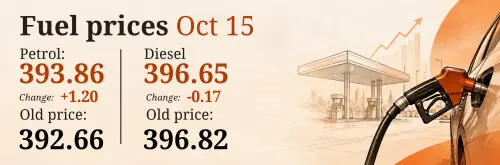
The government was also expanding targeted fuel subsidies and shifting social assistance payments to digital wallets to improve transparency and reduce leakages, he said.
On external financing, Aurangzeb said Pakistan had accessed China’s capital market through a Panda bond issuance at an interest rate of 2.5% and returned to the Eurobond market in September.
He said the government intended to diversify financing sources, replace more expensive external debt where possible and extend debt maturities rather than increase the overall stock of external debt.
Aurangzeb also said Pakistan would assume the chairmanship of the G-24 on November 1, giving it an opportunity to raise the concerns of developing economies in discussions on the international financial architecture.
He said the long-term solution to poverty and other structural challenges lay in sustainable growth, job creation, education, healthcare and skills development.





















Comments