


Senate, NA ratify KP emergency amid PTI protest, walkout
- Joint sitting on governor's rule to take place tomorrow
The National Assembly ratified an emergency in Khyber Pakhtunkhwa due to rising terrorism and security concerns, citing provincial government failures and opposition's political focus.
- Reasons for the emergency proclamation in Khyber Pakhtunkhwa.
- Federal government's criticism of the provincial administration.
- Parliamentary approval process and coalition support.
- Current security situation and normalcy in Peshawar.
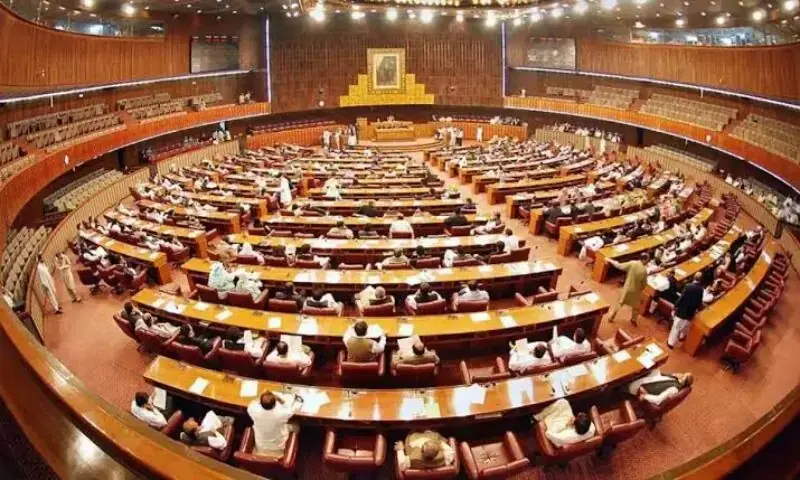
Both houses of Parliament on Wednesday ratified the presidential proclamation of emergency in Khyber Pakhtunkhwa under Article 232 of the Constitution, with the Senate approving the resolution hours after the National Assembly passed it amid opposition protest, Aaj News reported.
President Asif Ali Zardari had issued the order imposing emergency in the province on October 11 under Article 232. The federal government first secured the National Assembly’s approval and then moved the resolution in the Senate.
In the National Assembly, chaired by Speaker Sardar Ayaz Sadiq, Minister of State for Parliamentary Affairs Tariq Fazal Chaudhry first moved a motion to suspend question hour and then tabled the resolution seeking ratification of the president’s decision. The House passed it by majority vote despite protests from opposition members, and the session was adjourned until 11am on Friday.
Chaudhry later presented the resolution in the Senate, where PTI members staged a walkout in protest. The government nonetheless secured its passage in the upper house as well.
A joint sitting of Parliament has been summoned for 11:30am on Thursday, October 15, to formally ratify governor’s rule in the province under Article 234.
‘Decision taken after deliberation’: Tarar
Explaining the constitutional grounds for the move in the National Assembly, Federal Law Minister Azam Nazeer Tarar said the step was taken in view of rising terrorism, internal disorder and continued cross-border infiltration in the province.
He said the federal cabinet reviewed the situation in a two-and-a-half-hour meeting before recommending the imposition of emergency to the prime minister, after which the proclamation was issued under Article 232.
Citing official data, Tarar said Khyber Pakhtunkhwa recorded 2,911 terrorism incidents between 2021 and 2024, while the number rose to 3,787 between October 15, 2025 and October 9, 2026.
The law minister said the federal and provincial governments should have worked jointly to counter the wave of terrorism, but accused the provincial government of failing to handle the security situation. He criticised former chief minister Sohail Afridi for prioritising political activity, visits to other cities and statements about marching on Islamabad over maintaining law and order.
Tarar said the government had pursued dialogue rather than force until the end, with a team comprising Interior Minister Mohsin Naqvi, Rana Sanaullah and Amir Muqam holding two days of talks with the opposition and other parties in the Speaker’s chamber on several drafts.
However, he claimed that during discussions on counterterrorism, the opposition remained focused on the release of, and facilities for, the jailed PTI founder, a matter he said rests legally with the courts or with the president under Article 45.
Referring to past negotiations, Tarar said a consensus on simultaneous elections and dissolution of assemblies had been reached in 2023, but the PTI leadership later rejected it, after which the May 9 events took place and political tensions escalated.
He said the Constitution requires parliamentary approval of an emergency within 10 days of its proclamation, and called on all political parties to stand with the security forces.
Bilawal blames PTI, urges talks
Addressing the National Assembly earlier in the day, PPP Chairman Bilawal Bhutto Zardari said the provincial government had committed political suicide and bore full responsibility for the political, legal and constitutional situation in the province.
He said the PPP and the president had maintained from the outset that comprehensive talks should be held with PTI and the opposition before invoking what he described as the “constitutional atom bomb”.
He said two PPP representatives were part of the negotiating committee and that, late at night, he had been told the talks were moving in a positive direction.
Bilawal urged the federal government to find a middle ground, extending an offer to the opposition to return to the table.
Coalition partners back government
Coalition partners have assured the federal government of their full support. The PPP’s parliamentary committee met under Bilawal to deliberate on the situation in Khyber Pakhtunkhwa, and sources said the party will vote in favour of the governor’s rule resolution and back the government on various bills.
Separately, an MQM-Pakistan delegation led by Khalid Maqbool Siddiqui called on Prime Minister Shehbaz Sharif and pledged full backing on the issue.
The prime minister said the government had been compelled to take the difficult decision in the best interest of the province’s people and in light of security concerns, adding that its offers of dialogue had not drawn a positive response while civilians and security forces continued to be targeted.
PTI moves PHC
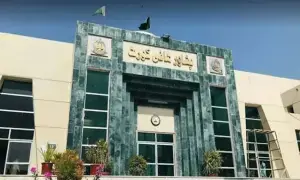
Meanwhile, PTI Chairman Barrister Gohar Ali Khan has challenged the imposition of governor’s rule and emergency in the Peshawar High Court through his counsel, Ali Zaman Advocate. The petition seeks to have governor’s rule declared void and requests an early hearing.
Speaking to the media outside Parliament House, Gohar said that if poor law and order was the justification, similar measures would also be needed elsewhere, including governor’s rule in Balochistan and emergency in the riverine katcha areas.
In Peshawar, normalcy is gradually returning. Containers placed on roads after the imposition of governor’s rule have been removed, educational institutions have reopened, and traffic, including the Bus Rapid Transit service, is being restored, though security remains tight in sensitive areas, including the Red Zone.

























Comments