


Copper firms with focus on supply developments in Chile
- Benchmark three-month copper on the London Metal Exchange gained 0.7% at $14,673.50 a metric ton
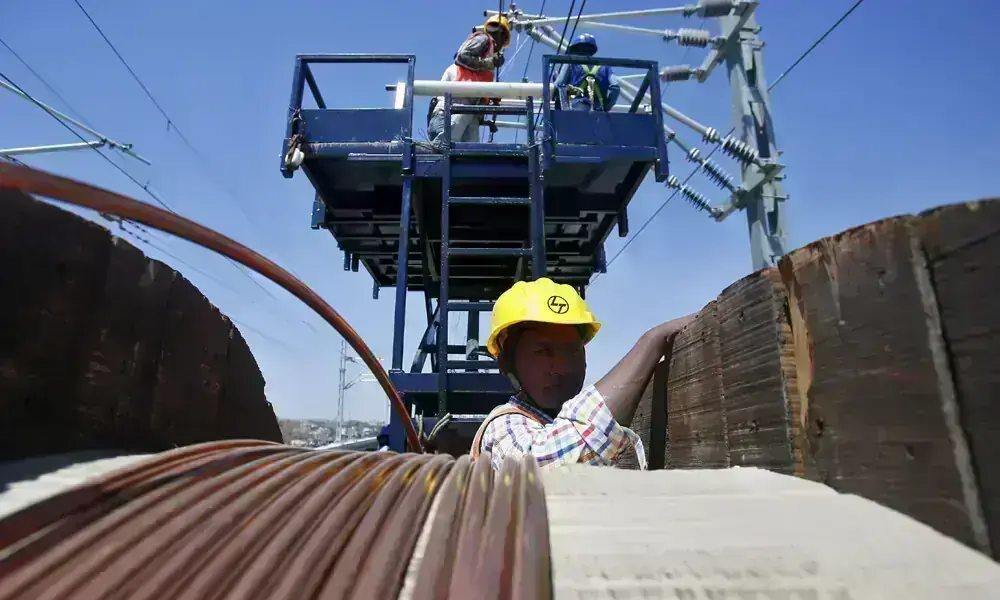
Copper prices rose on Wednesday, aided by supply concerns in top producer Chile, while markets watched developments at key copper mines.
Benchmark three-month copper on the London Metal Exchange gained 0.7% at $14,673.50 a metric ton by 0303 GMT.
The most-traded copper contract on the Shanghai Futures Exchange was up 0.4% to 111,330 yuan ($16,638) a ton.
“Supply risks in Chile have remained a key focus for the red metal, with strike votes, worker fatalities, operational disruptions, and renewed mine restart headlines helping maintain a supply-risk premium.
With these risks still evolving, any escalation in Chile would lend additional support to prices near-term,“ analysts at TD Securities said.
“Markets continue to grapple with tariff uncertainty and ongoing inventory reshuffling.”
The supervisors’ union at BHP’s Escondida in Chile, the world’s largest copper mine, said it will begin a strike on Wednesday after mediation efforts to secure a new collective labour contract failed.
Meanwhile, Chile’s Centinela copper mine and two striking unions returned to the negotiating table on Tuesday, aiming to resolve a week-long work stoppage that workers say is affecting operations.
Over the weekend, Chilean state miner Codelco partially suspended operations at its El Teniente mine after a fatal landslide. Elsewhere, copper inventories outside the United States have tightened as metal was shipped into the country ahead of potential tariffs.
Among LME metals, aluminium rose 0.2% at $3,042, zinc added 0.4% at $3,745.50, lead was flat at $1,901, nickel gained 0.5% to $15,665 and tin fell 0.1% to $51,705.
Among SHFE metals, aluminium fell 0.4%, zinc slipped 0.4%, lead gained 0.6%, nickel firmed 0.2% and tin fell 2.5%.
The International Nickel Study Group said on Tuesday that the global nickel market is set to end 2026 in a slight surplus, reversing a deficit forecast made six months ago, with oversupply expected to widen next year.






















Comments