


Interview with Arshad Anis - President, Teach the World Foundation: ‘We, as a country, do not have the luxury of time anymore’
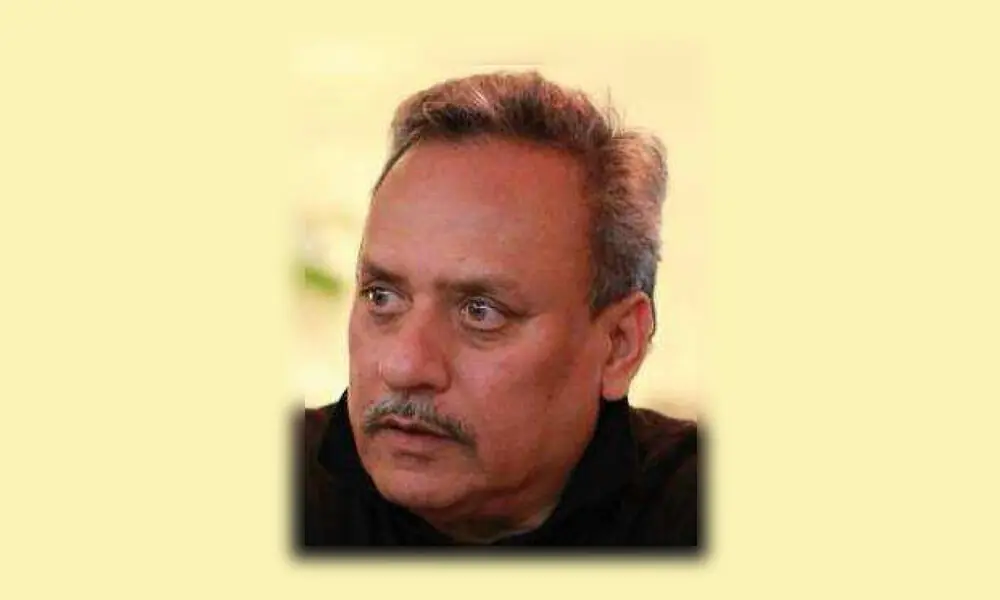
Arshad Anis is the President of Teach the World Foundation (TTWF), an organisation working to improve access to education for underserved communities and out-of-school children through technology-enabled learning models.
The Foundation’s Digital MicroSchools initiative combines digital learning tools, interactive content and trained local facilitators to strengthen foundational literacy and numeracy.
He also serves as Chairman of The Searle Company Limited, a position he assumed in January 2026. With a background in corporate leadership and governance, he is focused on promoting scalable education solutions through technology, community engagement, and public-private partnerships.
Following is the edited excerpts of his recent conversation with BR Research:
BR Research: What inspired you to join Teach the World Foundation to tackle one of Pakistan’s most pressing challenges, that too after your illustrious career in the corporate sector?
Arshad Anis: Your question itself carries the answer, the fact that it is one of the most pressing challenges and an existential threat to the country, inspired me to join the cause and use all of my corporate experience to help create a model that shows the path to elimination of the scourge of illiteracy and in particular the out of school population from Pakistan. This is also my way to show Allah gratitude for all His benevolence.
BRR: Pakistan faces a significant education gap, which is widening with each passing year. What do you see as the biggest barriers keeping children out of school?
AA: Historically the biggest barrier has been our lopsided priorities as a country. No nation has ever developed without giving education its deserved importance first. The historical neglect has brought us to a stage where today we have the largest population of school-going children, out of school. The numbers are so huge that the traditional method of schooling cannot resolve this humungous problem on its own anymore.
BRR: The education challenge impacts all sectors in Pakistan today, some visible and some under-the-current. In your experience, which of these challenges have now come to head within the corporate world and our society at large, already?
AA: The issue does not impact any one sector in particular, this is an existential threat to the country, and it impacts the overall health of Pakistan. It affects each and every segment of life equally, the numbers are so large and growing that neglecting them is no longer an option. If the numbers are not arrested on a crisis basis the country’s economic viability would be jeopardised.
BRR: Speaking to the national education policy framework, and the enshrined right of every child to have access to education - what are aspects of the challenge that we, as a country, continue to miss?
AA: At the national level, there is very little concentrated work being done on our education challenge. Our constitution enshrines education as the responsibility of the state and for it to ensure that no child is left out of school. Our government has failed to address this constitutional obligation, constantly and resultantly, it has now turned into a major crisis, where we are visibly heading towards a major catastrophe. If not addressed on war footing, the future of our children appears very bleak. The only way to address this monumental issue is through public-private partnership, on an urgent basis.
BRR: Teach the World Foundation has introduced a Digital Micro School model, not just in Pakistan but in the region. Explain how it works, and how it is helping underserved communities?
AA: Teach the World Foundation (TTWF) has introduced a model that provides the solution for the universal spread of education in countries that lack resources to bring education to all school going age children and eradicate illiteracy
By creating a technology-enabled environment, running out of single-roomed facilities, our solutions empower out of school children to learn using tablets with interactive, gamified learning courses. We employ women from our operation areas to act as facilitators, which also helps build community involvement, but more importantly, a sense of ownership.
Pakistan has a population of over 26 million out of school children which is the highest anywhere in the world. To provide education to such a large population through traditional means would require enormous resources both in human and material terms which are not available. Our Micro Schools provide a sustainable model that is both inexpensive & scalable and also works around the issue of massive dearth of trained teachers.
BRR: How can technology help Pakistan address its education challenges, particularly in communities where traditional schools are difficult to build and access and internet coverage and infrastructure remains questionable?
AA: Our Micro Schools are a great demonstration of this question: we setup within an impoverished community with a large out of school children’s population who have no easy access to a formal school institution nearby. We equip these schools with solar and use that energy to deliver courses through our digital tablets. It is almost an off-the-grid solution, running sustainably using whatever resources are readily available at the time and place.
A significantly large section of our country’s population live in areas where building infrastructure quickly is not possible, and it is a harsh commitment to expect from people to make the effort of accessing a facility a few hundred kilometres away, on a daily basis
Given the enormity of our national education challenge, we need to think creatively. While organisations work on building infrastructure and institutions, we need to find smart ways which will allow us to take education to children today. Remember, we, as a country, do not have the luxury of time anymore.
BRR: What impact have you seen from your programs so far, and how do you measure their success?
AA: The impact has been significant and many-fold. Today over 25,000 kids are studying in our micro schools, and the number is growing rapidly on a weekly basis. In the last 18 months approximately 6,000 students graduating out of TTWF Micro Schools have been mainstreamed in secondary schools, those who had crossed the age of admission in secondary schools have either joined a vocational training center or have started working as apprentices in small businesses.
We are also working on a program whereby besides conducting a learning assessment that we already do of all graduating students, we will be tracking their progress and trajectory beyond the micro schools.
BRR: How important are partnerships with the government, private sector and development organisations in taking these initiatives to a larger scale?
AA: Public-Private partnerships are absolutely critical, and very clearly are the need of the hour. Take us for example, we have already set up around 250 micro schools in partnership with the Sindh Education Foundation (SEF), which is a subsidiary of Sindh Government, while another 300 schools are likely to be set up in the next 12 months. Similarly, we are also working to forge partnerships with the private sector to take these micro schools across all of Pakistan and hope to resolve the issue of out of school children in the country.
BRR: What are Teach the World Foundation’s priorities and expansion plans for the coming years?
AA: Currently we are working towards a single objective of bringing all out of school children to a learning center and provide them with foundational literacy. In this regard we have multiple models in mind. Just this objective alone would require massive expansion in overall structure and significant upgradation in technology. Further, training plays a pivotal role in the meaningful achievement of this objective and TTWF looks to creating quality training centers across Pakistan.













Comments