


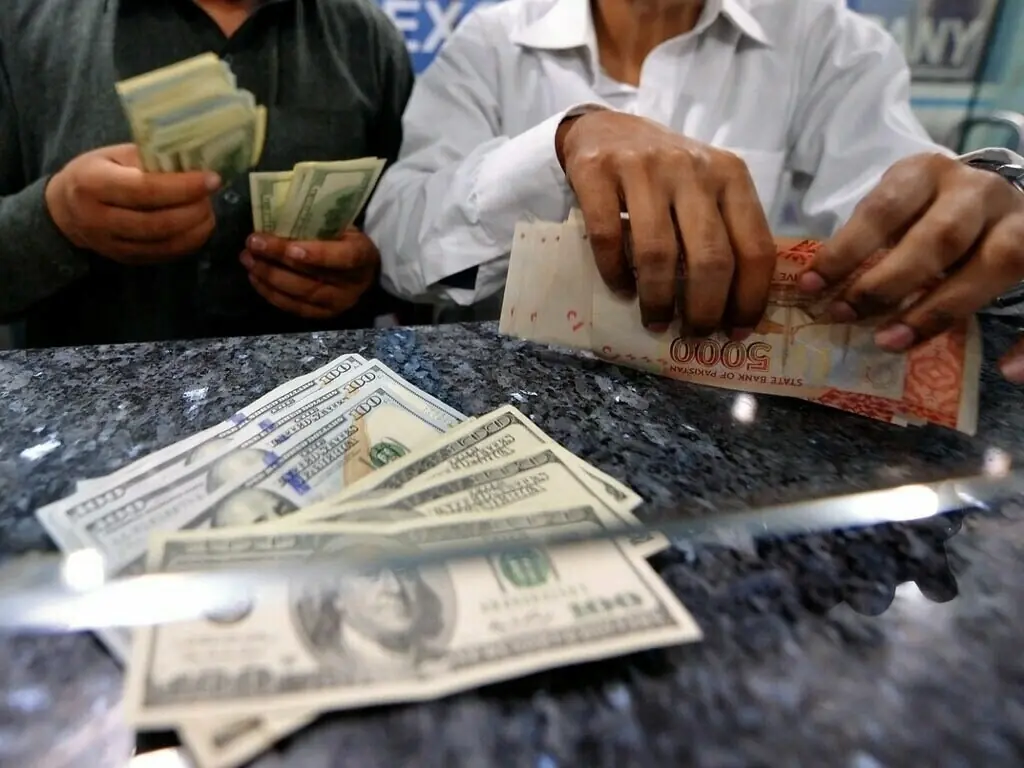
Pakistan’s remittances continue to provide much-needed support to the external account, with inflows reaching USD10.9 billion in the first quarter of FY27, up 14 percent from USD9.5 billion in the same period last year. The growth comes on top of a record USD41.6 billion received in FY26.
In Sep-26, remittances stood at USD3.59 billion, increasing by 12.7 percent year-on-year but declining by 1.9 percent from Aug-26. The monthly decline is not particularly concerning, as inflows have remained above USD3.5 billion throughout the first quarter. The monthly average of around USD3.63 billion is also higher than the FY26 average of USD3.47 billion.
Saudi Arabia continues to lead remittance inflows, contributing USD899 million in Sep-26, followed by the UAE at USD749 million, the UK at USD515 million and the US at USD306 million. For 1QFY27, Saudi Arabia contributed USD2.69 billion, up 16.2 percent year-on-year, while inflows from the UAE increased by 12.6 percent to USD2.23 billion. The UK recorded particularly strong growth of 19.4 percent, reaching USD1.64 billion.
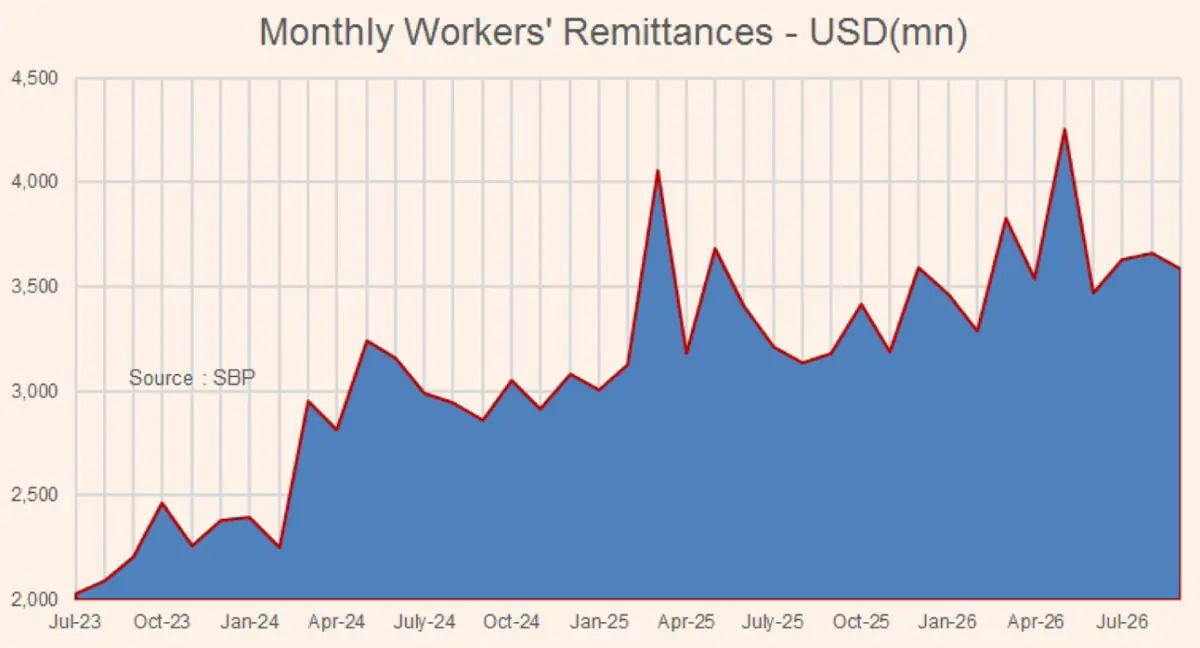
The bigger story is the sharp increase in remittances over the past three years. Annual inflows have risen from USD27.3 billion in FY23 to USD41.6 billion in FY26. Part of this improvement can be linked to the narrowing gap between formal and informal exchange rates, greater use of banking channels and incentives to encourage overseas Pakistanis to send money through the formal system. However, not all of this increase necessarily reflects higher earnings abroad. Some of it is likely due to money moving from informal to formal channels.
The authorities are now trying to maintain this momentum through a different incentive structure. The recently launched Pasban Remittance Reward Scheme offers Rs16 billion in annual cash prizes, funded by banks rather than the government. Under the scheme, Rs4 billion will be distributed every quarter among 2,521 recipients of qualifying remittances. It follows the withdrawal of earlier government-funded incentives and is aimed at keeping formal channels attractive without adding directly to the fiscal burden.
Whether such incentives can make a lasting difference remains to be seen. The real test is whether they bring more money into the formal system or simply reward transactions that would have happened anyway. Exchange-rate stability, competitive transaction costs, convenience, and confidence in banking channels will remain important.
Strong remittance inflows continue to support household spending, provide a steady supply of foreign exchange and ease pressure on the country’s external account. But there is another side to this story. Pakistan is becoming increasingly dependent on remittances to cover its weak export performance and growing trade deficit. While these inflows help keep the rupee stable and reduce immediate pressure on the external account, they do little to address the country’s underlying problems of low productivity, weak investment, and limited export competitiveness.
There are risks to the outlook as well. More than half of Pakistan’s remittances originate from Gulf economies, making inflows sensitive to economic conditions and geopolitical developments in the Middle East. Prolonged regional tensions such as the one currently, disruptions to employment or weaker economic activity in host countries could eventually affect remittance flows. So far, however, inflows have held up despite these risks.
For FY27, the outlook remains positive. The SBP expects remittances of around USD44 billion, and the first-quarter performance is broadly in line with that target. At the current monthly average, annual inflows would reach approximately USD43.6 billion.
For now, remittances remain one of Pakistan’s strongest sources of external support. They are helping the country manage its foreign exchange needs at a time when exports are struggling to gain momentum. But the economy cannot continue relying on overseas workers to make up for its weak export performance. Strong remittances are certainly welcome; the bigger challenge is to build an economy that can earn more foreign exchange on its own.

















Comments