


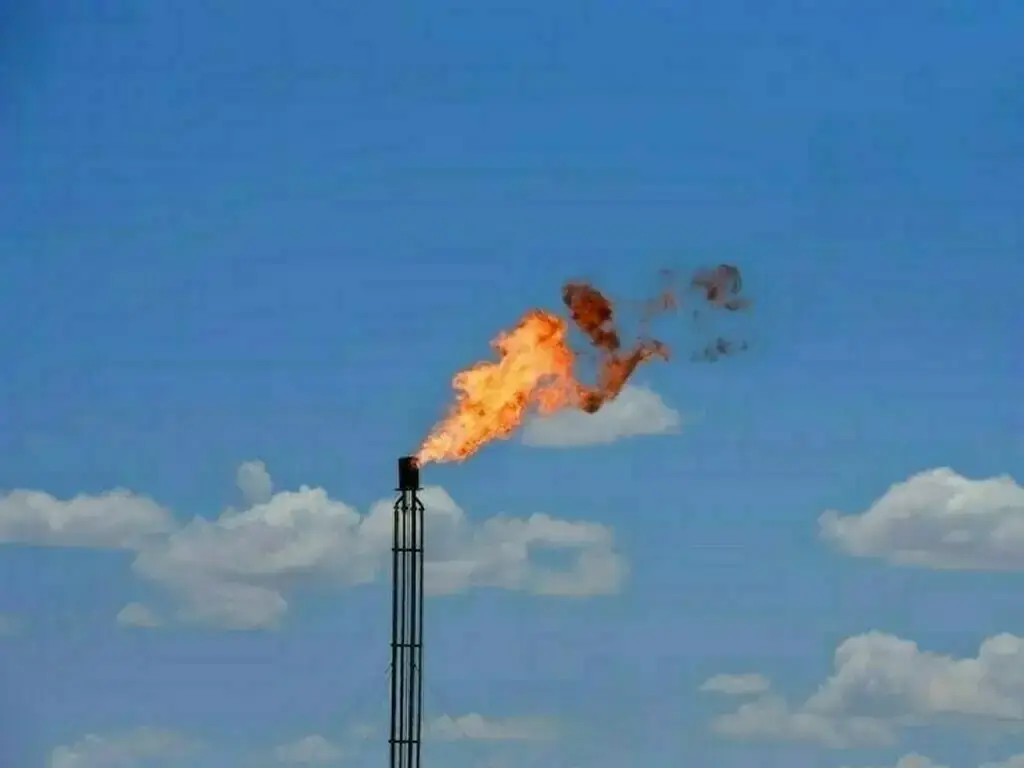
NEW YORK: US natural gas futures climbed about 2 percent to a two-week high on Thursday on a drop in output in recent days as energy firms reduced flows on offshore Gulf of Mexico pipelines ahead of Hurricane Isaias, and on forecasts for more demand this week than previously expected.
Front-month gas futures for November delivery on the New York Mercantile Exchange rose 7.4 cents, or 2.3 percent, to USD3.277 per million British thermal units (mmBtu), putting the contract on track for its highest close since September 24 for a second day in a row.
That also put the front-month up for a fifth day in a row for the first time since May, with gains of around 10 percent during that time.
The price moves also came as the market waited for a federal storage report expected to show energy firms added less gas to storage last week than usual for this time of year.
Analysts forecast energy firms added 79 billion cubic feet (bcf) of gas to storage during the week ended October 2.
That compares with an increase of 77 bcf during the same week last year and a five-year (2021-2025) average increase of 96 bcf for the period.
In the Gulf of Mexico, the US National Hurricane Center forecast Hurricane Isaias would hit the coast near the Mississippi-Alabama-Florida borders Friday night.
Even though storms can boost US gas prices by cutting output along the US Gulf Coast - something that is happening so far on Thursday - analysts have noted that such weather is more likely to reduce prices and gas demand by shutting LNG export plants and knocking out power to homes and businesses. About 40 percent of US power generation comes from gas-fired plants.
That’s because most US production comes from shale formations located far from the Gulf Coast like the Marcellus/Utica in Pennsylvania, Ohio and West Virginia and the Permian in West Texas and eastern New Mexico.
Just 2 percent, or 1.9 billion cubic feet per day (bcfd), of the 118.4 bcfd of US marketed gas production in 2025 came from the federal offshore Gulf of Mexico, according to the US Energy Information Administration.
Financial firm LSEG said average gas output in the US Lower 48 states slid from record highs of 113.3 bcfd in August and September to 111.2 bcfd so far in October due in part to force majeures and other problems on pipelines in Kentucky, Texas, West Virginia and elsewhere in recent weeks.
On a daily basis, output was on track to drop even further to a four-month low of around 108.5 bcfd on Thursday due mostly to Gulf Coast offshore outages related to Isaias.
LSEG said average gas demand in the Lower 48 states, including exports, will slide from 106.6 bcfd this week to 104.0 bcfd next week. The forecast for this week was higher than LSEG’s outlook on Wednesday.
Average gas flows to the nine large US LNG export plants fell to 16.9 bcfd so far in October, down from 17.9 bcfd in September and the monthly record high of 18.8 bcfd in April.
The LNG feedgas decline so far this month was due mostly to the shutdown of a liquefaction train at Freeport LNG’s 2.4-bcfd plant in Texas and planned annual maintenance at Berkshire Hathaway Energy’s 0.8-bcfd Cove Point in Maryland.
Energy traders said they expect Cove Point to return to service soon. Cove Point shut around September 19 for annual maintenance.























Comments