


Charting a New Course: How the EFP’s Economic: Council is Unlocking Pakistan's Economic Potential
- Mehmood Arshad, Board Member & Chairman, Economic Council, Employers’ Federation of Pakistan
Pakistan stands at a critical economic crossroads. With a young, dynamic population and a wealth of natural resources, our nation possesses the fundamental ingredients for economic prosperity. Yet, for decades, we have grappled with a persistent challenge: transforming this immense potential into tangible, sustainable growth. The core of this challenge is a pervasive issue of market access. It is a bottleneck that has stifled our exporters, discouraged investors, and left our economy sputtering.
The business community has operated in silos, facing a labyrinth of regulatory hurdles, a lack of actionable market intelligence, and a fragmented approach to international trade. It was this very frustration that gave birth to a new, strategic force within the private sector: The Economic Council of the Employers’ Federation of Pakistan (EFP).
EFP- EC recognized that the real deficit was not one of opportunity or talent, but of strategy and execution. The vision is not to be just another trade body, but a dedicated think tank, an intellectual engine designed to channelize Pakistan’s vast resources through meaningful, research-driven initiatives. Its core objective is to build the capacity of its member organizations, moving them beyond day-to-day survival towards strategic, long-term growth.
A Two-Pronged Strategy: Sectors and Markets
The Economic Council adopted a focused, two-pronged approach to tackle the challenge of market access:
- Sector-Specific Reports to Unlock Investment Potential
Pakistan’s economic narrative is often dominated by its traditional strongholds like textiles, agriculture, and remittances. The Council dedicated itself to producing deep-dive, sector-specific reports that spotlight under-explored and high-growth industries.
Take, for instance, the comprehensive report on the Fisheries sector. Pakistan boasts a coastline of over 1,000 kilometers, yet our seafood exports are a fraction of the potential. Our report analyzed the entire value chain, from outdated fishing practices and a lack of cold chain infrastructure to the absence of value added processing. It highlighted the massive potential for exports of high value species like tuna and shrimp and outlined a clear pathway for attracting both local and foreign investment.
Similarly, the report on Tourism brought to light the breathtaking, yet largely untapped, potential of our northern regions and historical sites. It moved beyond simplistic promotional campaigns to address fundamental issues: the need for investment in hospitality infrastructure, streamlined visa regimes, and the development of niche tourism products like eco-tourism and religious tourism. These reports are not academic exercises; they are blueprints for investment.
- Country-Specific Reports to Promote Exports
“The world is moving towards new economic alliances. Relying on traditional markets is no longer enough.”
Identifying a promising sector is only half the battle. The other half is finding and penetrating the right markets. This is where the Council’s second pillar comes into play: country-specific reports.
Our work has focused on identifying new frontiers for Pakistani exports. We initiated work on markets like Turkiye by analyzing their import profiles, consumer preferences, their trade relationships with other competing economies and competitive landscapes.
For Syria, we are examining the immense potential for reconstruction-related exports, from construction materials to pharmaceuticals, as the country looks towards rebuilding. We also took our first-ever business delegation during almost the last two decades to Syria last month. Our reports are designed to be practical toolkits for our exporters, de-risking their foray into new and unfamiliar territories.
Thought-Provoking Facts: The Billions We Are Leaving on the Table
To truly appreciate the urgency of this work, one must confront some thought-provoking facts. Pakistan is underutilizing its export potential and failing to attract investment in sectors that are booming globally. Each day of delay is a day of lost revenue and missed opportunities for our people
The Blue Economy: The global ocean economy is valued at trillions of dollars. Beyond fishing, it encompasses shipping, shipbuilding, marine biotechnology, and deep-sea mining. Pakistan’s maritime sector remains woefully underdeveloped, not just missing out on fish exports, but on an entire economic frontier.
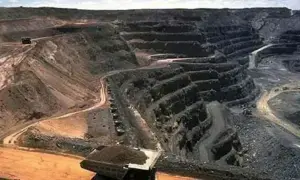
Mining and Minerals: From the copper and gold reserves in Reko Diq to the vast coal deposits in Thar and precious gemstones in the north, Pakistan is sitting on a treasure trove of mineral wealth.
The Path Forward
“Progress will not come from waiting for a savior, but from creating our own solutions.”
The Economic Council of the EFP is a testament to the private sector’s resolve to take ownership of its future. It is a recognition that progress will not come from waiting for a savior, but from creating our own solutions. By providing the business community with the strategic intelligence and capacity building needed to compete globally, the Council is working to turn Pakistan’s potential into prosperity.
“The challenges are immense, but the talent and resources are abundant. The real task is to channel them through meaningful partnerships and initiatives.”
The real task is to channel them through meaningful partnerships and initiatives. By transforming our approach to sectors and markets, we can create a more resilient, diversified, and vibrant economy, ensuring that Pakistan finally claims its rightful place on the world stage.
“Together, we can turn Pakistan’s potential into prosperity.”
Copyright Business Recorder, 2026
















Comments