


Establish a gas market for boosting exports
- Pakistan’s gas debate is usually presented as a choice between indigenous gas and imported LNG
Pakistan's gas market dysfunction impedes indigenous exploration and competitive LNG imports. A functioning market with open access and transparent pricing is crucial for reliable, economical gas supply and export growth.
- Pakistan's dysfunctional gas market and economic impact.
- Separating gas pipeline operations from trading.
- Creditworthy demand driving gas exploration and exports.
- Addressing the captive-power levy and gas circular debt.
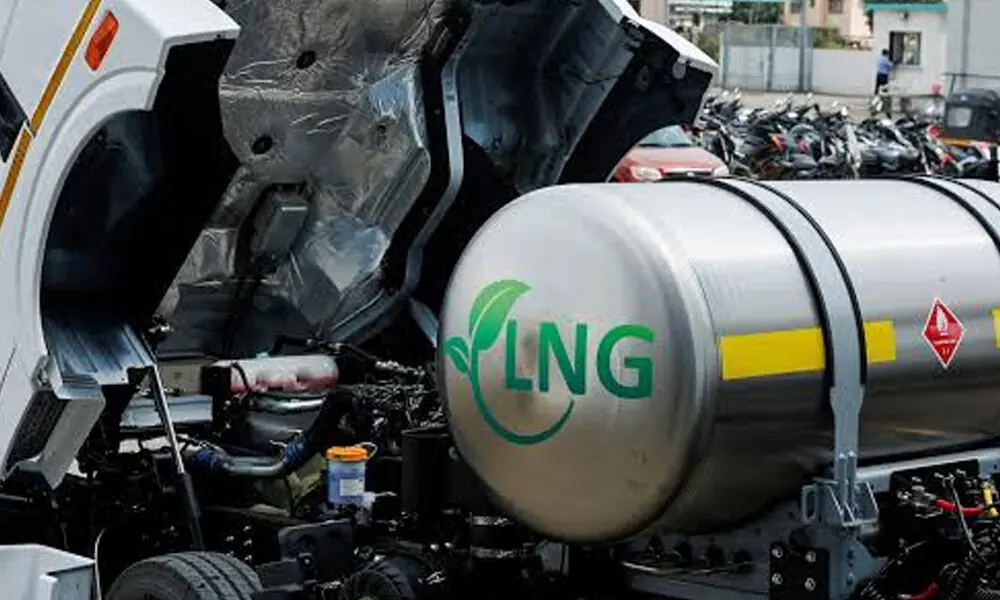
A functioning gas market would reward exploration at home and buy LNG abroad when its full delivered cost is competitive. Pakistan currently does neither.
Pakistan’s gas debate is usually presented as a choice between indigenous gas and imported LNG. That framing hides the real problem: Pakistan does not yet have a market capable of telling either source where it is economical, where it is reliable, and where it should lose. The country needs both, but neither should be protected from competition. Local producers should be able to sell directly to creditworthy buyers at transparent market-linked prices. LNG should enter through the same open network whenever its full delivered cost is competitive. The cheapest reliable molecule should win; every subsidy, bottleneck and payment delay that prevents that outcome should be treated as an economic cost.
That sounds obvious. Pakistan has managed to make it revolutionary because gas policy still treats molecules as instruments of allocation rather than commodities moving through a disciplined market. Gas is assigned administratively, transported by utilities that also trade it, priced through layers of cross-subsidy and used to rescue whichever part of the energy system is in trouble that month. Producers wait for allocations and payments. Private LNG suppliers wait for pipeline access. Consumers wait for gas. The only thing that moves promptly is circular debt.
Exploration policy and LNG policy cannot succeed separately because both depend on the same missing institution: a functioning gas market.
The indigenous decline is a market failure
The policy debate therefore needs a different sequence. Pakistan should not ask first whether domestic gas or LNG deserves priority. It should ask what market design would make each source reveal its true cost, attract capital where supply can be developed, and exit where it cannot compete. Without that architecture, every new discovery risks becoming another administered allocation and every imported cargo risks becoming another liability on the public balance sheet.
The official numbers are stark. During July–March FY2026, Pakistan consumed an average 2,929 mmcfd of gas: 2,316 mmcfd of indigenous supply and 613 mmcfd of RLNG. The Pakistan Economic Survey says depletion of indigenous reserves is a major concern and that no significant discoveries have been made. These figures show more than geological decline; they show a market that has stopped transmitting investable signals. Weak incentives, delayed decisions, payment risk, constrained marketing freedom and a downstream system that cannot reliably convert discovery into cash have turned exploration risk into policy risk.
Exploration is risky capital. Investors spend first, often for years, and may find nothing. If they do find gas, they need a bankable route from the wellhead to a paying customer. A policy can offer an attractive headline price, but the incentive is meaningless if allocation is delayed, the buyer is insolvent, the pipeline is controlled by a commercial rival, invoices remain unpaid or government changes the rules after the investment has been sunk.
The recent offshore round is encouraging but should be read honestly. Bids covered 23 blocks and about 53,510 square kilometres. The Petroleum Division reports roughly US$80 million of Phase-I commitments, with possible investment of US$750 million to US$1 billion if drilling proceeds. These are commitments, not discoveries. Serious drilling still requires a route from any discovery to a solvent market.
Pakistan has done this before
The lesson is not theoretical. I was involved in the producer-pricing reforms of the early 1990s that replaced discretionary, rate-of-return thinking with compensation linked to international energy values. The subsequent petroleum policy carried that logic forward through market-related producer pricing, clearer block awards and greater marketing freedom. Foreign and local companies brought capital, technology and management expertise, and national gas production rose from roughly 1,800 mmcfd to around 4,000 mmcfd within the following years. The evidence matters because it shows that geology responds to institutions: when investors can see price, access and payment discipline, capital follows.
The point is not nostalgia for one policy formula. Oil linkage designed three decades ago is not automatically the right benchmark today. The point is that investors respond when economic terms are credible, rules are implemented and the route to market is clear. Pakistan later weakened that bargain through delayed payments, administrative allocation, distorted consumer prices and a utility structure that socialized inefficiency. Predictably, investment and production lost momentum.
A new upstream policy should therefore offer more than a higher administered price. New, incremental, tight and marginal gas should have the right to be marketed directly to eligible buyers. Prices should be negotiated between willing parties within transparent rules. Producers should receive enforceable payment security and timely foreign-exchange convertibility for legitimate obligations. Exploration blocks should be awarded competitively, data should be accessible, approvals time-bound and contract sanctity treated as an investment requirement – not a favour granted by the government of the day.
Imported LNG must compete, not dominate
Supporting indigenous exploration does not justify excluding LNG. Domestic fields decline, discoveries arrive unevenly and industrial demand requires reliability. LNG can diversify supply, cover seasonal shortages and provide valuable flexibility. Pakistan’s two terminals are established assets with stated regasification capacity of about 1,200 mmcfd. They should be allowed to serve private suppliers and large consumers directly, not confined to a single state allocation chain.
But LNG must pass an honest competitiveness test. The comparison is not the headline cargo price against the wellhead price of domestic gas; it is delivered gas against delivered gas. That means the molecule, freight, port, terminal, retainage, pipeline charge, balancing cost, losses, taxes and financing must all be visible in the same calculation. Contract flexibility and reliability also have value. A cheap cargo burdened by excessive domestic charges is not cheap. Nor is locally produced gas cheap if inefficient network losses and legacy debt are loaded onto every unit sold.
Long-term LNG contracts can provide security against spot-market spikes. They should form a prudent core, not an inflexible entitlement that overrides demand. Future contracts need diversion, resale and seasonal flexibility, with limited dependence on any supplier or route. Spot purchases should supplement the portfolio when competitive. “Always term” and “always spot” are slogans; portfolio management is a profession.
Separate the pipeline from the trader
None of this can work while SNGPL and SSGC control the road and sell the cargo travelling on it. A market cannot discover the cheapest reliable molecule if the owner of the route can also favour its own trade. The network businesses must be separated from commodity trading and operated as regulated common carriers. Their task should be safety, pressure management, metering, balancing and transportation – not deciding which producer, importer or consumer is allowed to transact.
Available terminal and pipeline capacity should be published by location and period. Standard firm and interruptible transport products should be offered under common contracts. Booked but unused capacity should be surrendered, reallocated or traded. Network and imbalance charges should be approved transparently. Producers, LNG importers, terminals and licensed suppliers should be free to contract with industrial, power and other qualified buyers.
This is not deregulation by abandonment. OGRA should regulate the monopoly network more rigorously while stepping away from commercial allocation. Its job should be to make the market trustworthy: police discriminatory access, audit losses, approve efficient forward-looking transport tariffs, enforce transaction reporting and publish a delivered-cost dashboard. It should not choose the winning molecule. A regulator that allocates business becomes a participant; participants rarely regulate themselves with enthusiasm.
Creditworthy demand is exploration infrastructure
Pakistan often discusses exploration as if it ends at the wellhead. It does not. A creditworthy industrial buyer is as important to a gas discovery as a seismic survey. Export industries, especially value-added textiles, efficient combined heat and power plants and other qualified consumers should be able to sign enforceable gas-purchase agreements directly with producers or importers. Competitively priced gas is not a concession to such exporters; it is a pre-requisite for enhancing value-added textile exports, protecting margins in global markets and giving producers a bankable demand base. Different buyers may choose firm, interruptible, seasonal or index-linked supply. That diversity creates a market and gives producers a reason to explore.
The captive-power levy moved in the opposite direction. It treated efficient cogeneration and inefficient simple-cycle generation alike, destroyed creditworthy gas demand and weakened the economics of both LNG and indigenous supply. Where the grid can provide reliable power and a plant wastes fuel, policy should encourage migration. Where combined heat and power supports exports and uses fuel efficiently, an indiscriminate levy converts an energy customer into an economic casualty. More importantly, none of the market principles proposed here – open access, direct contracting, price discovery, creditworthy demand or competition between local gas and LNG – can take root while the levy remains on its present course. A market cannot be formed by taxing away the demand base that would make it bankable.
The problem is not confined to the captive-power levy. Pakistan has built a wider anti-export policy structure in which firms expected to earn foreign exchange are treated as a revenue base. Although exports are formally zero-rated, delayed sales tax refunds force exporters to finance the state interest-free while borrowing at high domestic rates; the delay becomes a hidden tax and, in practice, a form of double taxation when refunds are eroded by inflation or only partly realised. Other burdens include advance and minimum taxes on export proceeds, weakening of the Final Tax Regime, withholding taxes on inputs and services, duties on raw materials and spare parts, regulatory charges, high energy tariffs, cross-subsidies, withdrawal of regionally competitive energy rates, and uncertain duty-drawback or export-support schemes. Fixing the gas market is therefore only one reform among many needed to rebuild export competitiveness, but it addresses the most immediate and damaging constraint: energy costs that are materially higher than those faced by comparable exporting countries. Pakistan is perhaps among the few countries that discourages exports precisely when export earnings are its greatest macroeconomic need. The result is weaker competitiveness, lower investment, reduced capacity utilisation and a smaller foreign-exchange base. In short, policy has turned the export sector from Pakistan’s foreign-exchange engine into one of its most heavily burdened revenue targets.
The balance sheet must also be cleaned. The IMF places gas circular debt at about Rs3.4 trillion by December 2025. New producers, importers and consumers cannot be asked to inherit that stock through inflated network charges. Legacy debt, excessive unaccounted-for gas and politically mandated subsidies must be ring-fenced. Lifeline households should be protected through explicit budget support, not by hiding subsidies inside gas prices and sending the bill to the shrinking pool of productive users.
Let the molecule compete
The reform sequence should be clear: first define open access to transport, then make capacity and charges transparent, then allow qualified buyers and sellers to contract, and only then let price competition reveal the least-cost portfolio. Reversing that order will not work. More LNG without access reform becomes another state procurement problem; higher producer prices without buyers and payment security become another upstream promise the market discounts.
A functioning market would strengthen indigenous exploration precisely because it would give a discovery access to buyers and an economic price. It would also strengthen LNG security because terminals and suppliers could serve a broader customer base rather than depend on one state buyer. Competition would reveal when domestic gas is genuinely cheaper, when LNG is attractive and when neither source can support the intended use.
Government still has legitimate jobs: award acreage transparently, enforce contracts, regulate safety and monopoly networks, protect vulnerable households and maintain emergency-security rules. It should not procure every molecule, allocate every customer, bury every subsidy and then wonder why exploration stalls while imported gas becomes circular debt.
Pakistan’s objective should not be to maximise local gas at any price or LNG at any price. It should be to minimise the reliable delivered cost of gas while creating strong incentives to discover and develop indigenous resources. That requires a market capable of separating economical supply from protected supply, efficient demand from subsidised demand, and public-interest regulation from political allocation. It also requires a change of course on the captive-power levy, because creditworthy demand is not a side issue; it is the commercial foundation on which open access, direct contracting and price discovery depend. For value-added textiles, competitively priced gas is a pre-requisite for export growth, not a sectoral preference. Geology should determine what Pakistan can produce. Competition should determine what it buys. Bureaucracy should stop pretending it can do either better.
















Comments