


KP Police Act, 2017: Minister of state raises concern over proposed amendment
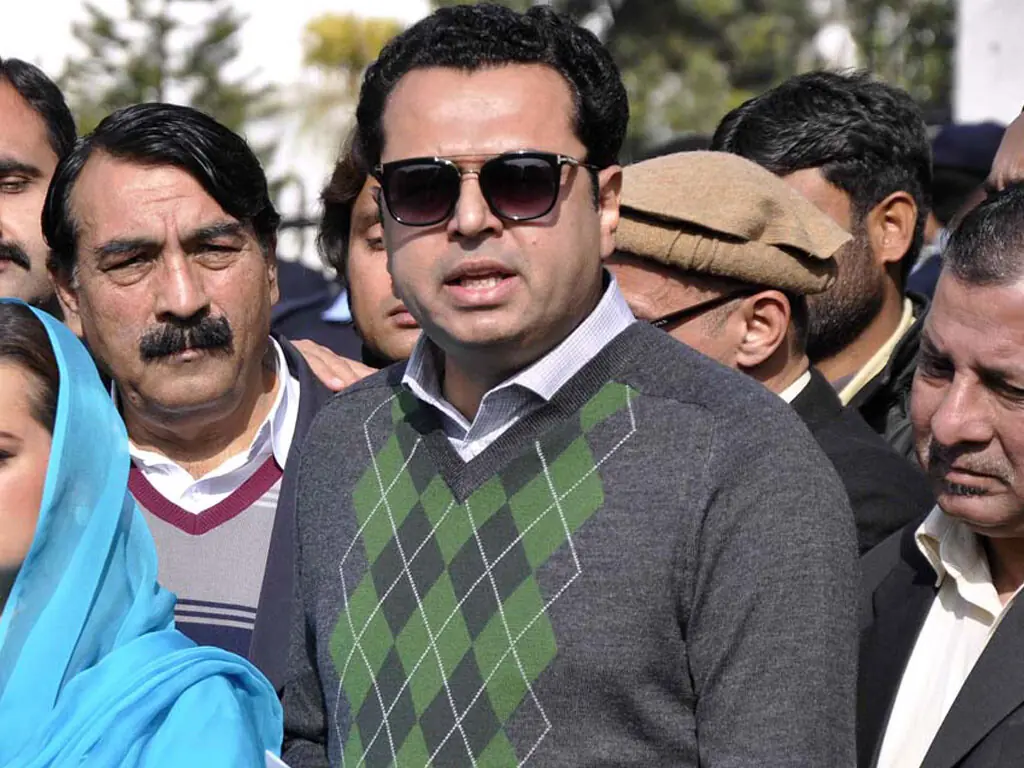
ISLAMABAD: Terming the recent proposed amendment to the Khyber Pakhtunkhwa Police Act, 2017 by the provincial government contrary to the Constitution and the Police Service of Pakistan (PSP) Rules, Minister of State for Interior Talal Chaudhry warned the provincial government to reconsider the legislation, stating that otherwise, it will definitely be challenged in court, and the federal government will also look into the matter in accordance with the Constitution.
Addressing at a press conference here on Thursday, the minister said that under the 18th Constitutional Amendment, policing and law and order are provincial subjects, but provinces have no absolute powers to make legislation beyond the Constitution and present legal frameworks. There is a settled principle in PSP rules, and these had been challenged in the High Court and Supreme Court during different regimes. After the SC decision settled the rules, PSP and laws have been made, he said, adding that you cannot override it through provincial legislation.
“You cannot destroy the command structure of the police that is fighting terrorism, losing its personnel daily for the last several years,” he said, adding that you cannot pass a law which is contrary to the Constitution and PSP rules.
The minister said that under Pakistan’s federal system, provinces did not have unlimited legislative powers and that police policies and structures should be consistent across provinces. Differences in police structures and salaries between provinces could adversely affect morale and command, he said.
Chaudhry also alleged that the proposed legislation conflicted with laws and previous judgments announced by the Sindh High Court (SHC), Peshawar High Court (PHC) and the Supreme Court.
He said that the legislation would definitely be challenged before the court and the federal government would look into it as per federal laws.
Chaudhry urged the Khyber Pakhtunkhwa government to reconsider the legislation and said the province should not proceed with its passage in the provincial assembly. “Political differences are possible, but there can be no compromise on the national interest and the National Action Plan (NAP),” he said.
He said that police and law and order matters did not fall exclusively within provincial jurisdiction even after the 18th Constitutional Amendment. Under the proposed amendment, the authority to appoint grade 17 to grade 19 has been withdrawn from the relevant officers and retained by the chief minister, he said.
Chaudhry said that the legislation would give excessive powers in the hands of the chief minister and the ruling political party. Destroying the police command structure would encourage police officials to look towards political leaders over professional responsibilities instead of their own officers, he said.
He said that the chief ministers of all provinces already have limited powers regarding consultation on the transfer and posting of police officers.
“These powers did not affect police command structure,” he said.
The minister criticised the Khyber Pakhtunkhwa government’s claims of making state institutions non-political, saying that the proposed legislation was in complete contrast to the 2017 police law.
“Despite claims of depoliticising the police, through this new legislation you have made the force more politicised,” he said.
Chaudhry said that senior positions could be filled without officers from the PSP and alleged that the new law could facilitate the appointment of preferred individuals as deputy superintendents of police (DSPs), as well as the promotion of favoured officers to Grades 18 and 19.
The minister said that the Khyber Pakhtunkhwa government did not provide adequate resources to police despite having financial authority. He claimed that police salaries and compensation packages for martyrs in the province were lower than those in other provinces and that the force lacked adequate bulletproof jackets, modern vehicles, drones and forensic facilities.
Chaudhry said that police should not be treated as an ordinary civilian institution because it was directly involved in the fight against terrorism. He also criticized the composition of proposed police committees, alleging that these committees did not have members from opposition parties and civil society. The proposed committees could give the provincial government larger control over police affairs at the tehsil and district levels, he said.
To a question about the Pakistan Tehreek-e-Insaf’s scheduled long march on September 27, the minister said all routes to the federal capital are open. He said that the Islamabad High Court’s decision would be implemented in letter and spirit to protect the lives and property of the people.
Copyright Business Recorder, 2026






















Comments