


Pakistan’s Nida Sheikh featured among Fuller Project’s global water defenders
- Fuller’s project focuses on growing water crisis and people working on ground to protect water resources
Pakistani social entrepreneur Nida Yousaf Sheikh, co-founder of Tayaba, is internationally recognized for her innovative solutions like the H2O Wheel, addressing water scarcity and empowering women in rural Pakistan.
- Nida Yousaf Sheikh's innovative water solutions in rural Pakistan.
- Tayaba's H2O Wheel and other technologies for water access.
- The global impact of water scarcity on women and girls.
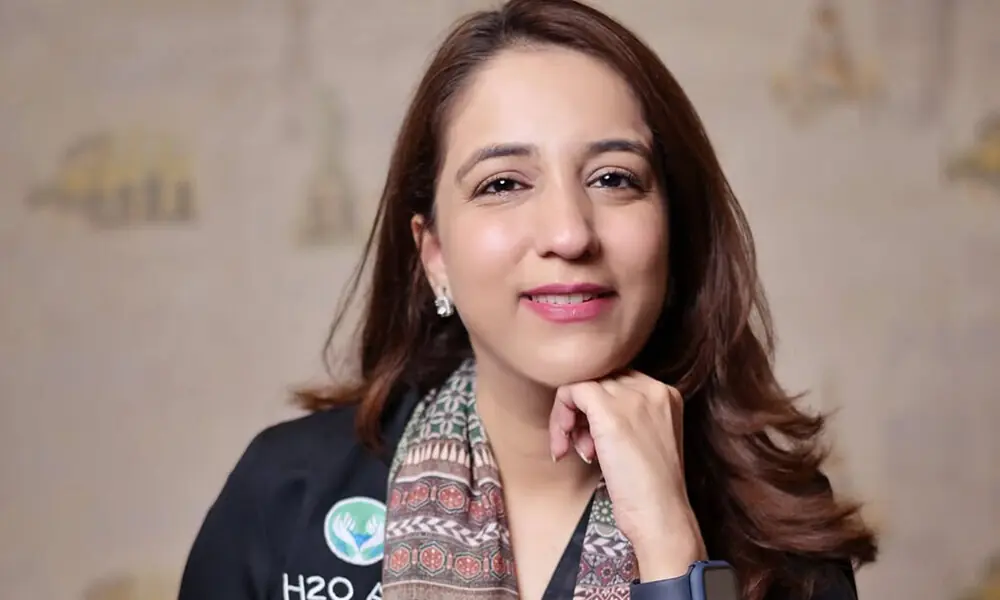
For many women in rural Pakistan, getting water is not as simple as turning on the tap. It can mean spending hours of the day collecting and carrying it home, a daily reality that Pakistani social entrepreneur Nida Yousaf Sheikh observed.
That experience became the starting point of her work with Tayaba, the organisation that addresses water scarcity and inadequate water infrastructure, where Nida served as CEO and co-founder. Now, her efforts to make access to water safer and less physically demanding have been recognised internationally, with the Fuller Project featuring her among 17 women and gender-diverse water defenders from across the world.
Fuller’s global project focuses on the growing water crisis and the people working on the ground to protect water resources, push for environmental justice and challenge the system that leaves communities without reliable access to water.
For Shiekh, the problem was deeply personal in what she witnessed among rural women.
“Engaging with rural women, I saw their daily battle to access clean water and was heartbroken to see them reduced to the role of ‘water labourers’, with their dignity and well-being disregarded,” she said, according to her Fuller Project profile.
Rather than looking only for complex solutions, Nida believes that some of the answers could be practical and affordable. That thinking led Nida and her organisation to develop the H2O Wheel, a rolling container that allows women and children to transport up to 40 litres of water without carrying the heavy load on their heads.
The work did not stop there. Tayaba expanded from the H2O wheel to H2O Solar water facilities and H2O Air devices, which extract safe drinking water from moisture in the air.
Following Pakistan’s devastating 2022 floods, the organisation also pioneered H2O Chain, a blockchain-powered platform designed to track humanitarian aid and make the distribution of water and other essential supplies more transparent.
Nida’s work has brought international recognition as well. She became the first Pakistan’s social innovator to win One Young World’s global LEAD 2030 Challenge Award for clean water and sanitation and was named one of the UN Women’s 30 for 2030 regional climate innovators.
Her inclusion in the Fuller Project comes against a difficult backdrop for Pakistan.
Pakistan is among the countries facing high water stress. According to WaterAid, 16 million people don’t have clean water close to home.
The issue, however, extends beyond access. Women and girls around the world are often the ones responsible for collecting water for their families, making them the first to experience the impact of shortages and contaminated supplies. Despite this, they remain underrepresented in the spaces where decisions about water access and funding are made, from local water boards to high-level summits.
It is this gap that Fuller’s project seeks to bring into focus.
By featuring Nida Sheikh alongside 16 other water defenders, the project puts the experiences of Pakistani women at the centre of a global conversation on water — one that is set to gain further attention ahead of the UN Water Conference in Abu Dhabi this December.
For Pakistan, Nida’s inclusion offers an international spotlight on both the country’s water challenges and the local innovators working to address them.



















Comments