


Pakistan’s energy shock
Pakistan faces a severe energy crisis due to disrupted global supply routes, threatening its economy, households, and industries with physical shortages and soaring costs, making the coming winter critical.
- Pakistan's vulnerability to LNG supply disruptions.
- Economic paradox of idle power capacity and high tariffs.
- Strategies for managing energy shortages and diversifying supply.
- Broader impact on household purchasing power and productivity.
Pakistan is facing an energy shock that could rapidly become an economic and social crisis. The disruption of the Strait of Hormuz, compounded by insecurity around the Red Sea, has transformed energy from a question of price into one of physical availability.
Oil and LNG supplies are under pressure, Asian buyers are competing for alternative cargoes and Pakistan has fewer financial and supply buffers than its larger neighbours.
The real danger is no longer confined to the petrol pump: it could reach household budgets, factories, farms, electricity supply and employment. The coming winter could become the decisive test of Pakistan’s economic resilience.
The present crisis is different from another episode of expensive oil. The immediate concern is whether sufficient energy can physically reach Pakistan and at what cost.
The Strait of Hormuz normally carries around one-fifth of global oil and LNG flows. Its disruption has hit Asia particularly hard, while the Red Sea problem has further complicated alternative supply routes. The IEA (International Energy Agency) estimates that the disruption has placed almost 20% of global LNG supply at risk.
Pakistan is particularly exposed because LNG is integral to its electricity and industrial system. Its dependence on Qatari LNG has left it vulnerable to the interruption of Gulf supplies, forcing it towards an exceptionally expensive and increasingly competitive spot market.
The immediate consequence is a difficult winter equation. Gas needed for power competes with the requirements of industry, fertiliser and households. Expensive alternative fuels can keep some power plants running, but transfer the cost directly into electricity tariffs and the wider economy.
Pakistan is not alone in facing this shock. The difference is the size of the buffers available to absorb it.
Bangladesh, another LNG-dependent South Asian economy, is already experiencing gas shortages, power interruptions and factory shutdowns. Its government is scrambling for alternative LNG cargoes while considering greater solar deployment and other fuel options.
India too faces higher energy costs and disrupted Gulf supplies, but its much larger refining capacity, diversified crude procurement, inventories and foreign-exchange reserves give it greater room to manoeuvre.
The lesson is important: no major Asian economy is immune, but those with diversified supplies and deeper financial buffers can absorb the shock longer.
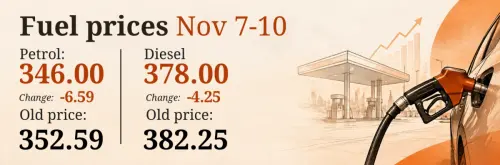
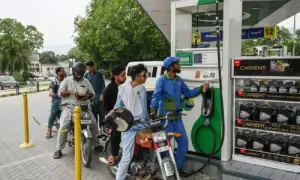
For the citizens of Pakistan the energy shock has translated into its survival shock: the crisis has reached the household. Petrol is already around Rs391 a litre while high-speed diesel around Rs425.
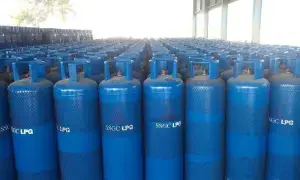
For an ordinary Pakistani family, this is not simply a transport expense. Higher petrol and diesel prices increase the cost of commuting, public transport, food distribution and agricultural operations. LPG and other fuels also become more expensive. The impact is eventually felt in virtually every household purchase.
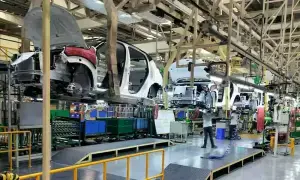
The social effect can be severe. A rickshaw driver earns less because passengers cannot afford higher fares; a factory cuts production because energy costs become uneconomic; a farmer pays more for irrigation and transport; and a salaried household cuts consumption to meet its monthly fuel and electricity bills.
That is how an energy shock becomes a loss of purchasing power and productivity.
The recent experience in Pakistan has already shown how quickly energy shortages can affect working hours and business activities. The government is trying to avoid a repeat of earlier enforced early closures as winter gas requirements approach.
Compounded with the paradox of expensive electricity and idle capacity of the Independent Power Plants (IPP), Pakistan faces another painful contradiction.
The country has substantial installed generation capacity, yet consumers can experience long outages or restricted supply when fuel is unavailable or electricity is too expensive to dispatch. At the same time, the state continues to make capacity payments to power producers under contractual arrangements, whether or not their full capacity is utilised. The impact of this will be higher tariffs - to be borne by the consumers by paying higher electricity bills.
This creates a particularly damaging economic paradox: Pakistan can be paying for electricity capacity that it cannot afford to use, thereby ballooning the circular debt; while consumers simultaneously suffer shortages and high tariffs.
Government payments to IPPs amounted to about Rs2.94 trillion in the first 11 months of FY2025-26, according to Ministry of Energy data reported in September.
These payments cannot simply be dismissed as illegitimate—they arise from contractual commitments—but their growing burden becomes increasingly difficult to sustain when demand is weak, generation is curtailed, and fuel prices are rising.
The present crisis therefore threatens to widen the circle: expensive imported fuel raises generation costs; reduced demand leaves more capacity underutilised; capacity payments remain; tariffs rise; consumers reduce consumption further; and the financial burden of the power sector grows.
Pakistan needs a single, continuously operating national energy command rather than fragmented responses from different ministries.
It should monitor daily fuel and LNG stocks, confirmed cargoes, shipping routes, power-generation requirements and foreign-exchange needs under alternative price scenarios.
Every possible non-Strait of Hormuz source of oil and LNG should be pursued. At this stage, security of supply is more important than obtaining the cheapest cargo.
Scarce LNG should be allocated according to economic priority—power generation, fertiliser, export industries, hospitals and other essential services.
Conservation must begin with government itself. The recently announced cuts in official fuel allocations, government vehicle purchases and foreign travel are appropriate, but they must be part of a wider demand-management programme.
For consumers, relief should be targeted at vulnerable households rather than through indiscriminate subsidies. Subsidise people, not petrol.
Most importantly, the government must prepare for a prolonged disruption rather than assume that the Strait of Hormuz will quickly return to normal.
The crisis demands more than emergency management.
The current shock is also changing energy strategy across Asia. Countries are looking for alternative suppliers, building reserves, accelerating renewables and reconsidering their dependence on imported gas.
Pakistan should read the same signal.
Its rapidly expanding solar generation is already providing some protection, but solar alone cannot solve the evening peak or replace gas across the wider economy. Storage, hydropower, diversified LNG, domestic resources and more efficient electricity demand must work together.
Pakistan also needs to use diplomacy aggressively. Its relationships with the Gulf countries and Iran provide channels through which it can seek protection for energy flows and shipping. Energy diplomacy has now become economic diplomacy.
The coming winter will be decisive.
If the disruption eases quickly, some of today’s pressure will recede. If it persists, Pakistan could face a simultaneous squeeze on fuel, gas, electricity, industry, food prices, employment and foreign exchange.
Pakistan cannot control the Strait of Hormuz or international energy prices. But it can determine how intelligently it manages the energy that remains available—and how fairly the burden is distributed.
The danger is not simply that Pakistan may run short of fuel. It is that expensive and uncertain energy could progressively reduce the purchasing power of its people, the productivity of its industries and the viability of its electricity system.
That is the crisis beyond the petrol pump—and the one Pakistan must prepare for it straight away.
Copyright Business Recorder, 2026
The writer is a former President OICCI; Global Business Leader and Strategic Affairs Analyst














Comments