


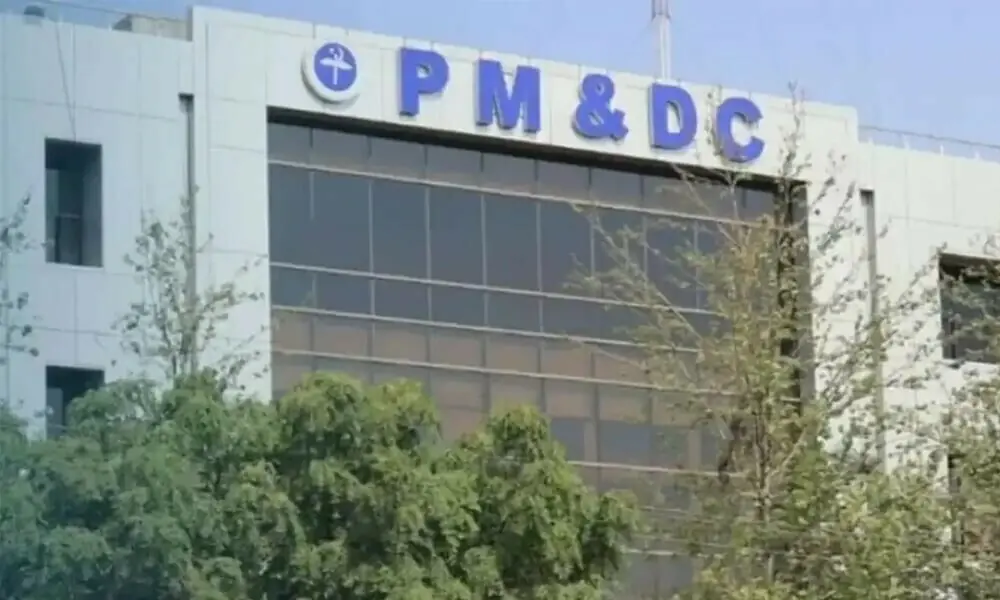
LAHORE: The Disciplinary Committee of the Pakistan Medical and Dental Council (PMDC) has decided to take disciplinary action against 15 doctors after charges including disrupting patient care, inciting others to halt medical treatment, blocking roads, and shutting down wards and emergency services were proven against them.
Exercising its powers under Section 44 of the Pakistan Medical and Dental Council Act, 2022, the Disciplinary Committee has concluded the formal hearing of the case. Acting on references received from the Government of Punjab, the PMDC sought responses from the concerned doctors and provided them with an opportunity to present their individual explanations.
Following the substantiation of the allegations, action has been taken against Dr Arif Aziz, Dr Shoaib Niazi, Dr Salman Haseeb, Dr Fakhar Munir Sial, Dr Nadeem Saqib, Dr Wajid Ali, Dr Aamir Bashir, Dr Asjad Salman, Dr Arsalan Raza, Dr Suleman Ghafoor, Dr Osama bin Saeed, Dr Ahmed Yar, Dr Kashif Saeed, Dr Hamid Arshad, and Dr Haseeb-ur-Rehman. The charges against these doctors included obstructing patient care, blocking roads, interfering with medical treatment, shutting down wards and emergency services, ejecting patients and their attendants from hospitals, and issuing inappropriate statements on social media. In light of these allegations, the Department of Specialized Healthcare and Medical Education had recommended suspending the doctors’ services, cancelling their postgraduate training, and permanently revoking their medical licenses.
Taking disciplinary action, the PMDC committee has suspended the medical licenses/registrations of the aforementioned doctors for the next six months. Proceedings were also initiated against the doctors under the Pakistan Employees Efficiency, Discipline and Accountability Act, 2006, alongside the suspension of their services and cancellation of their postgraduate training. Doctors are expected to adhere to the highest standards of service and responsibility, in keeping with the medical oath and professional obligations. Going on strike, disrupting emergency medical services, shutting down Outpatient Departments (OPDs), or obstructing national immunization programmes is fundamentally at odds with the core principles of the medical profession and amounts to a grave betrayal of public trust. The code of ethics dictates that patient welfare must always take precedence over personal grievances or collective protests. When doctors abandon their responsibilities or engage in actions that jeopardize patient care and public health, they not only violate legal obligations but also undermine the fundamental trust upon which the dignity of the medical profession rests. Such conduct is neither expected from, nor can it be tolerated in, those entrusted with the lives and well-being of the community.
Moreover, Provincial Health Minister Khawaja Salman Rafique attended the ‘One Health and Climate Event’ held at the Institute of Public Health (IPH) as the chief guest.
Addressing the participants, Khawaja Salman Rafique noted that the IPH has been playing a vital role in ensuring the health of the people of Punjab for the past 127 years and expressed his pleasure at attending this significant “One Health” event. He highlighted the extensive work undertaken to combat dengue under the leadership of Mian Shehbaz Sharif. He also acknowledged the exemplary services rendered by all relevant agencies including the Health Department, PDMA, Rescue 1122, the district administration, and the police during the 2025 flood.
Khawaja Salman Rafique stated that fundamental measures are being taken to improve the health sector under the leadership of Punjab Chief Minister Maryam Nawaz Sharif. He observed that the interconnectedness of human, animal, and environmental health is clearly evident today; the floods, heatwaves, and shifting disease patterns witnessed in Punjab in recent years are not isolated incidents but clear warning signs of the impacts of climate change. He expressed satisfaction that the IPH is playing a leading role in this regard, noting its continuous efforts to expand opportunities for quality health education. He added that the IPH’s certificate courses are assisting health professionals in enhancing their skills and improving the standard of healthcare.
Khawaja Salman Rafique further stated that significant improvements are being made in Punjab’s health sector under the effective supervision of Punjab Health Secretary Azmat Mehmood, with new institutions being established and the Institute of Public Health (IPH) being further strengthened. New children’s hospitals, cardiac institutes, a cancer hospital, burn units, and medical colleges are also being constructed. Thousands of new positions have been created for doctors, nurses, consultants, paramedics, and other healthcare professionals.
The Institute of Public Health (IPH) is also preparing to introduce new diploma and degree programmes. It was further stated that these programs would help produce more skilled professionals for Punjab and Pakistan. The IPH is also working on internationally recognized courses for its graduates to enhance their knowledge and expertise. In the postgraduate sector, the Institute of Public Health has designed PhD programs that involve collaboration with the University of Leicester (UK) and a partner university in Malaysia.
The health minister remarked that these partnerships with international institutions are aiding in training, research, and the improvement of healthcare services for the people of Punjab; this truly embodies the spirit of “One Health”.
The institute has signed Memoranda of Understanding (MoUs) with national and global institutions, such as Johns Hopkins University. These partnerships can create new opportunities for capacity building, leadership development, research, and professional training. These programmes will provide our researchers with high-quality doctoral-level education and international research experiences. Let us share our data, share our research, most importantly, share our responsibility for the health of our people, animals, and the environment.
Khawaja Salman Rafique stated that the Punjab government’s support for the Institute of Public Health would continue uninterrupted. “I look forward to seeing the ‘One Health and Climate Center’ progress and succeed. We must unite and play our vital role in building a healthy, strong, and climate-resilient Punjab.”
He added that under the Chief Minister’s Cardiac Surgery Programme, free surgeries worth millions of rupees have been performed on over 16,000 children to date, including more than 2,500 children from other provinces. Additionally, 2.4 million dialysis sessions have been conducted under the special dialysis program. “We will not allow our institutions to become mere parking lots; to reduce the patient burden on hospitals we must focus on preventive measures.”
Parliamentary Secretary Rushda Lodhi stated that the Punjab government is striving to improve the health sector. “We must play a pivotal role in the ‘One Health’ initiative. Ensuring ‘One Health’ is not solely the responsibility of health professionals; the public itself must help make this concept a success.”
Member of the Punjab Assembly Saima Zahid said that they would play a significant role in the ‘One Health’ initiative, noting that the Institute of Public Health is doing excellent work.
Dean of the Institute of Public Health, Professor Dr Saira Afzal, stated that in line with the Punjab government’s vision, measures are being taken to eradicate dangerous diseases from society, and the Institute remains committed to improving the health sector.
Copyright Business Recorder, 2026






















Comments