


Oil falls but on track for sharp weekly gain on supply concerns; US diesel hits record high
- Brent crude futures were down $2.46, or 2.29%, at $105.17 a barrel
Oil prices saw weekly gains despite Friday's dip, driven by Middle East shipping attacks and supply concerns, pushing US diesel to record highs amid ongoing volatility.
- Middle East shipping attacks and global oil supply.
- Record-high US diesel prices and their causes.
- Geopolitical tensions in the Strait of Hormuz.
- Potential diplomatic talks on Strait of Hormuz shipping.

HOUSTON: Oil prices fell on Friday but remained on course for a weekly gain of more than 9%, while U.S. diesel prices hit a record high as attacks along Middle East shipping routes stoked concerns about prolonged supply disruptions.
Brent crude futures were down $2.46, or 2.29%, at $105.17 a barrel at 11:33 a.m. (1633 GMT).
U.S. West Texas Intermediate crude fell $2.44, or 2.38%, to $100.04 a barrel. Both benchmarks hit their highest levels since mid-May earlier in the session.
Both reversed early gains after the Financial Times reported that foreign ministers in the Middle East are trying to work out a temporary deal with Iran to manage shipping through the Strait of Hormuz.
On Thursday, Brent and WTI rose more than 6% after an escalation in shipping attacks in the region.
But on Friday, traders were re-evaluating the risk.
“The things that were causing the panic yesterday are easing today,” said Phil Flynn, senior analyst with the Price Futures Group. “The question is will the market remain calm over the weekend? That’s when things seem to happen.
The report of talks on the future of Hormuz had the biggest impact on market sentiment.
“Some headlines of possible new talks in the Middle East are weighing moderately on oil prices today,” said UBS energy analyst Giovanni Staunovo. “I keep seeing near-term risks to the upside for oil prices, but we should expect ongoing high price volatility too.”
In a further potentially significant development for Riyadh, satellite imagery showed smoke on Thursday in the vicinity of Saudi Arabia’s East-West Pipeline, which has become a vital means for the kingdom to divert its crude exports away from Hormuz.
Saudi Arabia’s crude supply fell by 2.3 million barrels per day on the month to 6 million bpd in August, the lowest level in more than three decades, the International Energy Agency said on Friday, citing attacks on Saudi energy facilities.
Adding to concerns over regional oil flows, Yemen’s Houthis on Friday reached the island of Perim in the Bab el-Mandeb Strait, four Yemeni government sources told Reuters, potentially tightening their grip on one of the world’s vital shipping routes.
Iran said it had attacked 10 ships near the Strait of Hormuz on Wednesday, after the U.S. hit five Iranian oil tankers. Iran’s Islamic Revolutionary Guard Corps said it would escalate its response to any further attacks.
Vessel transits at the Strait of Hormuz fell to seven on Thursday from 11 the previous day, preliminary ship-tracking data showed on Friday.
The strait handled about 125 commodity vessels and one-fifth of global daily oil and liquefied natural gas supplies before the Iran war began in late February.
Meanwhile, two European Central Bank policymakers opened the door on Friday to further interest rate increases if a war-fuelled rise in energy prices continues and pushes up other prices in the euro zone.
Supply disruptions lift fuel prices
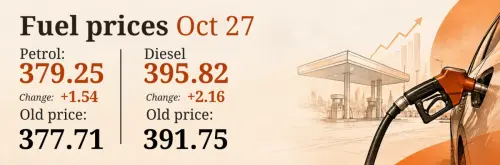
Oil supply disruptions due to the Iran war, along with Ukrainian attacks on Russia’s refineries, pushed the U.S. national average diesel price past $6 a gallon for the first time on Thursday, according to price tracker GasBuddy.
“Refined products, particularly diesel, are feeling a one-two punch right now,” said Tim Waterer, chief market analyst at KCM Trade.
“As long as both the Gulf shipping constraints and Russian refining outages remain in play, diesel and other refined products are likely to show a higher upside tendency than the broader crude market,” he added.
Commerzbank raised its year-end Brent crude forecast to $85 a barrel from $75, while increasing its diesel forecast to $1,200 a ton from $950 and its jet fuel forecast to $1,230 a ton from $980.






















Comments