



KARACHI: The Pakistan Business Forum (PBF) has urged Prime Minister Shehbaz Sharif to immediately reduce the petroleum levy by Rs60 per litre, saying the prevailing prices of petroleum products have become unaffordable for both consumers and the business community.
The business forum said inflation was continuing to rise while economic activity remained sluggish, urging the government’s economic team to move beyond a revenue-centric approach and focus on providing relief to households and businesses.
PBF Chief Organiser Ahmad Jawad said consumers were currently paying Rs106.15 per litre in taxes on petrol, describing the levy as an excessive burden in the prevailing economic circumstances.
“You cannot put everything on the people and the business community; the government must also bear some of the burden itself,” Jawad said.
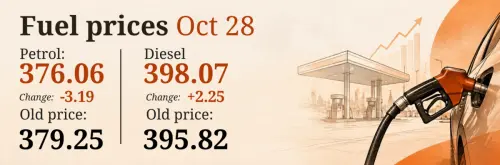
According to the PBF, the price of diesel has increased by Rs135 per litre over the past eight months, while petrol prices have risen by Rs114 per litre during the same period.
The forum said consumers and businesses were already struggling with high electricity costs and load-shedding, and argued that the government should focus on providing relief instead of imposing additional costs.
Jawad said tax revenues were increasing every year, but the economy was not showing a corresponding improvement.
“If tax revenue is rising but the economy is not moving forward, there must be something wrong,” he said, calling for a comprehensive review of the government’s economic policies.
The PBF said the government collected Rs1,567 billion through the petroleum levy during the last fiscal year, an increase of 29 per cent over fiscal year 2024-25.
The forum maintained that the government could accommodate a reduction in the petroleum levy by curtailing non-essential expenditure and adopting austerity measures.
It said lower petroleum prices would not only ease the financial burden on consumers but also reduce business costs, improve competitiveness and stimulate economic activity.
The PBF also expressed serious reservations over the government’s wheat policy, particularly the decision to abolish the wheat support price.
Jawad said the previous system had been functioning reasonably well, but the country was now being forced to import wheat, another burden on national exchequer.
He said the situation raised serious questions about the quality and consistency of policymaking. “It is beyond comprehension who is getting these wrong decisions made,” he said.
The PBF chief organiser called on the government to announce the wheat support price before November so that farmers could have clarity about the expected price in time and planning for the coming sowing season.
He said a timely announcement would help encourage wheat production, provide greater certainty to farmers and reduce the risk of Pakistan having to rely on wheat imports in the future.
Copyright Business Recorder, 2026
















Comments