



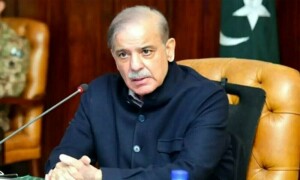
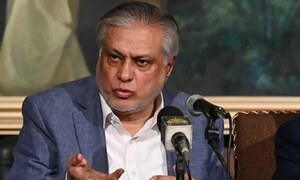
The Interior Minister stood at a podium designed for economic analysis and delivered a political statement. “The system has collapsed,” he declared, and he was correct, although not in the way he intended. He was identifying a symptom, but he did not acknowledge the underlying issue: decades of uncertainty about the distribution of power in the country and its limits.
This perspective is not new from this desk. In July 2023, I called for a “charter of power”, a framework to set boundaries, responsibilities, and red lines for every influence centre in the country. I argued that neither a Charter of Democracy nor a Charter of Economy can succeed without it. Back then, I stated that Pakistan’s instability stemmed not from a lack of political agreements but from the absence of a clear consensus on where authority lies, how much power is allocated, and for how long.
Now, three years later, a sitting Interior Minister has endorsed this diagnosis from within the system, yet the essential document remains missing.
Blaming politicians for institutional failures for seventy years only makes sense if you overlook how power has been distributed in this country for much of that time. It has been shared unevenly and often informally between elected governments and other influential centres. This is not a partisan point; senior members of the current coalition have called this arrangement a practical necessity rather than a formal constitutional design. This is not a confession of dominance by any one side; rather, it acknowledges the very gap I highlighted in 2023: power without a charter, influence without a clearly defined boundary.
That ambiguity carries tangible costs, which can be quantified. Investment cycles tend to pause not when governments change, but when the authority over decision-making becomes uncertain.
Investors are not guided by ideology; instead, they respond to ambiguity. For long-term projects to succeed, credible commitments are essential. When companies cannot be sure if current policies will endure future shifts in informal authority, they tend to delay investment, shorten their planning periods, or redirect capital. As a result, institutional uncertainty functions like an economic tax.
Each year this issue remains unresolved leads to missed investments, fewer jobs, and an increasing disconnect between citizens and the state. People no longer merely question policies; they also question who is making those decisions.
It is important to distinguish between an institution’s internal efficiency and its political role, as confusing the two serves no one. Clearly separating these questions reveals that a military’s political involvement in governance is entirely different from how it manages itself internally.
Internally, the military typically operates with fixed terms, insulated promotion boards, and no outside political influence on personnel and operations. This insulation mainly explains its organisational efficiency.
However, this does not justify any political role; in fact, it underscores that insulation from external interference is essential to effective functioning. Unfortunately, Pakistan’s civilian institutions have never been afforded such protection.
The tenure of the FBR chairman depends on which finance minister needs a compliant board at the time. NAB’s independence has been repeatedly legislated over the past decade, often aligning with those who benefit most.
The ECP’s rulings are challenged not on evidence but based on who controls the government machinery around it. Each institution has a clear mandate on paper, yet none are shielded from external interference in their daily operations. Stable institutions rely on consistent rules, not on the stability of governments.
The warning is clear: without resolving this fundamental ambiguity, any reform such as creating new provinces, a new NFC award, or a new administrative map will not solve the collapse; it will only shift it elsewhere.
Establishing a new province within the same unresolved power-sharing framework merely shifts the uncertainty to another capital. Similarly, adopting a new fiscal formula through the same process merely spreads the unresolved authority among more claimants. Effective reform begins with eliminating interference, not with redrawing geographical boundaries.
Election integrity begins with the essential act of voting, which is a citizen’s key interaction with the state. Public trust in institutions hinges on the government’s capacity to count votes accurately and transparently. This is not just theoretical; for example, in 2025, I proposed an ideal, tamper-proof election system in a fictional country: votes are finalised at the polling station, counted immediately, digitally signed, and uploaded instantly with timestamps and location data. This approach eliminates administrative steps where discretion or tampering could occur. Ultimately, the legitimacy of elections is fundamental to the credibility of all other institutions.
The final line of the piece summarises the main point: “We rebuilt trust by eliminating the need for trust.” This should serve as the benchmark for Pakistan’s next election; focusing not on convincing people to believe the outcome, but on ensuring the system makes scepticism irrelevant.
The mechanism, in sequence
Step one: it is immediate and non-negotiable. The next general election serves as the trust-repair mechanism, not just a formality to endure.
The ECP uploads Form 45 results from each polling station across the country, scanned and time-stamped, within two hours after polling ends. These are made publicly available on a portal accessible to any citizen, journalist, or party agent for cross-checking with their own copies. No constituency-level result is finalized until all individual polling-station forms are publicly accessible.
Step two: Within 18 months, pass legislation for a “Non-Interference Sequence.” This law would grant three institutions protections, such as fixed-term leadership, removal only with a two-thirds parliamentary vote for documented reasons, and a statutory ban on executive directives in operational matters. The order starts with ECP commissioners before the next delimitation, followed by the FBR’s board and chairman, and lastly, NAB’s prosecutorial leadership.
Step three involves a review in year three, where a joint parliamentary committee assesses each tranche based on a published scorecard. This review considers complaint-resolution and results-verification timelines for ECP, revenue-collection efficiency for FBR, and case-closure rates for NAB, with all metrics benchmarked against the baseline before insulation.
The irreversibility lock operates as follows: if insulation fails to significantly improve the targeted metric, a sunset clause reverts control. Conversely, if improvement occurs, a removal-only-by-supermajority clause ensures it remains permanently in place; mirroring the design that has safeguarded the central bank’s independence across different governments.
Trust between citizen and state cannot simply be restored through words. It must be rebuilt gradually, starting with the ballot. Let the ECP hold one election that everyone can trust without question. Allow institutions with clear mandates to stay protected, as the military’s internal structure already does.
Let them compete, fail, and improve publicly, as accountable institutions do in other contexts. This is the only meaningful reform question after Naqvi’s speech: not who broke the system, but whether Pakistan is finally ready to trust all its institutions to function properly.
This message is not targeted at any group. It is directed at the government, which must recognise that firefighting is not the same as governing, and that stepping back from interference does not signify weakness. It is also for the opposition, which must understand that calling for reform while relying on the same informal networks when in power is not true reform; it’s just rotation.
The message goes to the establishment, which must realise that maintaining organisational discipline within its ranks does not give it the right to extend that control into civilian areas where it was never meant to reach.
Finally, it is for citizens, who deserve one thing none of the above has yet provided: a state that can be trusted to count fairly, protect privacy, and operate transparently and evenly, without exceptions.
Pakistan doesn’t require another list of promises. What it needs is a Charter of Power. Unless authority is precisely defined, constitutionally limited, and institutionally honoured, all reforms will be short-lived, elections will be fiercely contested, and governments will focus on crisis management rather than state-building.
Copyright Business Recorder, 2026
The writer is a Professor of Economics at the Pakistan Institute of Development Economics (PIDE). He can be reached at: [email protected]

















Comments