


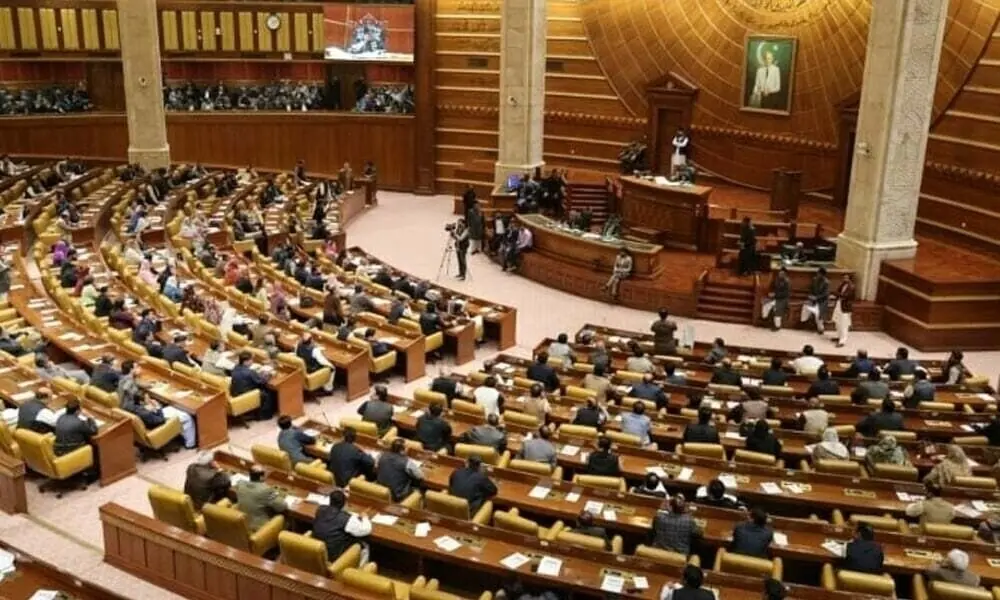
EDITORIAL: The Punjab Assembly’s passage of the Punjab Anti-Terrorism (Amendment) Bill 2026 should have produced a serious debate about how Pakistan protects judges, prosecutors, lawyers and witnesses in terrorism cases. Instead, the opposition responded with slogan-chanting, accusations of political victimization, and eventually a walkout.
That was unfortunate because whatever legitimate concerns individual provisions may raise, the central purpose of protecting participants in terrorism trials is both logical and rooted in Pakistan’s bitter experience of fighting militancy.
That experience is hardly distant history. Terrorism has claimed around 100,000 lives in Pakistan, devastated communities, attacked security personnel and civilians alike and repeatedly challenged the writ of the state. Yet prosecution has long been one of the weakest links in the counterterrorism chain.
Arresting suspected terrorists achieves little if witnesses are too frightened to testify, prosecutors fear for their families and judges must consider threats extending beyond themselves to their children.
There have been far too many instances over the years of people involved in terrorism cases facing intimidation and threats. In such an environment, conventional assumptions about open proceedings become difficult to maintain without adequate safeguards. Witnesses can withdraw, testimony can collapse, and cases can ultimately fail for want of evidence.
The resulting acquittals then reinforce the impression that the judicial system is incapable of successfully prosecuting terrorism cases, when part of the problem lies in the conditions under which justice is expected to operate.
The amendment’s provision allowing the identities of judges, prosecutors, defence lawyers, and witnesses to be concealed, along with measures such as voice alteration, must therefore be considered against this security reality.
Protecting those involved in exceptionally dangerous proceedings is a reasonable objective. It should, however, be implemented without compromising the constitutional guarantee of a fair trial.
Security and due process must coexist, and the legislation should contain sufficient safeguards to ensure that extraordinary protections cannot be converted into instruments of arbitrary prosecution.
This is where the opposition could have made a more useful contribution. Its concern about the proposed role of a Grade-20 designated official in advising the Lahore High Court chief justice on the classification of “special security cases”, for example, deserved proper examination.
Any arrangement that gives an executive official an important role in determining which cases enter an exceptional judicial framework should be scrutinised carefully for adequate checks, clearly defined criteria and protection against political misuse.
But scrutiny requires participation. Walking out of the Assembly after creating a rumpus surrendered precisely the parliamentary opportunity through which objectionable provisions could have been challenged, amendments proposed, and safeguards demanded.
Opposition parties exist partly to force governments to improve legislation. Simply branding an anti-terror law “draconian” and abandoning the legislative process does little to accomplish that responsibility, particularly when the security problem the law seeks to address is undeniable.
The government, for its part, should resist treating passage of the bill as the end of the matter. Extraordinary procedures inevitably require extraordinary safeguards.
Rules governing classification of cases, anonymity, access to evidence and the rights of defendants must be precise, transparent and subject to judicial oversight. The law must protect the justice system from terrorists without creating opportunities for governments to misuse counterterrorism powers against political opponents.
Pakistan has paid far too high a price for terrorism to pretend that judges, prosecutors and witnesses can always operate safely under ordinary conditions.
Punjab is therefore justified in strengthening their protection. The opposition would have served democracy better by staying in the House and strengthening the law rather than walking out while it was being made.
Copyright Business Recorder, 2026

























Comments