


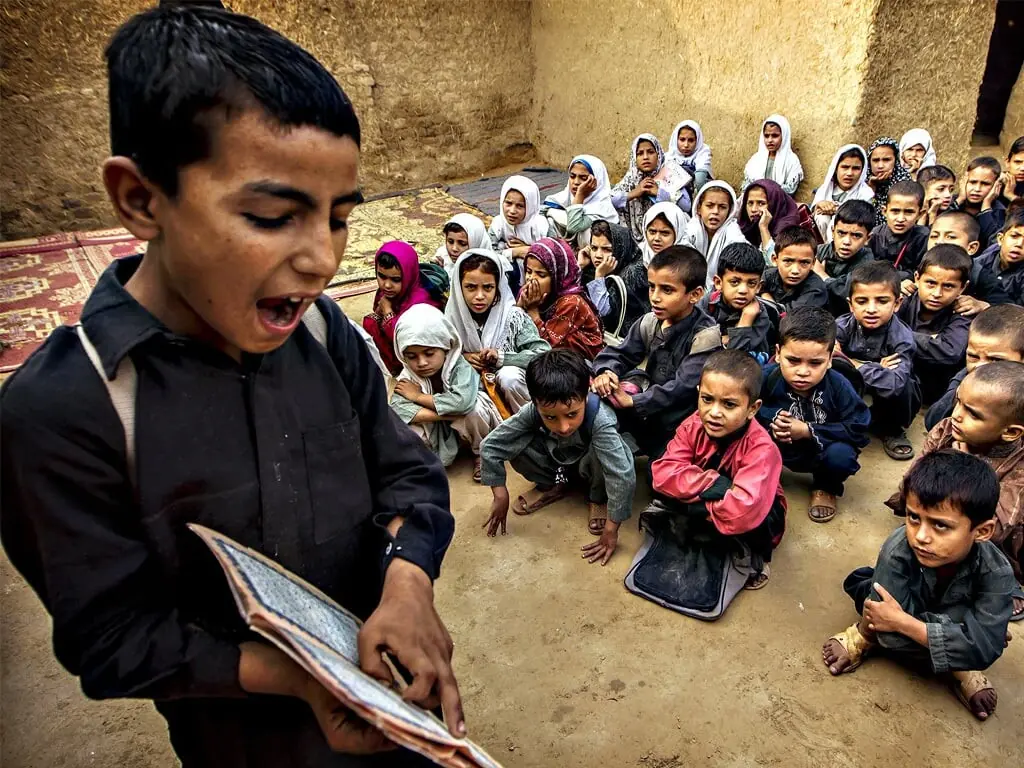
In today’s world, progress of a country depends not merely on economic resources but on human capital. If children are unhealthy and lack the capacity to learn, the process of development stalls. Learning and health poverty are two sides of the same issue that directly influence human capital formation.
Health poverty describes a situation where children lack access to adequate nutrition, healthcare facilities, and opportunities for early childhood development whereas learning poverty refers to a child’s inability to read and comprehend a simple text by the age of ten.
According to the World Bank, these two crises reinforce each other and collectively give rise to a “human capital crisis.”
Learning poverty in Pakistan stems from a complex array of interconnected factors. This includes significant contributions from broader systemic and socio-economic challenges such as access gaps, overall quality of educational provision, policy issues, and other factors including parental education level.
Pakistan faces educational crisis with millions of out-of-school children and persistently low learning levels.
Despite significant progress in increasing school enrolment rates, millions of children, especially in rural and marginalized areas, remain outside the education system. In 2022 around 77 percent of children were unable to read simple text by the time they reached the primary level.
Before COVID-19, 80 percent children at late primary age were no proficient in reading. About 32 percent of children are out of school, completely deprived of the learning process.
The underprivileged and marginalized learn little; according to Economic Survey 2024-25, poverty was 21.9 percent in 2018-19 which increased to 28.9 percent in 2024-25. Rural poverty increased from 28.2 percent to 36.2 percent, while urban poverty increased from 11 percent to 17.4 percent over the same period.
The first five years of a child’s life are not merely their childhood years; they lay the foundation for their entire life and during this period that the majority of a child’s brain development occurs.
The nutrition, healthcare, protection, and learning opportunities they receive shape their physical and mental capabilities and these capabilities subsequently influence their education, employment, and role in society. According to NNS-2018 (no recent data available), approximately 40 percent of children of Pakistan suffer from stunted growth. This goes beyond a health concern; it is a critical issue affecting human potential, productivity, and national development. Neglecting early maternal and children’s nutrition will have long-lasting consequences for society and for economy as a whole.
In terms of budget allocation, recent data indicates that Pakistan spends around 0.8-1 percent on health and around 1.9 percent of its GDP on education. In contrast, global standards (SDGs/UNESCO) recommend spending at least 3-5 percent on health and 4-6 percent of GDP on education; we are far from SDGs-3 and SDGs-4 targets.
The issue threatens country’s efforts to build human capital and achieve the target set under Sustainable Development Goals (SDGs). This implies that Pakistan is spending less than half of the recommended amount on education and is also clearly lagging in the health sector. Consequently, neither health outcomes nor learning outcomes are improving.
As a matter of policy, Pakistan should increase its budget allocation in phases for instance, raising education spending to 4 percent and health spending to at least 2-3 percent of GDP over the next 3-5 years and direct these additional funds specifically toward school nutrition, early childhood development, and primary education.
Global experiences indicate that as health poverty declines, learning poverty also begins to decrease.
When children have access to better nutrition, clean water, vaccinations, and basic healthcare facilities, their physical and mental development improves and this improves the learning ability. For instance, school meal programmes and health interventions in India, Bangladesh and Nepal not only improved children’s health but also led to improvements in their learning outcomes.
The reality is that pursuing both (health and learning) simultaneously is more effective; however, focusing heavily on health particularly nutrition and early childhood during the initial stages can produce better results. The investment in health has an immediate impact on learning outcomes, whereas the effects of investment in education tend to become visible over the medium to long term.
In other words, health and learning are interconnected functioning like a “chain”. Improved health leads to better school attendance and increased attentiveness, thereby accelerating the pace of learning and reducing learning poverty.
Unless children are provided with nutritious food, basic healthcare facilities, and support for early development, the impact of educational reforms will remain limited. It is essential not to view education and health in isolation but to address them through a unified strategy, enabling both issues to be mitigated simultaneously.
The need of the hour is to focus on health and education together but begin with children’s health and nutrition, so that the foundation for learning is automatically strengthened.
Address education and health through an integrated strategy, increase investment in the early years, learn from successful regional models and implement them locally. This is the path that can lead the country toward sustainable development and robust human capital. Sustained commitment is essential for the country to break the cycle of learning poverty and move toward a more promising future.
Copyright Business Recorder, 2026
The writer is a Senior Research Economist at the Centre for Sustainable Futures (CSF) at PIDE. He can be reached at Email: [email protected]

















Comments