


Monetising Pakistan’s mineral wealth
Unlocking a country's mineral potential, especially in Pakistan's Tethyan Metallogenic Belt, demands substantial capital, advanced technology, and systematic exploration to attract investment and maximize commercial value.
- Mineral deposit validation stages and monetization strategies.
- Ore beneficiation and upgradation processes.
- Case studies of Saindak and Reko Diq projects.
- Policy recommendations for mineral sector development.
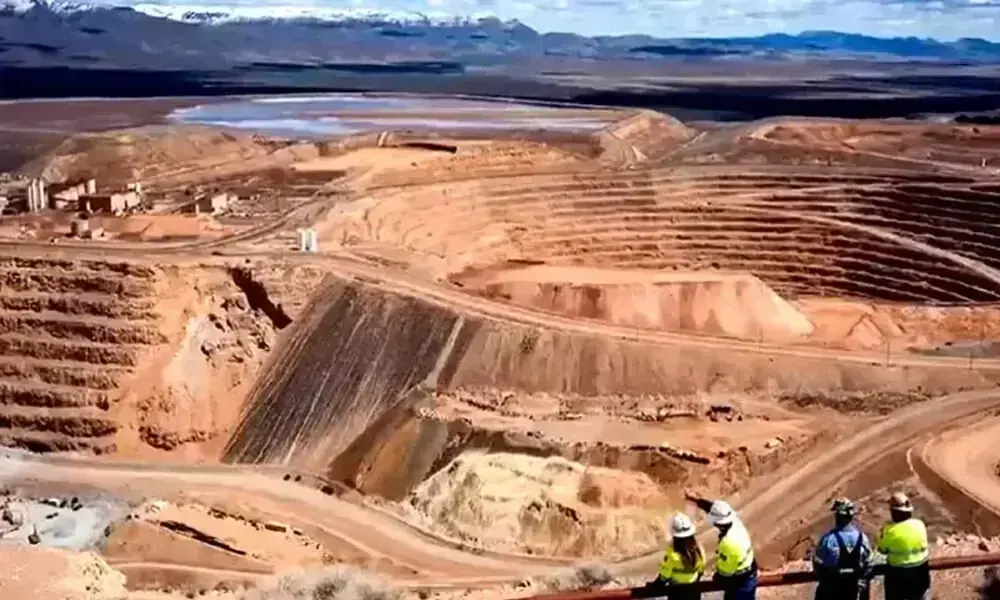
A country’s natural resources encompass its airwaves, rivers and streams, and mineral deposits. The first can be utilized to provide bandwidth and telecommunication services, the second to store water and generate electricity, and the last to provide valuable raw materials for industry.
None of these resources can be tapped without advanced technology, systematic exploration, and substantial capital investment.
Without capital, these resources remain distant wonders. The key prerequisites for developing mineral resources, in order of significance, are accessibility, size of the deposit, and ore grade.
The deposit must be located where extracted minerals can be efficiently transported in volume for processing and subsequently to market. The size of the deposit is critical to justifying an industrial-scale operation, while the grade ensures its economic viability.
Mineral deposits pass through distinct stages of geological and economic validation:
1.Inferred/indicated resources: Initial estimates based on broad geological sampling, remote data, and theoretical assessments that establish preliminary resource indications and continuity.
-
Estimated reserves: More detailed subsurface assessments confirming the reasonable financial and technical viability of potential deposits.
-
Proven reserves: The final stage of mapping the underground deposit through high-intensity deep drilling, core sample extraction, and detailed testing. This stage adds real commercial value, allowing a comprehensive, optimized mining plan—whether open-pit or underground—to be finalized.
Once reserves are proven, the remaining financial components can be calculated: capital expenditure, mining costs, extraction, loading, and logistics. Modern industrial mining relies heavily on scale; top-tier hydraulic excavators can lift close to 100 metric tons per grab, and ultra-class haul trucks can carry up to 500 metric tons.
With a fully evaluated resource, a government or owner can choose the monetization model: partnering with or selling rights to major international mining companies that invest heavy capital in exchange for royalties per ton or a profit-sharing structure.
Beneficiation and upgradation
Depending on its grade, raw ore must undergo beneficiation to increase its metallic content percentage. It is generally easiest and cheapest to upgrade ore from lower percentages (e.g., 10 percent) to intermediate levels (50–60 percent) through mechanical methods such as crushing, grinding, flotation, and magnetic separation. Conversely, high-end purity upgradation (from 90 percent to 99.9 percent) usually entails costly chemical refining.
Regardless of the processing path chosen, transactions rely on independent, rigorous testing services at critical custody transfer points: pre-shipment at the load port, at the discharge port, and upon delivery to the final processing facility. This framework fairly protects the interests of all stakeholders involved.
For instance, copper ore with a 1 percent metal content is valued relative to the final market price of 99 percent pure copper, factoring in deductions for transport, processing, wastage, overheads, and profit margins. Given economic efficiencies, it is often more viable to perform initial beneficiation locally within Pakistan and ship the concentrated intermediate product to specialist smelters abroad, such as in China. This ensures each stakeholder earns a profit on the specific phase of value addition they undertake, while saving Pakistan from building expensive processing facilities that would struggle to compete with global specialists processing millions of tons from worldwide sources.
Historical case studies: Saindak and Reko Diq
The history of mineral exploration in Pakistan’s Chagai mineral belt demonstrates that commercial exploitation is a long-term, capital-intensive endeavour spanning from initial discovery to the final market product.
• The Saindak deposit: Initial regional frameworks trace back to the mid-1950s, marked by the very first aerial photography initiatives covering Baluchistan, funded through a Canadian grant under the Colombo Plan. Using these foundational Canadian aerial maps as a guide, the Geological Survey of Pakistan (GSP) took the lead on the ground, officially identifying copper mineralization at Saindak in 1961 and carrying out early exploration, testing, and estimation. Subsequent joint deep-core drilling with the assistance of the United States Geological Survey (USGS) in the early 1970s confirmed the extent of the ore bodies, eventually leading to the establishment of the Saindak Copper-Gold Project.
• The Reko Diq complex: Reko Diq was a logical sequence to Saindak. Continuing to explore the Tethyan Metallogenic Belt, and building on regional geological frameworks, GSP geologists identified outcropping copper mineralization around the ancient Reko Diq volcanic center in 1978. Lacking deep-drilling technology at the time, the true scale of the deposit remained hidden until 1993, when the Baluchistan Development Authority (BDA) signed the Chagai Hills Exploration Joint Venture Agreement (CHEJVA) with Australian mining giant BHP. BHP’s advanced exploration pinpointed 14 massive porphyry deposits. The project later transitioned through the Tethyan Copper Company (a joint venture of Barrick Gold and Antofagasta), ultimately revealing a super-giant deposit holding billions of tons of mineralized rock.
Geologically, these deposits sit within the Tethyan Metallogenic Belt—one of the longest and most mineral-rich structures on Earth, stretching 12,000 kilometers from south-eastern Europe, through Turkey, Iran, and Pakistan, into Southeast Asia and Indonesia.
Policy recommendations
Local, small-scale mining that relies on surface traces and ad-hoc digging rarely results in sustainable industrial deposits and frequently leads to structural failure or severe environmental hazards.
Pakistan has been endowed with a part of the mineral rich Tethyan Metallogenic Belt. This gives us a God-given natural focus point, and concentrating on this economizes our effort and gives us a natural advantage. Further study and exploration of this belt are bound to yield early and positive results.
Near-term commercial focus should prioritize commodities capable of yielding faster economic returns: copper, chrome, lead-zinc, salt, and bauxite. While rare earth elements (“REE”) have taken center stage globally and represent a major talking point for Pakistan, current data maps out only geochemical anomalies rather than fully delineated, mineable ore bodies. Virtually none of these REE deposits are currently at a commercial or bankable stage.
To unlock Pakistan’s true mineral potential, federal and provincial governments should prioritize strengthening the Geological Survey of Pakistan (“GSP”). A sustainable and long-term funding plan must be developed to equip the GSP with modern technologies, including advanced remote-sensing technologies, and deep-core drilling capabilities which will enable the State to discover, estimate, and prove mineral assets to a bankable standard, significantly de-risking them before marketing them to serious local and international investors.
Copyright Business Recorder, 2026






















Comments