


Training yesterday’s workers for tomorrow’s jobs
Pakistan's new youth employment policy addresses rising global unemployment and AI's impact, requiring a fundamental rethink of education and skills to leverage its demographic dividend.
- Global youth unemployment and AI's disruption of traditional jobs.
- Pakistan's demographic challenges and the need for human capital development.
- Fundamental reforms in education and vocational training for future skills.
- Private sector collaboration in shaping curricula and providing apprenticeships.
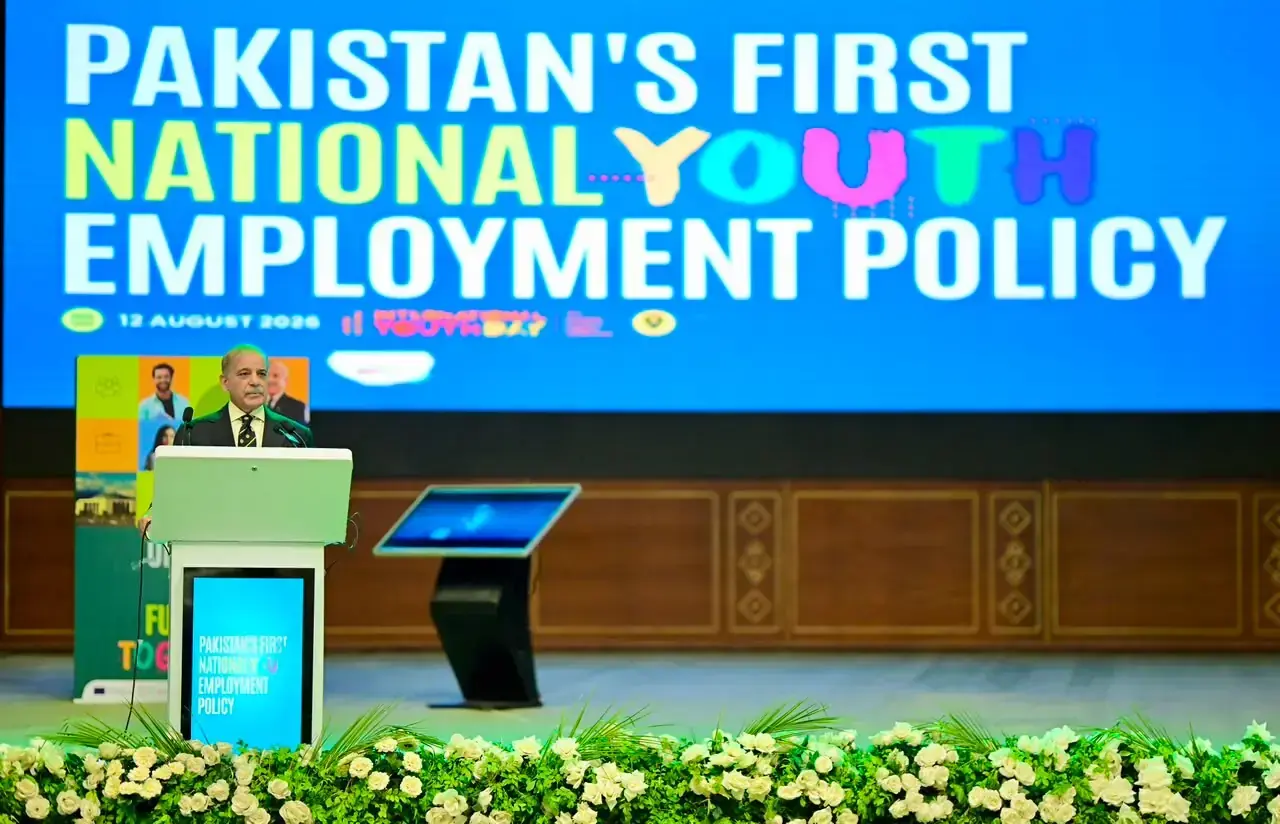
EDITORIAL: Pakistan’s launch of its first National Youth Employment Policy could hardly have come at a more consequential moment. On the same day, the International Labour Organization reported that global youth unemployment rose to 12.4 percent in 2025, leaving 67 million people aged 15 to 24 without work, while more than 257 million were neither employed nor in education or training.
More importantly, the ILO has drawn attention to a structural change that governments can no longer afford to ignore: traditional entry-level jobs are disappearing just as artificial intelligence and other technologies begin transforming the skills employers require.
This is where good data becomes indispensable. Governments cannot prepare young people for a labour market they do not properly understand.
The ILO is right to identify the changing nature of youth employment and the emerging risks associated with AI, even while cautioning that it is too early to establish a direct causal relationship between AI and rising unemployment.
Office and administrative positions, sales jobs and manufacturing roles that traditionally provided young workers with their first foothold in employment are already declining. Pakistan must know precisely where its own jobs are disappearing, where new ones are emerging and what skills those new jobs require.
For Pakistan, the warning could scarcely be more serious. The country’s enormous youth population is routinely described as a potential demographic dividend, but demographics generate no dividend automatically.
A young population becomes an economic advantage only when it is healthy, educated, skilled and productively employed. Pakistan continues to struggle with widespread child malnutrition and stunting, high poverty and illiteracy, rapid population growth and an enormous out-of-school population.
Without radical improvement in human capital, the celebrated youth bulge can become a source of unemployment, social frustration and economic instability instead.
The government’s new employment policy therefore deserves support, particularly its emphasis on technology, skills and greater female participation. Sending selected students abroad for specialised training, encouraging start-ups and expanding access to education can all contribute.
But the scale of Pakistan’s problem is far greater than any collection of scholarships, laptops, Chromebooks or new schools can address. Such programmes may benefit thousands or even hundreds of thousands. Pakistan must prepare millions of young people for a labour market being transformed before their eyes.
That requires a fundamental rethink of education and skills policy. Pakistan urgently needs a nationwide network of properly equipped polytechnic and vocational institutes providing market-relevant training in areas such as electrical and mechanical trades, industrial technology, electronics, coding, digital services, automation and other employable skills.
AI literacy should increasingly become part of that system, teaching young people how to work with emerging technologies rather than leaving them to discover too late that technology has displaced the jobs for which they were trained.
The private sector must be deeply involved as well. Training programmes designed exclusively by government bureaucracies risk producing qualifications for which employers have little demand.
Industry should help determine curricula, identify emerging skill shortages and provide apprenticeships so that technical education remains connected to actual employment. Labour-market data must constantly feed back into this system as technology changes the nature of work.
Prime Minister Shehbaz Sharif is therefore correct to place youth employment near the centre of the policy agenda. But the government must recognise the scale of what it is confronting. Pakistan is attempting to educate and employ one of the largest young populations in the world just as AI begins disrupting the traditional route from education into employment.
Another generation cannot be prepared for yesterday’s economy and then blamed for failing to find tomorrow’s jobs. The National Youth Employment Policy will matter only if it becomes the beginning of a much larger human-capital emergency programme. Pakistan’s demographic clock is already ticking. Technology has simply made it tick faster.
Copyright Business Recorder, 2026






















Comments