


RBI's Mixed Messages
- India's central bank faces market confusion over its communication, while Mumbai sees a major food hygiene crackdown
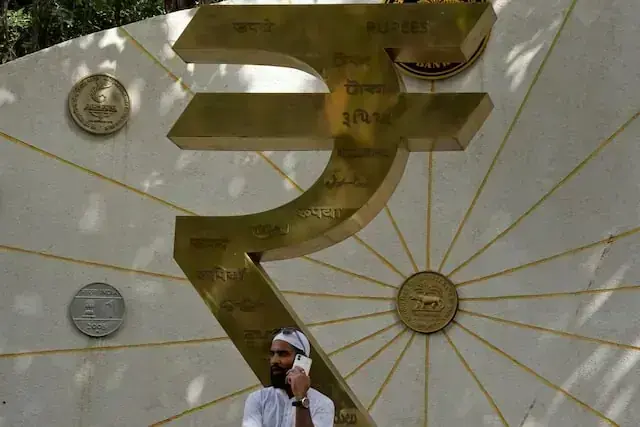
Two recent moves from the Indian central bank have left investors scratching their heads over which signals matter and which do not. Does the Reserve Bank of India need to rethink the ways it communicates? That’s our focus this week.
And, a crackdown on food quality in the Indian financial capital Mumbai engulfs large foreign and local brands. Scroll down for more on that.
WORDS VS. ACTIONS
“If I seem unduly clear to you, you probably misunderstood what I said.” Alan Greenspan’s famous quip about central bank communication might be getting a fresh outing in India.
The Reserve Bank of India has found itself under fire at least twice in recent weeks over its messaging.
The first episode involved a dollar deposit scheme introduced in June to attract foreign currency inflows and support a rupee that had slipped to record lows. The RBI shut the scheme a month early, just a week after Governor Sanjay Malhotra was asked about a potential early closure and said no such proposal was on the table “as of now”.
Because the RBI never specified how much money it hoped to attract or how it viewed the costs attached to it, markets assumed the scheme would run its full course. The surprise closure, probably a result of stronger-than-expected inflows, nevertheless rattled currency and bond markets.
While the RBI could not have stated an explicit target, “it would have helped if the RBI were more explicit about costs and attendant liquidity and repayment implications to balance expectations,” said Dhiraj Nim, economist and FX strategist at ANZ Research.
Days later, investors were wrong-footed again when minutes from the RBI’s August rate-setting meeting struck a notably less dovish tone than the policy itself.
Union Bank of India taps dollar debt market after 12-year hiatus
The meeting had been read to suggest the panel was in no hurry to raise rates. Policymakers said inflation pressures were largely supply-driven and showed “little” sign of broadening, prompting analysts to rein in rate-hike expectations.
Yet the minutes suggested policymakers were already contemplating tighter policy. The rise in average headline and core inflation “may suggest a recalibration of policy rate,” Malhotra said in the minutes, in a far clearer signal of tighter monetary policy than was offered at the time of the rate decision.
“There is a clear disconnect,” State Bank of India chief economist Soumya Kanti Ghosh wrote, pointing to both the deposit-window surprise and differences between the policy statement, the press conference following the decision and meeting minutes.
The RBI did not reply to Reuters’ emailed request for comment.
COMMUNICATING THROUGH UNCERTAINTY
To be fair, the RBI is hardly alone. Ghosh described central banks globally as navigating a “communication quagmire” in an unusually uncertain environment.
The U.S. Federal Reserve’s new chairman Kevin Warsh has largely shunned forward guidance and opted not to participate in the “dot plot” that investors use to gauge future interest rates. The retreat from guidance has vexed markets and may be an “own goal,” Breakingviews columnist Felix Martin recently argued.
Yes Bank, two other peers withdraw dollar debt plan, bankers say
Hints of a similar philosophy surfaced in comments from RBI Executive Director Indranil Bhattacharyya in the August meeting minutes. Rather than offering “forward guidance”, he said, the central bank is providing “framework guidance”. Understanding the RBI’s inflation framework and policy “reaction function”, he argued, offers a better clue to future decisions.
The challenge is that India’s framework leaves room for interpretation. While the RBI targets 4% inflation, it is allowed a tolerance band of 2% to 6% to accommodate food and fuel shocks given the dominance of these items in India’s inflation basket. Markets therefore struggle to judge whether policymakers would react only when inflation threatens the upper end of that band in times of supply shocks, or much earlier.
For now, Bhattacharyya’s comments may offer the clearest clue. Noting that 69% of inflation-weighted items are currently rising by less than 4%, he argued that policymakers “must look out for the extent of generalisation and risk of inflation expectations getting unanchored before contemplating any rate hike”.
FOOD QUALITY CRACKDOWN
The food safety chief of the western Indian state of Maharashtra has intensified a crackdown on the food industry over poor hygiene.
A number of well-known local eateries have been asked to stop operations and permits of a dozen warehouses of Indian grocery giants Eternal, Swiggy and Zepto have been suspended after inspectors found cockroaches crawling over rusted and dirty food storage racks.
Read here for more on the maverick food safety chief Tukaram Mundhe.
India’s Federal Bank latest lender to tap dollar debt market via GIFT City, bankers say
The national food safety regulator is also investigating the alcohol industry, inspecting a Pernod Ricard factory and pushing for better hygiene, Reuters’ Aditya Kalra reported. Read here for more.
The regulator also banned several whisky and rum brands made by the Indian unit of Diageo and Inbrew Beverages after discovering the companies had been adding flavourings to achieve the drinks’ distinctive aroma and taste rather than the age-old natural process. Diageo later said it would reformulate some of its popular brands.
Russia’s share of India’s oil imports has surged to a record high, driven by disruptions to Middle East supply triggered by the Iran war. India’s Russian crude buying faces uncertainty after legislation passed by the U.S. Senate this month to impose tariffs of 100% on buyers of Russian oil, Reuters’ Nidhi Verma reports.
Russian Urals crude delivered to India has flipped to a premium because of the strong demand.



















Comments