


Mir Raza death: SHC forms judicial commission despite family’s opposition
- Court extends Mir Raza’s business partner’s interim bail till Sept 1
Mir Raza Ali's family is challenging the investigation into his death, opposing a judicial commission and demanding an empowered Joint Investigation Team due to concerns over evidence handling and police negligence.
- Family's opposition to a judicial commission.
- Demand for an empowered Joint Investigation Team (JIT).
- Concerns over police investigation and evidence preservation.
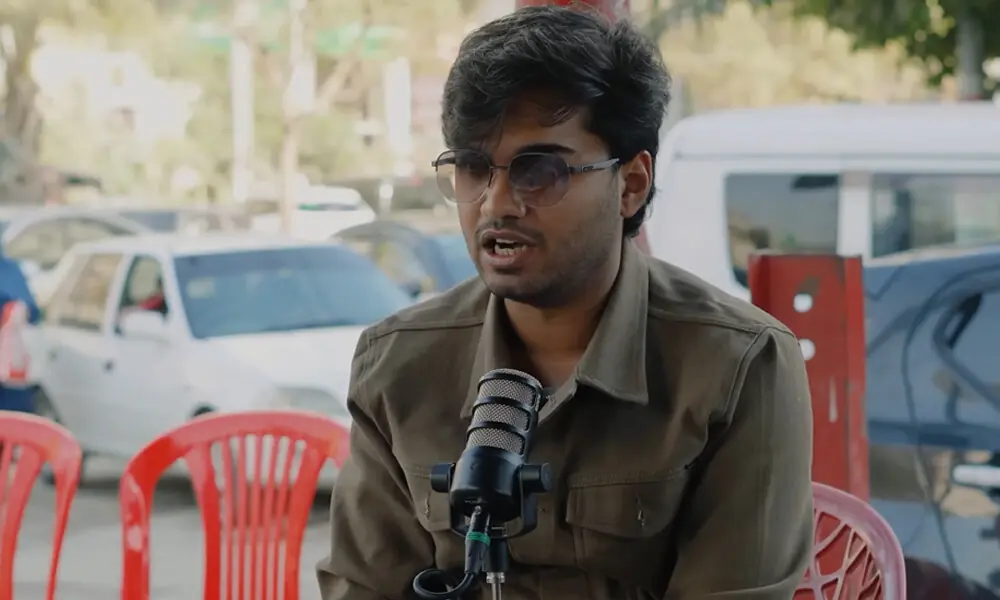
The Sindh High Court (SHC) on Monday constituted a judicial commission to investigate the killing of young Karachi businessman Mir Raza, Aaj News reported.
SHC Justice Umar Sial has been appointed head of the judicial commission, with the chief justice of the Sindh High Court issuing a notification regarding his nomination.
The SHC Directorate has also informed the Sindh Home Department about the formation of the judicial commission.
Earlier in the day, Mir Raza’s family had moved the Sindh High Court, opposing the formation of a judicial commission and seeking the constitution of a joint investigation team (JIT) to probe his killing.
The family’s petition, seeking the formation of an empowered JIT, was admitted for hearing by the court.
The latest development comes as Mir Raza’s family on Monday approached high court, opposing the formation of a judicial commission and seeking the constitution of an empowered JIT to probe his death.
Speaking to the media outside the SHC, the family’s lawyer, Jibran Nasir, expressed concerns over the progress of the investigation and the preservation of crucial evidence by the police.
Jibran said doubts had surrounded the investigation from the outset, raising questions not only about geofencing but also the retrieval and preservation of CCTV footage linked to the case.
He said the family did not support the formation of a judicial commission, arguing that such a commission could only present its findings, whereas a thorough investigation should be carried out by law enforcement and investigative agencies.
The lawyer questioned why crucial evidence was allegedly lost during the initial stage of the investigation and why no action had been taken against officials responsible for the alleged negligence.
Jibran further said that the government’s decision to nominate a high court judge for the proposed judicial commission had not yet been formally shared with the victim’s family. He added that a letter had also been written to the Sindh chief minister regarding the matter.
According to Jibran, a judicial commission could only be constituted in cases where the relevant committee had made such a recommendation. He said the family had instead requested the formation of an empowered JIT comprising representatives of various security and intelligence agencies.
Expressing dissatisfaction over the investigation, Jibran said the investigating officers had appeared before a magistrate but had neither nominated any suspect nor indicated that a supplementary challan was likely to be submitted at this stage.
He said the family should also be informed if any legal or departmental action was being taken against members of the previous investigation team, as it remained unclear whether they had been questioned or held accountable.
Business partner’s interim bail extended
Meanwhile, a Karachi City Court extended the interim pre-arrest bail of Mir Raza’s business partner, Muhammad Ahmed, until September 1.
Ahmed and members of Mir Raza’s family appeared before the court along with their lawyers during the hearing.
Ahmed’s counsel, Khalid Mumtaz Advocate, argued that business partners were often easy targets in criminal cases and could be falsely implicated. He said his client had repeatedly been summoned to the police station and had sought interim bail for protection against possible arrest and harassment.
However, Jibran, representing Mir Raza’s father, rejected the claim, telling the court that Ahmed had only been summoned to join the investigation and was not facing imminent arrest.
He argued that Ahmed was frequently with Mir Raza and, therefore, his participation in the investigation was important to help establish the facts of the case.
Jibran further contended that, considering the circumstances surrounding the incident and the relationship between the two men, Ahmed was not entitled to bail in the case.
After hearing arguments from both sides, the court extended Ahmed’s interim bail until September 1.
The court also directed him to fully cooperate with the police investigation and appear at the police station whenever required to join the probe. He was further barred from leaving the city until the next hearing.


























Comments