


Importing cotton, exporting aquifers: the arithmetic of surrender
Pakistan's policy choices prioritize water-intensive sugar exports over its competitive textile industry, leading to raw cotton imports, aquifer depletion, and an unsustainable economic model.
- Pakistan's shift from cotton production to importing raw cotton.
- "Hydrological money laundering" through water-intensive textile processing.
- Policy choices favoring water-intensive sugar cultivation over cotton.
- Economic and environmental costs of aquifer depletion and proposed reforms.
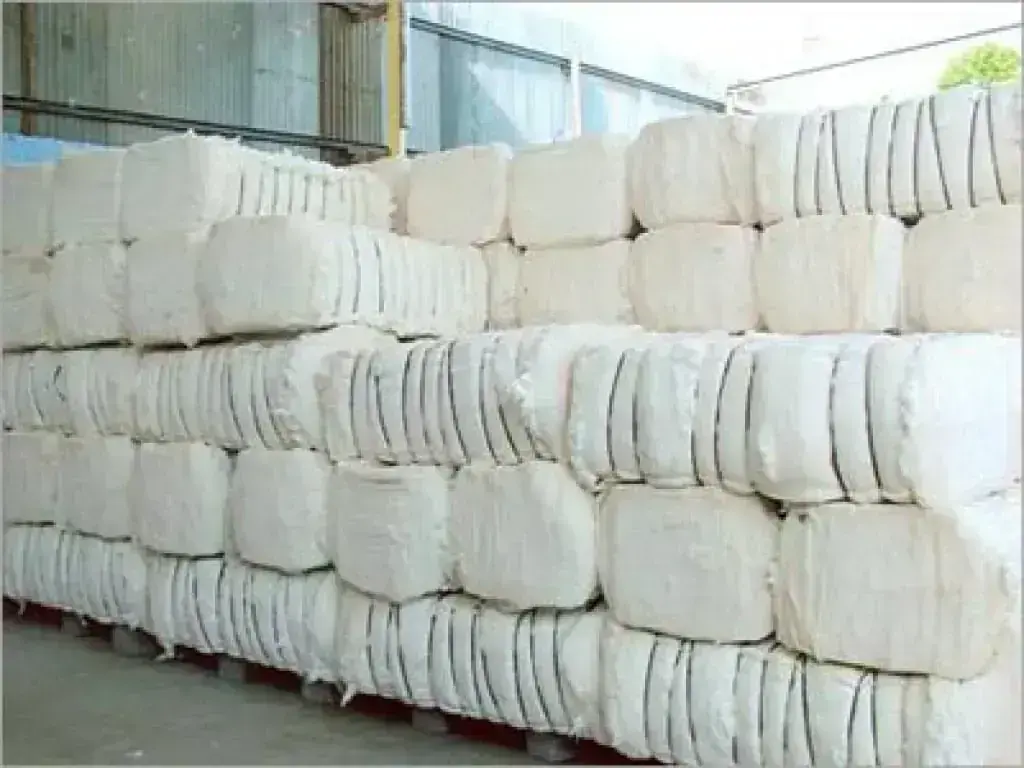
Pakistan imports raw cotton. Let that sentence settle before reading further.
A country that once stood among the world’s leading cotton producers, that built its entire industrial base on domestic white gold, now buys its primary raw material from abroad. It imports cotton. This imported cotton is then processed using domestic groundwater, dyed with domestic groundwater, finished with domestic groundwater, and exported back as a triumph of industry. Every container of yarn, denim, and ready-made garments leaving Karachi Port carries thousands of litres of Punjab’s and Sindh’s aquifer water, paid for by the water table beneath our fields.
This is not a supply chain. It is hydrological “money laundering”. We import someone else’s raw cotton, launder it through our depleting aquifers, and book the foreign exchange as a national victory. The industry adapted by outsourcing the cultivation to foreign farmers and keeping the processing water problem at home. The laundering is structural, not individual.
And at the same moment, the Pakistan Sugar Mills Association is lobbying the federal government for permission to export 600,000 tonnes of surplus sugar. The arithmetic is simple enough for a child, yet too complex for a ministry to acknowledge: we are importing the raw material of our largest industry so that we can export the surplus of a crop that is draining our aquifers. This is not market failure. This is policy choice.
The ledger
At its peak in 2004-05, Pakistan harvested 14.6 million bales of cotton, and the crop underwrote close to 60 per cent of export earnings. That foundation has been dismantled. Nationally, production fell to a disastrous 4.91 million bales in the 2022-23 season, a 66 per cent collapse. In Punjab alone, acreage shrank from 5.5 million acres in 2010 to 2.6 million acres by 2025. Over 50,000 power looms fell silent in Faisalabad. Ginning units collapsed from approximately 1,200 to 400 nationally. The infrastructure of the industry remains. The raw material no longer does.
The standard explanation blames the farmer: this treats the cultivator as the author of the collapse. The farmer is merely the executor of a bad equation. The state wrote the numbers.
The invisible subsidy
Why did cotton retreat at the same time that sugarcane expanded? As I detailed in the preceding piece on sugarcane, Punjab’s flat-rate abiana prices canal water at 35 paisa per cubic metre against a scarcity value of roughly Rs3, while an estimated 1.5 million tubewells pump groundwater at near-zero marginal cost, unmetered and unregulated. The crop that demands the most water receives the largest hidden subsidy because the aquifer is never invoiced.
Sugarcane enjoys a government-announced support price, advance payments from mills, and a political lobby of extraordinary density. Cotton faces market-determined prices and a fragmented ginning sector with no unified voice. The 2020 Sugar Inquiry Commission, constituted under the Commissions of Inquiry Act, documented nearly
Rs29 billion in federal and provincial subsidies granted to the sugar industry over five years. Cotton growers received no comparable incentive.
The farmer in Rahimyar Khan did not miscalculate. He solved the equation the state gave him. The answer was sugarcane.
The water arithmetic
The numbers are unambiguous. A kharif cotton plus rabi wheat rotation requires roughly 4.85 million litres of water per acre. All-year sugarcane requires roughly 7.28 million litres per acre, a 50 per cent increase in water consumption. Multiply that gap across the 2.9 million acres of cotton lost in Punjab, and the hydrological arithmetic becomes staggering. Pakistan did not merely change crops. It increased the burden on the Indus Basin by billions of litres annually on every acre converted.
In Rahimyar Khan, the heart of the former cotton belt, the water table fell 10.34 feet between 2004 and 2024. The aquifer depletes invisibly; the harvest cash arrives visibly. This asymmetry is what makes liquidation feel like prosperity.
The industrial miscalculation
But the most devastating figure is not per-acre water use. It is foreign exchange earned per cubic metre of water consumed.
The textile sector earns approximately USD 17.9 billion annually. Sugar’s entire annual export earnings amount to a few hundred million dollars. The textile value chain earns roughly 50 times more foreign exchange per cubic metre of water than sugar. Yet we have structured our water pricing, our subsidy allocation, and our political attention to expand the smaller industry at the expense of the larger one.
We did not trade textile products for sugar. We traded a globally competitive industry for a hydrological Ponzi scheme. The arithmetic is not wrong by accident. It is wrong by design.
The anatomy of surrender
A nation surrendering its agricultural sovereignty does not do so in a single act. It does so through a series of small, rational policy choices that accumulate into an irrational whole. The flat-rate abiana. The support price. The solar tubewell. Each decision, viewed in isolation, has a political constituency. Viewed together, they form a noose.
As my column documented in the sugar piece, the Competition Commission’s record Rs44 billion penalty on mills and the PSMA for cartelization was set aside by the Supreme Court in September 2025 on procedural grounds. Recent deregulation, abolishing support prices and liberalising sugar trade, removes the state from sugar pricing while leaving the industry’s largest implicit subsidy, cheap and unmetered water, untouched. It simply shifts the burden from the federal budget to the aquifer.
Three reforms
First, restore crop-differentiated abiana and move progressively toward volumetric pricing. The thirstiest crops must face the true scarcity cost of the water they consume.
Second, zone cultivation and revive the seed. Discourage sugarcane expansion across critically stressed aquifers. Break the cartelised seed-approval regime and introduce climate-resilient cotton varieties, paired with transition capital and crop insurance for farmers shifting back.
Third, align industrial policy with hydrology. Condition sugar export permissions on measurable water-efficiency targets. Tie any sugar export approval to the clearance of farmer arrears and a hydrological audit of the cane belt. A mill that cannot pay its growers should not export.
The two invoices
Every sack of sugar that leaves a Pakistani mill carries two invoices. One is paid by the foreign buyer. The second is charged silently to an aquifer that cannot send a bill. But the bill for the cotton we stopped growing is not silent. It arrives every month, denominated in dollars, at our spinning mills. It cost us over USD 2 billion last year. Furthermore, it will cost us more next year. The aquifer’s invoice is deferred, invisible, payable by the next generation. The cotton import invoice is immediate, loud, and payable now. We have managed to make both worse simultaneously.
Pakistan’s textile industry is the only globally competitive industrial sector this country has ever built. It survived partition, wars, sanctions, and global recessions. It will not survive the aquifer.
The arithmetic is not complicated. It is suicidal. And it is a choice. We can stop making it.
Copyright Business Recorder, 2026
The writer is a former Minister of Irrigation, Punjab; a three-time Member of the Punjab Provincial Assembly; a former Member of the National Assembly; a former Senator; and currently engaged with UNDP as Senior Water Sector Expert






















Comments