


From strategic success to economic prosperity: Pakistan’s next chapter
Pakistan's recent diplomatic and strategic achievements, including the Makkah Joint Defence Agreement, position it to now focus on translating these successes into tangible economic prosperity and growth.
- Makkah Joint Defence Agreement with Saudi Arabia and Türkiye.
- Translating diplomatic and strategic gains into economic prosperity.
- Attracting foreign investment and expanding international trade.
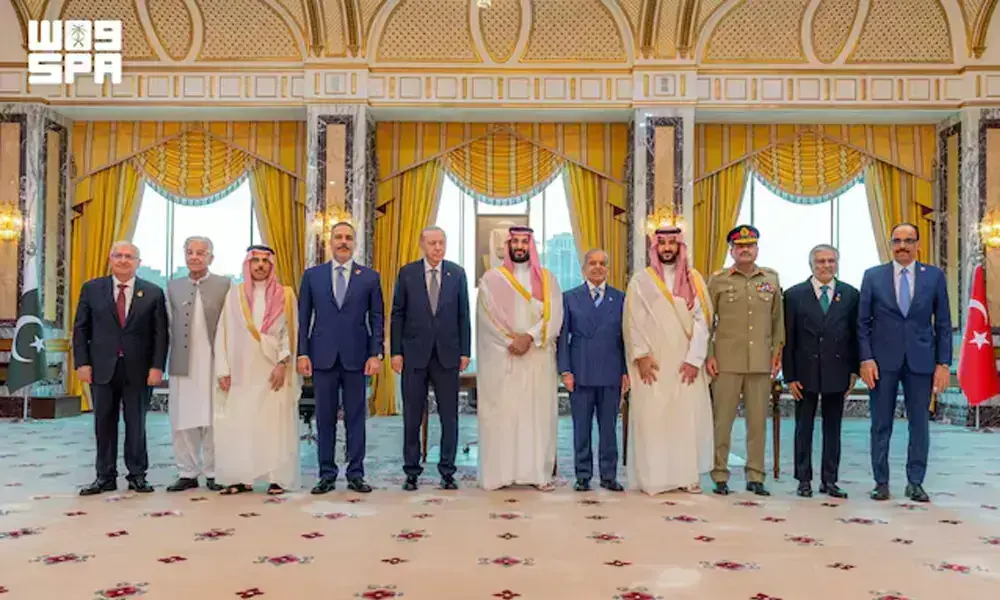
Pakistan has witnessed a remarkable period of diplomatic and strategic developments over the past three months. These achievements have enhanced the country’s standing in the international community and demonstrated Pakistan’s growing relevance in regional and global affairs.
Pakistan’s diplomatic efforts toward reducing tensions and promoting dialogue in the Middle East have contributed to a broader international discourse on peace, stability and responsible diplomacy. Such initiatives have not only strengthened Pakistan’s image as a country committed to peace, but have also opened new opportunities for stronger diplomatic and economic engagement with the international community.
A particularly significant development has been the Makkah Joint Defence Agreement involving Pakistan, Saudi Arabia and Türkiye. This landmark understanding represents an important step towards enhanced strategic cooperation, mutual security, collective responsibility and regional stability. At a time when the international community faces complex and evolving security challenges, closer cooperation among responsible states can play an important role in promoting peace, stability and prosperity.
I extend my heartfelt congratulations to the Prime Minister of the Islamic Republic of Pakistan, the Chief of Army Staff, and the Director General of Inter-Services Intelligence (ISI) on this important development. I commend the leadership of Pakistan for its role in this historic initiative and convey my best wishes for the continued strengthening of the bonds of friendship and cooperation among Pakistan, Saudi Arabia and Türkiye.
While Pakistan’s recent diplomatic and strategic achievements are significant, the next and most important chapter must be economic advancement. Strategic importance and diplomatic influence must now be translated into tangible economic opportunities for the people of Pakistan. The country needs to capitalise on its strengthened relationships and growing regional importance by attracting investment, expanding trade, creating employment opportunities and developing sustainable economic partnerships.
The country has tremendous potential in areas such as trade, investment, infrastructure, technology, tourism, agriculture, energy, manufacturing and human-resource development.
The objective should not merely be to establish agreements and partnerships, but to ensure that these relationships deliver real economic benefits for ordinary Pakistanis.
The current economic challenges require expertise, professionalism, continuity and effective implementation. A team of professionally qualified technocrats with proven records, practical experience and expertise in different fields of government and economic management can make a meaningful difference. Such professionals can help develop evidence-based policies, improve institutional efficiency, attract foreign investment, strengthen exports, facilitate businesses and introduce reforms capable of creating long-term economic stability.
The principle should be simple: “The right person for the right job”. Putting competent and experienced professionals in the right positions can create a significant positive impact on economic development and strengthen the overall governance system. I believe that the people in command understand the importance of professional expertise and the valuable role that technocrats can play in achieving economic and social stability. Their expertise can be utilised with confidence to design and implement policies that move Pakistan toward sustainable growth.
Pakistan now has an opportunity to transform its growing strategic importance into economic diplomacy. Our international partnerships should increasingly focus on promoting Pakistan’s economic development and strengthening its global economic integration.
This includes attracting foreign direct investment into Pakistan, expanding bilateral and multilateral trade, increasing Pakistani exports, and developing access to new international markets. Greater emphasis should also be placed on promoting tourism and cultural exchanges, developing energy and infrastructure projects, and encouraging technology transfer, innovation, and digital development.
At the same time, international cooperation should create greater employment and entrepreneurship opportunities, strengthen public-private partnerships, support small and medium-sized enterprises (SMEs), and contribute to the development of human resources and professional skills.
Pakistan should further work toward building stronger economic ties with the Gulf countries, Türkiye, Sri Lanka, and other friendly nations to create mutually beneficial partnerships and expand its economic opportunities globally.
The country should use its improved diplomatic standing and strategic partnerships to create investment corridors, trade opportunities, business-to-business connections and joint ventures that can generate employment and improve the quality of life of our citizens.
The next plan of action should therefore be the revival of economic prosperity for the people of our beloved country. Pakistan has demonstrated that it can play an important role in regional diplomacy, strategic cooperation and international affairs. The next challenge is to demonstrate the same determination in the economic arena. Our goal should be a Pakistan that is economically strong, socially stable, internationally respected and capable of providing meaningful opportunities to its young and talented population.
The recent strategic developments should be viewed not as an end in themselves, but as an opportunity to build a stronger economic future. Pakistan stands at an important juncture. With competent leadership, professional technocrats, effective institutions, sound economic policies and strategic international partnerships, the country can move toward sustainable economic growth and stability. The time has come to turn strategic success into economic prosperity. May Pakistan continue to strengthen its friendships, expand its international partnerships and emerge as a peaceful, prosperous and economically resilient nation.
The author is Honorary Consul General of Sri Lanka in Lahore.



















Comments