


Auto policy: Protection at a crossroads
Government stakeholders are nearing consensus on a new auto policy, balancing protection for local assemblers with reforms, despite industry concerns and conflicting ministerial objectives.
- Conflicting government views on auto industry protection and reforms.
- Proposed duty changes impacting local assemblers and imported vehicles.
- The auto sector's economic impact, employment, and IMF approval.
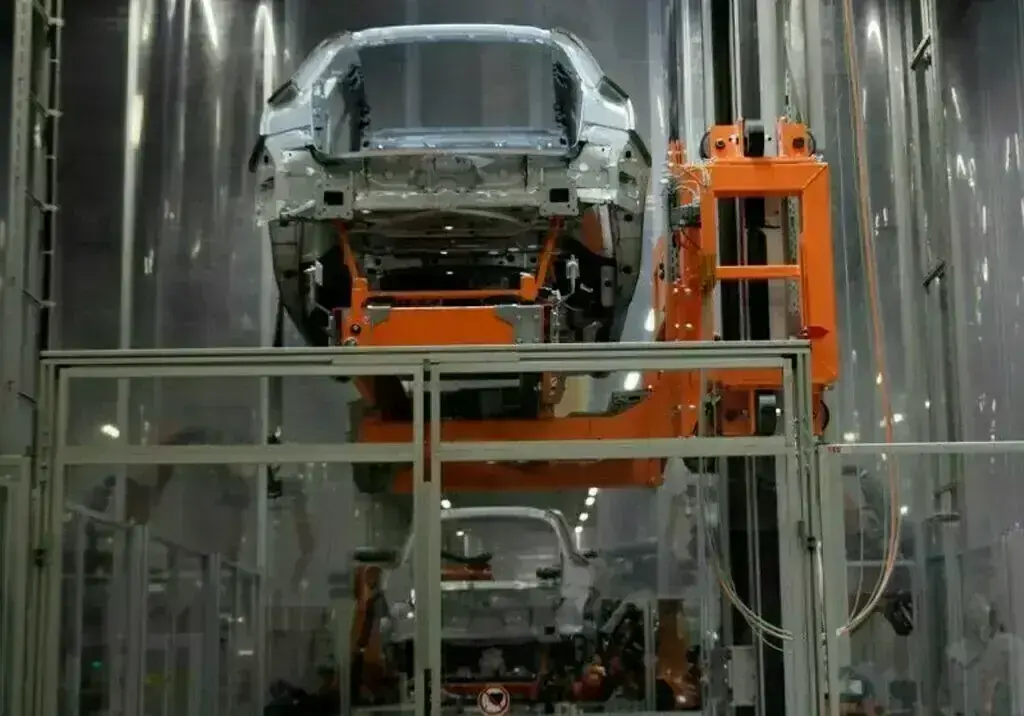
Finally, a consensus among various government stakeholders is being reached on the auto policy. The previous policy expired on 30th June, and since then, the industry and consumers have been waiting for direction before making decisions.
The rift is between the ministries of Industries and Commerce, whose objectives are conflicting. The former is defending the status quo by maintaining protection for assemblers, while the latter is pushing for reforms in line with the National Tariff Policy 2025–30.
A presentation is likely to be made to the PM soon, and the next step would be to get the IMF’s nod.
The story starts with a reduction in CBU duties—customs duties have been reduced by 50-60 percent to 30-40 percent for different engine sizes. There are reductions in regulatory duties too. However, there was no change in the duty structure for CKDs, resulting in a partial elimination of the protection assemblers have.
One reason this slipped into the budget was that the industry was too busy fighting over its share of the pie. ICE-focused players opposed support for NEVs, while within the NEV segment, the debate over incentives for EVs versus hybrids was equally intense. EVs, along with REEVs, secured a one-year extension on lower duties and GST. PHEVs and HEVs were less fortunate, as their sales tax incentive expired.
Later, assemblers realized that the narrowing CKD-CBU duty gap could allow importers to grab a larger share of the market. That has given them cold feet, with many curtailing production and delaying price announcements—particularly for PHEVs and HEVs.
They have the backing of the Ministry of Industries, which has resisted the strong free-market arguments put forward by the Commerce Ministry and a team of economists.
The counterargument is that an industry that has failed to achieve competitiveness and scale despite nearly four decades of protection should not continue to receive the same level of support. The last three auto policies targeted annual production of 500,000 cars, yet the industry has, at best, reached only around two-thirds of that level. Consumers and the exchequer have borne the cost in the process.
The other side blames overall macroeconomic factors and the lack of backward value-chain development for hindering the attainment of scale and global competitiveness. They say that cycles of high interest rates and heavy taxation have kept demand at bay. Plus, parts and production cannot achieve scale without having backward industrial production in steel, glass and other areas, as all the raw materials have to be imported.
The industry may be right from its perspective, but the bigger picture is that, for whatever reason, the result is that the industry may struggle to survive without protection.
And that is not likely to change anytime soon. Hence, what is the point of continuing to divert fiscal resources to it when they could be used by other sectors?
However, it is not easy to break the status quo. Auto assemblers and parts manufacturers provide direct and indirect employment, which may take a dent. Plus, over a billion dollars in investment has been made by new entrants over the last ten years, and that may become a sunk cost.
The industry claims, without supporting data, that it creates 1.8–2.5 million jobs.
However, after rigorous deliberations by the committee, the actual figure appears to be closer to 300,000—relatively small in the broader scheme of things. More importantly, the ministry does not have a well-documented estimate of the industry’s overall contribution, including employment, GDP contribution, foreign exchange savings and the strengthening of the engineering base.
Nonetheless, automobile lobbies are working hard to keep the protection. They have powerful ears listening to them, which are supporting the status quo. Plus, strongmen in the government desire to support EVs too. Thus, the consensus is likely to be formed around a reduction in CKD duties and neutralizing the negative fiscal impact by imposing FED.
The government may also cascade FED to support NEVs and small cars. Meanwhile, GST on PHEVs/HEVs may be slashed to 18 percent from the existing 25 percent. And going forward, some CKD protection on EV parts may continue.
Once the policy is presented to the PM and has his office’s approval, the next step is to negotiate with the IMF, which is against any protection for automobiles in general and EVs in particular. Let’s see how the final shape comes up.
However, policymakers should keep in mind that automobile and parts manufacturing accounts for less than 1 percent of GDP, so any disruption to the sector is unlikely to have a meaningful impact on the broader economy.
At the same time, taxpayers bear a fiscal cost for every job the sector creates, while much of the benefit is pocketed by auto assemblers and their international partners. That form of rent-seeking may continue.















Comments