



ISLAMABAD: Pakistan’s military on Tuesday warned that any future Indian military adventurism would be met with a “strong, decisive and disproportionate response”, as it rejected an Indian documentary on the 2025 conflict as an attempt to reshape the operational record through what it called a cinematic and selective narrative.
The Inter-Services Public Relations (ISPR) said that more than a year after Marka-e-Haq, India remained unwilling to acknowledge what Pakistan described as the realities of the conflict.
Responding to an Indian documentary on the so-called Operation Sindoor, the military’s media wing said the production relied on dramatic reconstruction, selective interviews, emotional storytelling and “Bollywood-style” depiction rather than an objective presentation of operational facts and outcomes.
The ISPR said contradictions within the documentary itself exposed weaknesses in the Indian narrative. It pointed to the documentary’s attempt to connect an April 16, 2025 address by the Indian Army chief with the Pahalgam incident that occurred on April 22, arguing that the chronology was being used to construct an unfounded conspiracy narrative.
It also questioned India’s account of those allegedly responsible for the Pahalgam attack. According to ISPR, India claimed that three alleged perpetrators were killed on July 28, 2025, 82 days after Operation Sindoor.
“If the alleged perpetrators were killed on July 28, India must explain whom it claimed to have punished on May 7, 2025,” ISPR said.
The military’s media wing also rejected India’s claim of “100 per cent mission success”, saying it did not correspond with the operational record.
The ISPR maintained that Pakistan’s armed forces thwarted Indian aggression during Marka-e-Haq and shot down eight Indian military aircraft.
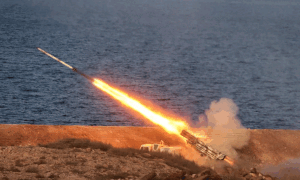
It said that during Operation Bunyan-um-Marsoos, Pakistan employed Fatah precision-guided rockets and missiles, Pakistan Air Force precision weapons, long-range loitering munitions and precision artillery.
According to the ISPR, Pakistan struck 26 Indian military targets in response to the aggression, including installations it said were associated with attacks on Pakistani civilians and the sponsorship of terrorism inside Pakistan.
The ISPR said statements by India’s own military leadership acknowledging Pakistani missile, drone and aerial activity, continued engagements along the Line of Control and the activation of Indian air-defence systems contradicted claims that Pakistan had suffered a “decisive defeat”.
The military’s media wing further said the Indian documentary itself acknowledged that hostilities ended following contact between the Directors General of Military Operations of the two countries and through mutual agreement.
It maintained that a ceasefire facilitated by the United States could therefore not be presented as a unilateral Indian military victory.
“India has not declassified history; it has attempted to curate it,” ISPR said, adding that cinematic reconstruction could not alter the chronology of events, aircraft losses, military casualties or the actual conduct of military operations.
The ISPR said Pakistan did not need to construct an artificial narrative around Marka-e-Haq, maintaining that the operational record, battlefield evidence, diplomatic engagements and statements by Indian officials themselves established the facts.
Pakistan remained committed to regional peace and stability, it said, while stressing that the armed forces were fully prepared and capable of defending the country’s sovereignty, territorial integrity and national interests.
“Any future Indian military adventurism will be met with a strong, decisive and disproportionate response,” the ISPR warned.
Copyright Business Recorder, 2026




















Comments