


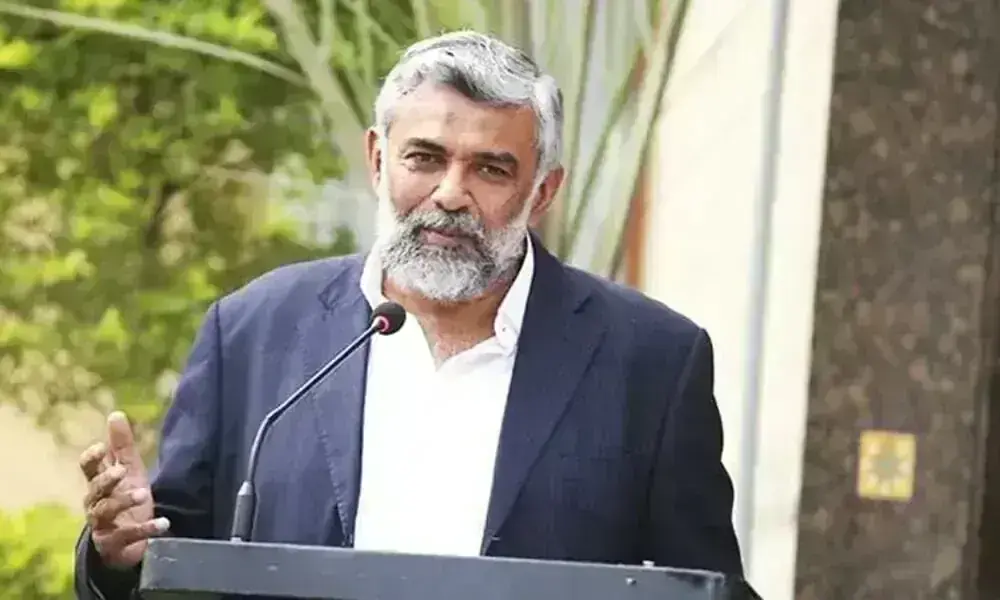

KARACHI: The founding fathers of Pakistan had envisioned this country as a welfare state, but even after 79 years of Independence the country is yet to become a welfare state, said Pasban Democratic Party (PDP) chairman Altaf Shakoor here on Friday.
He said a systemic lack of political will was the single largest barrier holding back Pakistan’s social development.
He challenged the long-standing political narrative that universal social safety nets were an unaffordable luxury for developing nations.
Instead, social security covers guaranteeing public healthcare, pensions, unemployment support, and quality education were the basic constitutional rights.
He said under strict deficit-reduction targets mandated by global lenders like the IMF, social security expenditure was routinely the first item on the chopping block.
Altaf Shakoor said this fiscal squeeze was further exacerbated by a tax framework that shields the country’s wealthiest segments.
Pakistan’s tax-to-GDP ratio remained critically low at under 10 percent due to widespread exemptions and reluctance to tax high-value sectors.
The PDP chief said because lawmakers often belonged to privileged economic classes, there had been little legislative drive to enforce progressive wealth taxation, leaving the state perpetually under funded.
Altaf Shakoor said regional experience demonstrated that becoming a welfare state was a matter of political priorities rather than absolute wealth, he said.
He said regional peers further proved that high national income was not a prerequisite.
Sri Lanka achieved high human development indicators through decades of universal free health and education while India had leveraged digital public infrastructure to register hundreds of millions of informal workers and scale health coverage to over 500 million citizens.
Altaf Shakoor said breaking the cycle of economic vulnerability required stopping taking new loans.
He also called for broadening the direct tax base.
He called for codifying universal protection: transitioning relief programs into a legally protected, contributory social insurance framework covering formal and informal workers.
The PDP chief also stressed the need for empowering local governments.
He said that true independence was incomplete without economic freedom and social security.
“Pakistan’s transition to a social welfare state is fundamentally a test of political intent,” he said.
Without a decisive commitment to tax equitably, manage debt responsibly, and prioritize human dignity, the vision of a prosperous, resilient nation would remain unrealized, he said.
Copyright Business Recorder, 2026


















Comments