


Beyond tax-to-GDP ratio
Pakistan's tax-to-GDP debate masks a deeper issue: an extractive fiscal system, narrow tax base, and lack of accountability, requiring constitutional reform beyond mere statistical adjustments.
- Pakistan's incomplete tax-to-GDP ratio and its statistical weaknesses.
- The paradox of high taxation on the formal economy versus a narrow tax base.
- The need for a constitutional fiscal settlement and institutional reform.

Every pre and post budget debate in Pakistan presents a familiar headline: the country’s tax-to-GDP ratio remains among the lowest in the region. This year the debate has taken an interesting turn. A think-tank has pointed out that the official figure of around 10 percent is incomplete because it excludes provincial taxes and the petroleum levy. By adding these components, they argue, Pakistan’s effective ratio for FY2026-27 approaches 12.9 percent rather than 10.5 percent.
This correction exposes an important statistical weakness. It does not, however, answer the more fundamental question: what exactly are we trying to measure?
Pakistan’s fiscal crisis cannot be understood merely by refining the numerator of a ratio. It requires rethinking the very framework through which we assess taxation, state capacity and public finance. This is where constitutional political economy offers a more useful lens than conventional public finance.
The first proposition is straightforward. Pakistan is a federation. The Constitution distributes taxing powers between the federation and the provinces. Provincial taxes are integral part of Pakistan’s overall fiscal effort and should not disappear from national discussions merely because they are collected outside the Federal Board of Revenue (FBR).
A national tax-to-GDP ratio that ignores provincial revenues understates the country’s aggregate tax collection.
Inclusion of provincial taxes is analytically sound. Their omission has long distorted public debate by creating the impression that the federation alone constitutes Pakistan’s tax system.
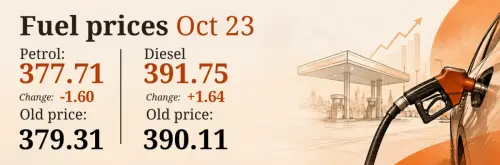
Petroleum levy presents a different question. Economically, the levy resembles a tax. It is compulsory, non-voluntary and ultimately paid by consumers. Yet constitutionally and budgetarily it is classified as non-tax revenue. It is imposed under a different legal framework and has historically been distinguished from taxation in official accounts.
One cannot simply shift between legal classifications according to convenience. If the levy is treated as non-tax revenue in the budget, it cannot simultaneously become “tax” merely because it improves an international indicator. Doing so merely replaces one counting problem with another. Pakistan needs greater conceptual clarity.
The federal government officially publishes separate indicators quarterly and yearly that include total revenue to GDP ratio (15.7% in FY 2025-26), tax revenue to GDP ratio (11.1% in FY 202526), FBR tax-to-GDP ratio, (10.2% in FY 2025-26), measuring the performance of the federal tax administration and Provincial tax-to-GDP ratio (0.9% of GDP in FY 2025-26).
Each indicator serves a different purpose. Combining them into a single politically convenient figure obscures rather than illuminates fiscal reality. More importantly, none of these ratios explains why Pakistan repeatedly experiences fiscal crises despite imposing increasingly heavy burdens on the documented economy. The prevailing narrative assumes that Pakistan suffers from low taxation because citizens are undertaxed. This conclusion does not withstand closer examination.
Pakistan’s formal economy is already subjected to one of the most intrusive systems of fiscal extraction in the developing world. Companies pay high effective corporate taxes supplemented by super tax. Salaried individuals have witnessed repeated increases in withholding and direct taxation.
Consumers bear an 18 percent general sales tax together with provincial sales taxes on services, custom duties, regulatory duties, additional custom duties, petroleum levies, electricity duties, gas surcharges and numerous withholding taxes embedded within commercial transactions.
Almost every organised economic activity has become a withholding point for the State. Banks, telecom companies, electricity distribution companies, exporters, importers, manufacturers and employers now function as tax collection agents. The paradox is therefore obvious.
Pakistan simultaneously exhibits a relatively low aggregate tax-to-GDP ratio and exceptionally high effective taxation of those already documented. This apparent contradiction disappears once attention shifts from rates to the tax base.
The country’s fiscal weakness does not primarily arise because existing taxpayers contribute too little. It arises because a substantial proportion of wealth, property, agricultural income, commercial activity and economic rents remain outside meaningful taxation while governments repeatedly increase extraction from the shrinking pool of compliant taxpayers.
The result is a fiscal system that becomes narrower as rates become higher. This distinction is frequently ignored in policy discussions. Successive governments celebrate higher annual collections while failing to disclose how much of the increase resulted from inflation, petroleum levies, higher withholding rates, blocked refunds or one-off measures rather than genuine expansion of the tax base. Equally absent is any discussion of provincial fiscal effort.
Pakistan’s Constitution assigns important revenue bases to the provinces, including agricultural income taxation, urban immovable property, services and various local taxes. Yet provincial own-source revenues remain strikingly small compared with transfers received under the National Finance Commission Award. This is not merely an administrative deficiency. It reflects a deeper constitutional imbalance.
Political incentives encourage provincial governments to depend overwhelmingly upon divisible-pool transfers while postponing politically difficult reforms relating to agricultural income taxation, property valuation and municipal finance. The consequence is a federation where both tiers of government expect someone else to undertake politically costly tax reforms.
The debate over whether Pakistan requires an 18 percent tax-to-GDP ratio similarly deserves closer scrutiny. The proposition is intuitively appealing. A country aspiring for sustained development cannot indefinitely finance current expenditure and development through borrowing. Higher domestic revenue mobilisation is essential. Yet no universal economic principle establishes 18 percent as a magic threshold.
The appropriate level depends upon the size of government, demographic pressures, defence requirements, debt-servicing obligations, public sector efficiency, social protection commitments and the constitutional allocation of expenditure responsibilities.
A government characterised by inefficient spending, loss-making state-owned enterprises, poorly targeted subsidies and weak accountability does not become development-oriented simply because it raises additional revenue equivalent to five percentage points of GDP. Revenue cannot be divorced from expenditure.
The essential question is not how much government collects but what kind of government is collecting it and how those resources are subsequently deployed. This is precisely where constitutional political economy departs from conventional public finance.
Traditional fiscal analysis treats taxation primarily as a technical exercise in revenue optimisation. Constitutional political economy asks prior questions. Who possesses taxing authority? Who bears the burden? How are spending priorities determined? What constitutional constraints protect citizens against fiscal overreach? What institutional incentives encourage or discourage productive investment? How do taxation and public expenditure influence political legitimacy? These questions cannot be answered through a single ratio. Nor can GDP itself be regarded as a neutral denominator.
Changes in statistical methodology, inflation, rebasing exercises and fluctuations in nominal output all influence tax ratios independently of tax policy. A favourable movement in the ratio may therefore conceal deteriorating economic fundamentals, just as a temporary decline may accompany productive structural adjustment. Fiscal performance consequently requires a broader dashboard of indicators.
Alongside tax-to-GDP ratios, governments should regularly publish data on tax expenditures, effective tax incidence across income groups, provincial own-source revenues, refund backlogs, cost of collection, debt servicing as a proportion of net revenue, public investment efficiency, and compliance costs imposed upon businesses. Only then can policymakers distinguish between sustainable fiscal strengthening and temporary revenue extraction.
Pakistan’s long-term challenge is therefore neither statistical nor merely administrative; it is institutional. The country’s post-colonial fiscal architecture evolved around extraction rather than reciprocal accountability. Citizens increasingly encounter the State as a collector of taxes, levies, duties and surcharges rather than as a provider of justice, education, healthcare, infrastructure and local public services. This weakens voluntary compliance.
When taxpayers perceive that additional collections finance recurring deficits, inefficient enterprises, administrative expansion and elite privileges rather than public goods, resistance inevitably grows. Higher statutory rates then generate further avoidance, greater coercive enforcement and increasing dependence upon withholding mechanisms. The cycle reinforces itself.
Breaking this equilibrium requires more than improved tax administration. Pakistan needs a constitutional fiscal settlement founded upon broad tax bases, moderate and predictable rates, meaningful provincial fiscal responsibility, empowered local governments, transparent expenditure and credible institutional accountability.
Economic growth and tax reform must proceed together. Broadening the base through documentation, rationalising exemptions, integrating the informal economy and strengthening provincial taxation can gradually raise revenues without imposing confiscatory burdens upon existing taxpayers.
Conversely, continuing to pursue higher collections through petroleum levies, repeated withholding taxes, retrospective measures and indirect taxation may improve annual statistics while simultaneously weakening investment, productivity and public confidence.
Pakistan certainly has a tax-counting problem. That is only the surface manifestation of a much deeper constitutional problem. The real challenge is not whether the country’s tax-to-GDP ratio is 10 percent, 13 percent or eventually 18 percent. It is whether Pakistan can transform an extractive fiscal order into a constitutional social contract where taxation reflects ability to pay, governments remain accountable for expenditure, provinces assume genuine fiscal responsibility, local governments mobilise and spend their own revenues, and citizens receive visible public value in return for compulsory contributions.
Until that transformation occurs, debates over a few percentage points in the tax-to-GDP ratio will continue to generate headlines, while the structural causes of Pakistan’s fiscal crisis remain largely untouched.
The country’s future depends not merely on collecting more revenue. It depends on rebuilding the constitutional foundations that determine how revenue is raised and spent, who bears its burden, and whether the State ultimately earns the trust that makes sustainable taxation possible with equitable inclusive development.
Copyright Business Recorder, 2026
The writer is a lawyer and author, is an Adjunct Faculty at Lahore University of Management Sciences (LUMS), member Advisory Board and Senior Visiting Fellow of Pakistan Institute of Development Economics (PIDE)
The writer, an Advocate Supreme Court, Adjunct Faculty at Lahore University of Management Sciences (LUMS), member Advisory Board and Visiting Senior Fellow of Pakistan Institute of Development Economics (PIDE), holds LLD in tax laws
The writer is a corporate lawyer based in the US with extensive expertise in financial regulations, including Virtual Asset Service Providers (VASPs), corporate governance, and global economic policies. He holds an LLM from Washington University in St. Louis and has completed the Management Development Program at the Wharton School. He has developed regulatory frameworks for North American and South American Financial Institutions and has consulted and trained bureaucrats of different regions. He can be reached at [email protected]

















Comments