


Stocks up in Asia as tech mood shifts, oil slides
- MSCI’s broadest index of Asia-Pacific shares outside Japan rose 2.3%, while Chinese blue chips gained 1.5%
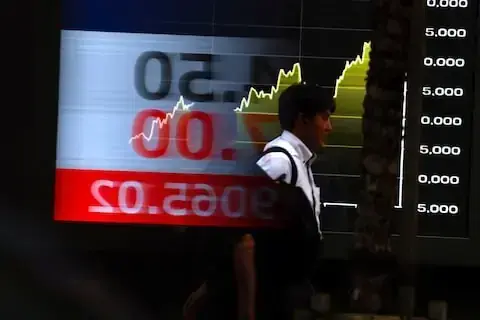

SYDNEY: Asian stock markets jumped on Wednesday as robust earnings and renewed appetite for tech propelled Wall Street to record highs, while hopes for progress on opening the Strait of Hormuz pushed oil prices and bond yields lower.
More evidence of the vast sums being spent on AI capex helped lift Japan’s Nikkei 3.5%, while South Korea continued its wild swings with a rise of 4.3%.
MSCI’s broadest index of Asia-Pacific shares outside Japan rose 2.3%, while Chinese blue chips gained 1.5%.
The tech rally came despite a setback for AMD, which fell 8.8% after hours as earnings beat the Street but still fell short of investors’ sky-high expectations.
AI and satellite group SpaceX shed 7.5%, undoing much of a rally in regular trading time, on worries capex was eating up all its cash flow.
This has been a recurring concern for all AI stocks given the vast cost of compute power, with borrowing costs for the sector continuing to rise.
“SpaceX continues to execute strongly operationally, but its ambitious investment program means additional capital will almost certainly be required over the medium to longer term,” said Chris Weston, head of research at broker Pepperstone.
“How management funds that growth, and at what cost, is likely to remain a central theme for investors over the coming quarters.”
Asia stocks move higher on Wall Street lead, oil steady
The next test for SpaceX investors comes on Thursday, when as many as 912 million shares held by employees and other pre-IPO stakeholders become eligible for sale.
Nasdaq futures were flat on the earnings results, while S&P 500 futures added 0.3% after hitting all-time highs on Tuesday. EUROSTOXX 50 futures gained 0.3%, while DAX futures rose 0.5% and FTSE futures added 0.2%.
Oil slide boosts bonds
Sentiment was supported by an ongoing slide in oil prices as Qatar said mediators were making progress in efforts to end the U.S.-Iran war, though details were lacking.
Brent crude fell 0.6% to $78.85 a barrel, a long way from its July top of $102, while U.S. crude dropped 0.9% to $75.09.
John Oh, an energy economist at CBA, said ship tracking numbers suggested oil flows through the Strait of Hormuz were proving more resilient than first thought, perhaps reaching 40% to 45% of pre-war levels last week.
“We estimate that traffic flows only need to return to 50% to 60% of pre-war levels to assert oversupply conditions in global oil markets,” he wrote in a note.
“This helps explain why Brent oil futures are so quick to move into the $70s as markets are justified to price in oversupply worries when there are hopes that the strait will be officially re-opened.”
The pullback in oil provided some relief from inflation fears and boosted bonds globally, with 10-year Treasury yields now at 4.603%, down from last week’s high of 4.747%.
Markets also sharply pared the probability of a September rate hike from the Federal Reserve to 57% from 67%.
Fed Bank of Kansas City President Jeff Schmid, however, used a speech on Tuesday to call for tighter policy to help bring inflation back to the central bank’s 2% target.
Currencies were mostly quiet, though the New Zealand dollar slipped 0.3% after data showed unemployment hit a decade peak of 5.6% in the June quarter.
The euro was flat at $1.1537, just short of its recent six-week high at $1.1559. The dollar was a shade lower on the yen at 157.63, with the threat of intervention lingering over traders.
U.S. Treasury Secretary Scott Bessent said he was sure Bank of Japan Governor Kazuo Ueda will “do what is best” for the country’s economy, which markets took as encouragement to raise interest rates further.
Japan and the United States launched a rare joint yen-buying intervention last week and vowed to take further action if needed to shore up the currency.
In commodity markets, the drop in yields helped non-interest-paying gold up 1.6% to $4,140 an ounce.




















Comments