


Enhanced evening discharge rates: Advisor proposes introduction of ToU net metering/billing
An advisor proposes Time-of-Use net metering with higher evening rates to boost Battery Energy Storage Systems in Pakistan, addressing peak demand and a rapidly growing BESS market, despite current regulatory gaps.
- Pakistan's rapidly expanding battery energy storage market.
- Proposed Time-of-Use net metering for BESS incentives.
- Significant increase in lithium-ion battery imports.
- Urgent need for BESS regulatory framework and safety standards.
- Policy recommendations for local assembly and waste management.
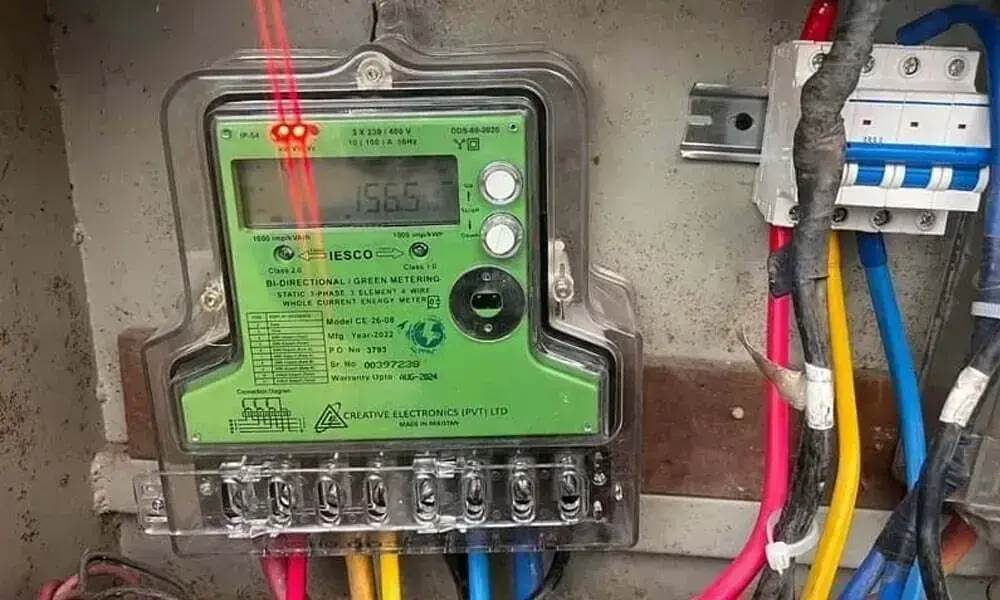
ISLAMABAD: Power Division Advisor Syed Faizan Ali has proposed the introduction of Time-of-Use (ToU) net metering/net billing with enhanced evening discharge rates of Rs 18–22 per kWh (from 5:00 pm to 10:00 pm) to incentivise Battery Energy Storage Systems (BESS) and reduce peak-hour procurement costs for system operators. Pakistan’s evening peak demand has now crossed 26,000 MW annually.
In his market intelligence report on “Li-Ion Battery & BESS Import Analysis 2024–26,” based on 30 months of customs transaction data (January 2024 to June 2026), Faizan noted that Pakistan’s battery energy storage market has reached a historic inflection point.
The report highlighted a peak import level of 652.2 MWh in April 2026, cumulative imports of 6.004 GWh valued at Rs 126 billion (approximately USD 454.7 million), and a current annualised run rate of around 5.86 GWh — positioning Pakistan among the fastest-growing emerging BESS markets globally.
READ MORE: Expert suggests introduction of ToU net metering
Pakistan imported 6.004 GWh of lithium-ion batteries under HS Code 8507.6000 during the 30-month period, with monthly import volumes increasing by 1,640 percent — from 42 MWh in January 2024 to 652 MWh in April 2026. The April 2026 figure marks the highest monthly import level on record.
The surge in demand has been attributed partly to regional energy disruptions linked to geopolitical tensions in the Middle East, which accelerated the shift towards energy independence through battery storage.
The market has also structurally transitioned from export-oriented solar systems to self-consumption-optimised solar-BESS configurations, particularly after revisions to the net metering framework finalised in February 2026 following NEPRA’s draft prosumer regulations issued in December 2025.
The report notes that CMPAK Limited emerged as the largest single-month telecom BESS buyer, importing 3,512 units of ZTE/Huawei backup batteries (9.6 MWh), signalling a large-scale transition from VRLA to lithium iron phosphate (LFP) batteries in Pakistan’s telecom tower infrastructure.
Utility-scale containerised BESS systems (1 MWh and above) accounted for more than 252 MWh across 19 installations, with repeat procurement indicating a shift from one-off purchases to programmatic deployment. Meanwhile, the product mix has undergone a significant change: 11–20 kWh commercial rack-mounted systems now account for 35 percent of 2026 imports (compared to just 1 percent in 2024), driven by products such as Dyness PowerBrick and Pylontech.
The residential segment (3–6 kWh), although declining in share, still represents the largest portion at 39 percent of total module volume.
The average monthly imports for January–June 2026 stood at 413 MWh—6.6 times higher than the 2024 average and more than double the 2025 average—indicating sustained growth with no signs of plateauing.
Despite rapid expansion, the report warns of significant regulatory gaps. Pakistan currently imports BESS at an annualised rate exceeding 5 GWh without mandatory product safety standards, grid interconnection regulations, or defined tariffs for storage-based grid services.
The consultant stressed the urgent need for a modern regulatory framework to ensure consumer safety, grid stability, and efficient utilisation of private investment.
Faizan emphasised that the net metering and billing regime must incorporate a Time-of-Use structure to encourage battery discharge during evening peak hours, transforming distributed storage into an active grid management tool rather than a passive load.
He also highlighted the need for a national battery registration and visibility framework, enabling utilities to track installed capacity, location, and operational parameters of distributed storage.
Such visibility is critical for accurate demand forecasting, network planning, and optimisation of both distributed and utility-scale BESS investments.
The report further cautions that declining battery costs, combined with widespread rooftop solar adoption, could lead to partial grid defection by commercial, industrial, and affluent residential consumers. This trend may erode utility revenues, increase tariffs for remaining consumers, and reduce overall system efficiency. A forward-looking regulatory approach is therefore required to keep distributed storage grid-interactive, enabling services such as peak shaving, demand response, voltage support, and congestion management.
To address these challenges, the consultant has proposed a series of policy measures, including: classification of BESS components under a zero-duty HS schedule; launch of multi-MWh competitive BESS tenders (2025–2028); development of grid connection standards based on IEC/IEEE benchmarks; mandatory compliance with IEC 62619 standards; establishment of a national BESS registry; and mobilisation of USD 500 million in concessional financing through institutions such as the State Bank of Pakistan, World Bank, ADB, and KfW.
Additional recommendations included development of a battery technology policy framework under CPEC to promote local assembly of LFP cells and battery management systems, targeting 500 MWh annual domestic capacity by 2028, and introduction of an Extended Producer Responsibility (EPR) regime to manage end-of-life battery waste as installed capacity approaches 10 GWh.
Copyright Business Recorder, 2026



















Comments