


Austerity must also apply to the officialdom
Pakistan's government preaches austerity while its top bureaucracy secretly approves significant pay raises and maintains perks, undermining public trust and the nation's reform efforts.
- Government's austerity measures and public sacrifices.
- Secret pay raises for top federal bureaucracy.
- Bureaucracy's resistance to reforms and self-serving interests.

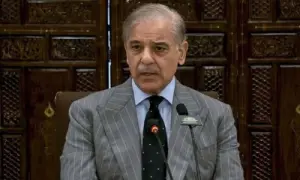
EDITORIAL: This is the fifth consecutive budget presented under the premiership of Shehbaz Sharif. One common theme has been austerity. The fiscal noose has been tightened through exorbitantly high taxation and massive reductions in development spending.
The government has budgeted a primary fiscal surplus for three consecutive years, while growth has been compromised in the process. Then, when international oil prices increased sharply, another form of austerity was imposed on the public.
One can sense that this is the need of the hour and that the public at large is sacrificing for the greater good of the country. However, it is reasonable to expect government officials to set the tone. Austerity must begin at home. However, the reality is starkly different; and it hurts.
Reportedly, on the eve of the budget presentation, a special increase of Rs1.8 billion was approved for the top bureaucracy in a special cabinet meeting. The details were unveiled after five weeks, when the budget had already been passed and the increase in take home pay was already in effect. This is the second time in four years that these top government officials have received something extra.
The question is how this behaviour can be justified while persuading others to practise austerity. There is already criticism that provincial governments spend beyond their means and are being forced to share a hefty amount with the federal government this year. The business community is paying for the inefficiencies of the government through high utility prices and heavy taxation. Excessive taxation of the salaried class is hurting the middle class, while the poor are paying more for everything in the form of rising inflation.
Real incomes for the lower strata are falling, while investment and savings are at all-time lows. Private cars and travel are heavily taxed; and the list goes on. Still, the top federal government officials, who are at the helm of affairs and play a key role in making all these decisions, are protecting and preserving their own interests quite efficiently.
They are shielded from inflation and enjoy all the perks while the masses bear the brunt. This is outrageous. The top bureaucracy is all over the place. An official can be running the tax machinery while sitting on the boards of firms he taxes. They obtain perks from different sources—by sitting on the boards of public-sector companies and through deputations to donor-funded projects. Yet, they still ask for more when almost everyone else is suffering.
The reason presented for this move is that provincial employees enjoy huge perks because their governments have the budget, and no one is ready to work in the federal government. Hence, more perks are being offered to them. The logical step would have been to reduce the allowances and other benefits given to provincial government employees. Instead, they have raised their own benefits.
This shows how shallow the government’s reform story is and how little willingness it has to reform itself. The bureaucracy does not like privatisation because it would take away board seats that come with quarterly payments and travel benefits. They do not want to move away from donor money because this would take away the extra perks and income they receive from it. They do not want to rationalise the size of government because it would result in fewer senior positions for civil servants.
The message is that the sacrifices of the masses, who are being dragged into poverty for the benefit of a few, must not be wasted. Someone must act and send the right message. Otherwise, mistrust and disgruntlement will only increase.
Copyright Business Recorder, 2026






















Comments