


Houthis announce Saudi naval blockade
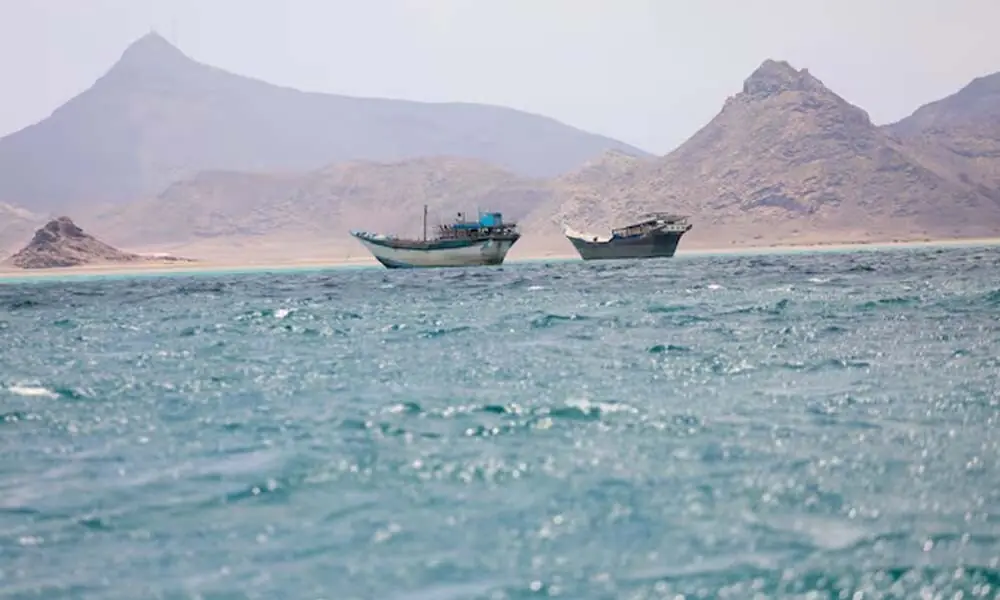

DUBAI/RIYADH: Yemen’s Iran-aligned Houthis said on Monday they would impose a naval blockade on Saudi Arabia, opening a potential new front against the United States in its war with Iran and raising the threat to global energy supplies and trade beyond the Gulf.
The Houthis made their announcement despite signs that Tehran and Washington want to resume diplomacy to halt a worsening cycle of attacks that has all but wrecked a fragile interim agreement signed last month.
Iran’s Foreign Ministry said mediators had presented “proposals” to Tehran, signalling that diplomatic contacts remain active, but gave no details. Oil prices rose briefly after the Houthi statement but later fell back as traders held out hope of a diplomatic breakthrough. The insurance cost of shipping goods through the Red Sea rose on the increased risks for merchant shipping.
READ MORE: How a Houthi blockade in the Red Sea tightens Iran’s grip on global energy supplies
Iran had been pressing the Houthis to close the Bab el-Mandeb gateway to the Red Sea if the US continued to attack Iranian power infrastructure.
The full closure of the Bab el-Mandeb strait would reduce global oil supply by 7% as it would leave most of Saudi oil exports unable to leave the region.
The disruption would add to the huge cut to oil flows from the war in the Gulf, which has already reduced shipments by 10% of global supply.
In their statement, the Houthis’ armed forces said they were declaring “a maritime embargo against the criminal Saudi enemy, based on the equation of ‘an eye for an eye’, effective immediately” in response to what they called “an unjust and oppressive siege” imposed on Yemen by the Saudis.
There was no immediate response from Saudi Arabia.
Diplomatic push to restore ceasefire
A senior Iranian official told Reuters on Monday that Tehran had received a proposal from mediators for a 10-day ceasefire in efforts to salvage the interim deal, intended to pave the way to a lasting agreement to end the war that began on February 28 with US-Israeli attacks on Iran.
Neither the ministry nor the official who spoke to Reuters gave any details on the putative ceasefire discussions. Two Pakistani government sources said separately that Iranian Interior Minister Eskandar Momeni had asked Pakistan to resume its mediation role in the conflict. He later arrived in Islamabad for further talks.
The diplomatic push followed another night of US strikes on Iranian cities and attacks by Iran’s Revolutionary Guards on US military assets across the region.
US President Donald Trump, under mounting political pressure at home over rising gasoline prices since the war began and Iran effectively closed the vital Strait of Hormuz, defended the latest strikes on Iran as honouring the deaths of up to three American service members in recent Iranian attacks.
“Every time Iran kills an American Soldier they will pay for that killing many times over! This directive has been passed on to Secretary of War, Pete Hegseth, Chairman of the Joint Chiefs of Staff, Daniel Caine, and every Leader in the Military,” Trump wrote on Truth Social on Monday.
The war has killed thousands of people, mostly in Iran and Lebanon, part of which has been occupied by Israeli forces following attacks on Israel by Hezbollah fighters who said they were acting in solidarity with Tehran.
Lebanese President Joseph Aoun is due to meet Trump at the White House on Tuesday to present a plan on how to disarm Iran-aligned Hezbollah and secure an Israeli withdrawal. Israel also still has forces in Gaza following two years of war ignited by the Palestinian militant group Hamas’ attack on southern Israeli communities on October 7, 2023.
US Central Command said its ninth consecutive night of strikes against Iran aimed at weakening its ability to attack commercial vessels in the strait. The US military also said it redirected seven commercial vessels and disabled one as part of a US naval blockade of Iranian ports.
In Iran, explosions were reported in Tabriz, Chabahar, Konarak, Bandar Mahshahr and Bandar Imam Khomeini. One person was killed and several wounded southwest of Tabriz, according to state news agency IRNA.
The IRGC said it targeted US aircraft at Jordan’s Aqaba airport with ballistic missiles, as well as military assets at Kuwait’s Al-Adiri camp and Ali Al Salem Air Base, and positions in Syria.
Sirens sounded in Bahrain throughout Monday. Kuwait’s army said it again intercepted Iranian drones.
Kuwait’s government said a desalination plant had been attacked on Sunday for the second day running, causing a fire.




















Comments