


Workshop on FoRB: Call for legal safeguards, equal citizenship to retain GSP+ status
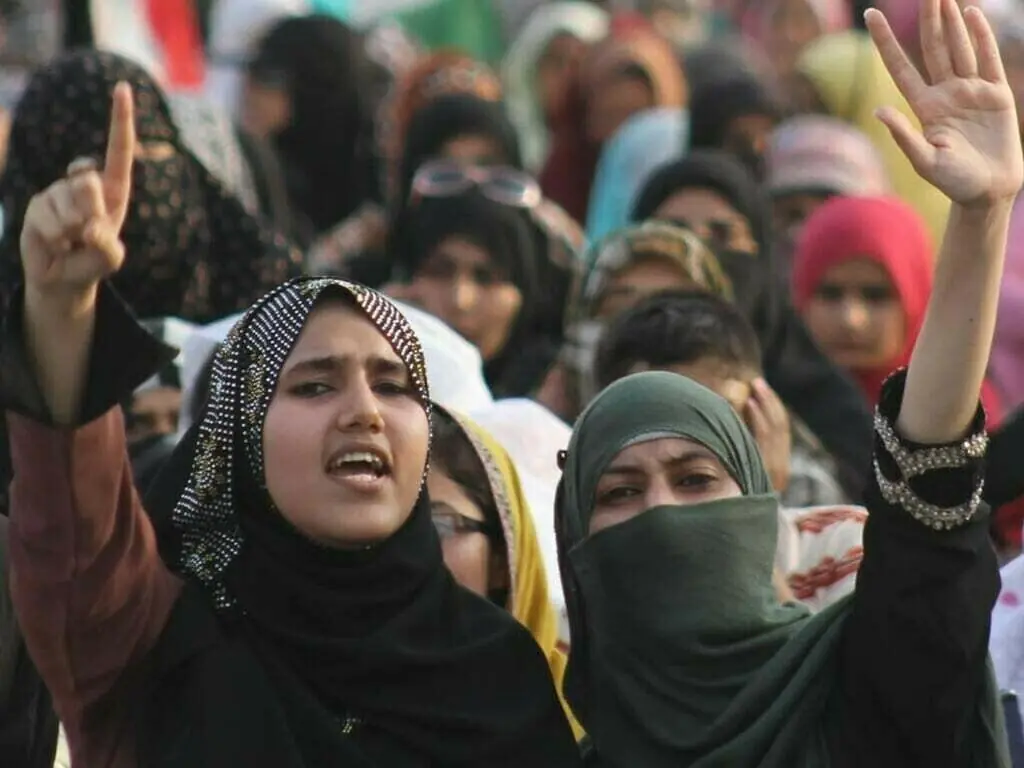

FAISALABAD: As Pakistan seeks to retain its GSP-plus trade status with the European Union by fulfilling its international human rights commitments, participants at a three-day National Consultative Workshop on Freedom of Religion or Belief (FoRB) called for stronger legal safeguards, equal citizenship, and zero tolerance for religious hate and mob violence.
They stressed that translating Pakistan’s commitments under the Fourth Cycle of the Universal Periodic Review (UPR) into practical reforms is essential not only for protecting fundamental rights but also for strengthening the country’s international standing and democratic credentials.
The workshop was organized by the Association of Women for Awareness and Motivation (AWAM) in collaboration with the Department of International Relations, Government College University Faisalabad, and Social Sciences Baha Services (SSBS) under the European Union-funded Asia Action for Freedom of Religion or Belief project. It brought together 35 participants, including historians, academics, researchers, parliamentarians, civil society representatives, journalists, members of the National Commission for Human Rights (NCHR), trade unionists, and representatives of religious minority and indigenous communities.
Discussions focused on the protection of minority women and children, civil society’s role in safeguarding FoRB, national policy and institutional reforms, protection from religious hate and mob violence, and digital safety for minority rights defenders.
Punjab parliamentarians and members of the Parliamentary Minority Caucus, Ijaz Alam Augustine and Qudsia Zia Batool, acknowledged that although political space for religious minorities is gradually expanding, progress remains slow. They emphasized that sustained engagement between lawmakers and civil society is vital for meaningful reforms and pledged to place the consultation’s recommendations before the Pakistan Muslim League (N)’s Central Decision-Making Committee.
Farah Zia, Director of the Human Rights Commission of Pakistan (HRCP), observed that the Objectives Resolution had complicated the Constitution’s democratic character and commitment to inclusion. She said Pakistan remained divided over whether to pursue a federal or centralized model of governance, while certain forces continued to inject religion into laws and public policies, undermining equal citizenship and the principle of equal rights.
Academics including Dr Yaqoob Khan Bangash (IBA Karachi), Dr Riaz Ahmad Shaikh (ZABIST), Professor Dr Rizwan Ullah Kokab, Dr Ghulam Mustafa, and Dr Irum Sultana (GCUF), and Dr Muqarrab Akbar (BZU) argued that existing legal frameworks would remain ineffective without consistent political will. They noted that religious minorities continued to face barriers to equal political and economic participation and called for meaningful inclusion of non-Muslim citizens as equal stakeholders in national development.
Former parliamentarian Aasiya Nasir and AWAM Executive Director Sonia Javed highlighted the continued failure to effectively address forced religious conversions and child marriages involving minority girls, issues repeatedly raised during the UPR process and by Members of the European Parliament. Naseem Anthony, PhD Scholar at the Department of International Relations, Government College University Faisalabad, and Ahmad Ali, Research Associate at AWAM, observed, “despite constitutional guarantees and Pakistan’s commitments under the Fourth Cycle of the UPR, significant gaps remain in protecting religious minorities and ensuring equal citizenship. They urged the Government, “translate its UPR commitments into concrete legal and institutional reforms, strengthen safeguards for religious minorities, and promote a national narrative based on equality, inclusion, and Freedom of Religion or Belief for all.”
Journalists Naeem Ahmad and Hamid Yaseen emphasized that Pakistan’s legal framework requires reforms to align domestic legislation with international human rights obligations, particularly under the country’s treaty commitments and GSP+ framework.
Dr Haroon Baloch, digital rights activist and lecturer at the University of Management and Technology (UMT), Lahore, called for stronger data protection legislation and enhanced digital advocacy skills for human rights defenders. He warned that the growing weaponization of digital platforms required robust legal and institutional mechanisms to counter online threats, protect civic space, and safeguard fundamental rights.
Participants concluded that Pakistan must strengthen equal citizenship, reinforce legal protections for all religious communities, reject hate speech and mob violence, and fully implement its international human rights commitments to build an inclusive society and reinforce its global credibility.
Copyright Business Recorder, 2026

















Comments