


EDITORIAL: For years, allegations of systematic discrimination against India’s Muslim minority were routinely dismissed by many governments as domestic political rhetoric or bilateral point-scoring. That position has become increasingly difficult to sustain.
When United Nations (UN) human rights experts themselves raise concerns about the exclusion of millions of voters, discriminatory official rhetoric and the erosion of fundamental political rights, the discussion moves beyond regional diplomacy into the realm of international accountability.
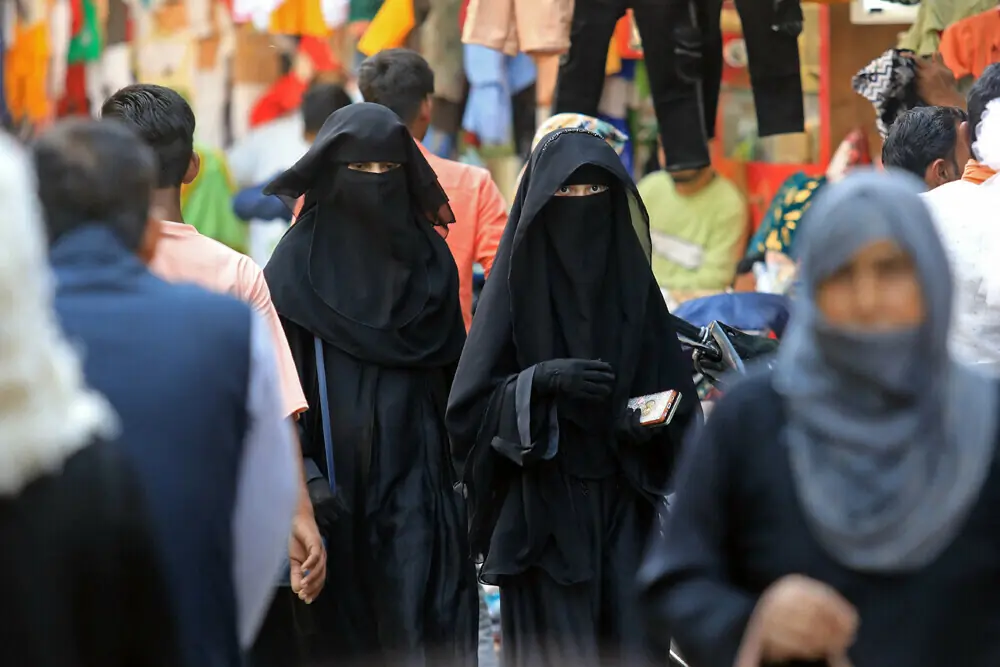
The latest concerns relate to the large-scale revision of electoral rolls in West Bengal, where UN special rapporteurs questioned the deletion of millions of names from voter lists and warned that the process appeared to have disproportionately affected Muslims and other minority communities. Particularly troubling were allegations that overwhelming numbers of deleted voters in some constituencies belonged to the Muslim community despite its far smaller share of the local electorate. The experts also expressed concern over the use of artificial intelligence to identify supposed irregularities, warning that opaque technological systems can reinforce existing biases when deployed without adequate safeguards.
Equally disturbing was the language reportedly employed by senior Indian officials.
According to the UN communication, public references to identifying “illegal Bangladeshi immigrants” and slogans advocating a policy of “Detect, Delete and Deport” risk conflating Indian Muslim citizens with foreign nationals while legitimising discriminatory attitudes towards an entire religious community. Such rhetoric carries consequences well beyond electoral administration. When governments appear to define citizenship through the prism of religion or ethnicity, public institutions themselves risk becoming instruments of exclusion rather than equal protection.
These developments cannot be viewed in isolation.
Since the Bharatiya Janata Party (BJP) came to power under Prime Minister Narendra Modi, concerns regarding the treatment of religious minorities have steadily intensified. Controversies surrounding the Citizenship Amendment Act, the proposed National Register of Citizens, restrictions affecting Muslim communities, attacks by extremist groups, demolition drives targeting Muslim neighbourhoods and repeated communal rhetoric have together created a pattern that has attracted growing international scrutiny. Individually, governments may defend each measure on administrative or legal grounds. Collectively, they present a picture that many observers increasingly find difficult to ignore.
Pakistan has repeatedly highlighted these concerns in international forums, arguing that India’s domestic trajectory raises serious human rights questions. Those warnings have often been dismissed through the familiar lens of regional rivalry. Yet when independent UN experts raise remarkably similar concerns, the conversation inevitably changes. The issue can no longer be portrayed solely as a bilateral political dispute. It becomes a matter of international human rights obligations undertaken voluntarily by a member state of the United Nations.
India has long projected itself as the world’s largest democracy, a distinction carrying responsibilities as well as prestige. Democratic legitimacy depends upon more than periodic elections. It requires equal citizenship, impartial institutions, independent judicial oversight and the assurance that every eligible citizen can participate in the electoral process without discrimination based on religion, ethnicity or political identity. Electoral systems lose credibility when significant sections of society come to believe that administrative procedures are being selectively applied against them.
The implications extend beyond India’s borders.
South Asia remains a region where communal tensions possess the capacity to influence regional stability, diplomatic relations and social cohesion across national boundaries. Policies perceived as targeting religious minorities inevitably resonate throughout neighbouring countries and complicate an already fragile regional environment.
Ultimately, the significance of the UN experts’ intervention lies less in the immediate legal consequences than in the broader signal it sends. International institutions rarely employ such language lightly. Their concerns deserve careful engagement, transparent investigation and credible responses rather than dismissal.
India frequently reminds the world of its democratic traditions and constitutional values. Those traditions are strongest when institutions protect minorities with the same determination that they protect majorities. The latest UN communication presents an opportunity for India to reaffirm that commitment through openness, accountability and respect for equal citizenship. Ignoring such warnings would only reinforce the very concerns that have now reached the international stage.
Copyright Business Recorder, 2026


















Comments