


Resowing the seeds of food security in Pakistan
- Plight of smallholder farmers in Punjab, large landowners in Sindh presents complex agricultural dilemma
Global food insecurity trends in the UK and USA highlight challenges for Pakistan's agriculture, impacting small farmers and underutilizing trained graduates, necessitating a new social contract for sustainable food security.
- UK's agricultural policy shifts and rising food costs.
- Declining youth engagement in US farming professions.
- Pakistan's smallholder farmer struggles and large landowner influence.
- Underutilized agricultural graduates trained in modern technologies.
- Proposed reforms for Pakistan's agricultural sector and food security.
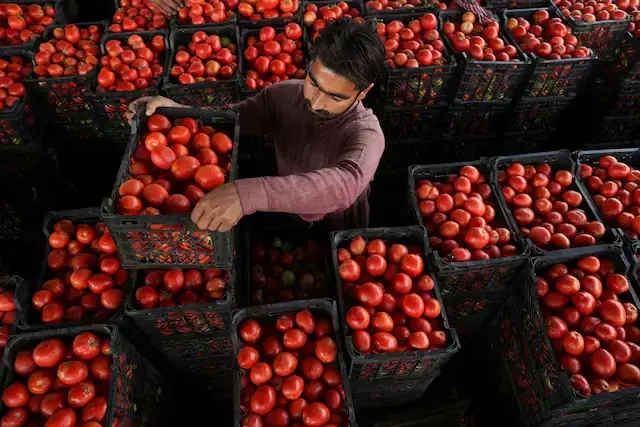

Recent discussions in global media about food insecurity, particularly in countries like the UK and the USA, highlight critical issues that resonate far beyond their borders. The implications of these trends can be distinctly felt in Pakistan, where smallholder farmers in Punjab and large landowners in Sindh represent two contrasting yet interconnected facets of the agricultural landscape. As we confront the multifaceted challenges of food security in Pakistan, it is vital to understand how these global shifts influence local agricultural practices.
In the UK, The Times article indicates a troubling trend: including the government is focusing on environmental initiatives like planting hedges and woodlands – over actual food production to feed humans, skyrocketing costs of diesel and fertilizers, forces farmers to keep fields fallow. UK produces 62 percent of its own food, and 83 percent of fruits are sourced from abroad that is vulnerable under existing geopolitical conflicts, and lastly the inflation outlook by which food prices are on track to be 50 percent higher than 2021 cost of living crisis. The same has also proposed solutions to emphasise on food production with guaranteed minimum payments to farmers with supporting regenerative farming to reduce reliance on synthetic fertilizers and rely on domestic ammonia plants producing ammonium nitrate.
Similarly, reports indicate in the USA, the younger generation is increasingly distancing themselves from agricultural professions due to economic pressures and changing lifestyle choices. The rising costs of living, coupled with the allure of urban job opportunities, lead many young people to view farming as an outdated or unviable career. This decline in agricultural interest threatens sustainability and contributes to food insecurity, as fewer farmers mean diminished food production and reliance on an ageing agricultural workforce. As younger generations prioritize technology and urban lifestyles, traditional farming risks being sidelined, emphasizing the need for a reimagined agricultural narrative.
In Pakistan, the plight of smallholder farmers in Punjab and large landowners in Sindh presents a complex agricultural dilemma that mirrors challenges seen globally. Small farmers in Punjab face mounting pressures to maintain viability amidst rising input costs and limited access to modern agricultural technologies. The consequences of food inflation compromise their ability to sustain livelihoods, exacerbating an existing food security crisis. Meanwhile, large landowners in Sindh leverage significant influence over agricultural production and policy, often overshadowing smaller farmers and creating a two-tier system that undermines the contributions of smallholders. This disparity threatens the national capacity for food production and market stabilization, highlighting an urgent need for reform.
Compounding these challenges is the recent return of over 1,000 agriculture graduates and experts who have undergone extensive training in modern agricultural technologies in China. Equipped with advanced knowledge and skills, these individuals represent an invaluable resource for revolutionizing the agricultural sector in Pakistan. However, many of these trained professionals currently find themselves without suitable positions, budgets, or avenues to apply their expertise effectively. This situation not only squanders their potential to drive innovation in sustainable farming practices but also exacerbates the existing challenges in food security.
To leverage this wealth of knowledge, it is crucial to allocate specific roles and budgets that enable these experts to participate meaningfully in agricultural development. Collaborations between these trained professionals and local farmers can facilitate knowledge transfer and practical application of innovative practices, enhancing agricultural productivity and sustainability. Additionally, creating educational scholarships in agricultural sciences, low-interest loans for startups, and grants for innovative farming methods could reframe agriculture as a viable and respected career path for the youth.
Moving forward, there is a pressing need for a new social contract for agriculture in Pakistan—one that prioritizes the needs of all stakeholders. This contract must encompass transparent pricing mechanisms, timely support for farmers, and the development of infrastructure that fosters productivity. A collaborative approach involving both public and private sectors can lead to better outcomes, as investment in farming technologies and sustainable practices address both production needs and environmental concerns.
The challenges posed by global agricultural trends offer both caution and opportunity for Pakistan. By resowing the seeds of food security through renewed investment in smallholder farming, fostering youth engagement, and leveraging the expertise of trained agriculture graduates, Pakistan can pave the way for a sustainable agricultural future. It is imperative to recognize the importance of nurturing our agricultural community as an essential foundation for food security and national well-being.
The writer is a former Director General in the Federal Government and can be reached at: [email protected]




















Comments