


Copper, industrial metals fall as Middle East war weighs on demand outlook
- Benchmark three-month copper on the London Metal Exchange lost 0.88% to $13,479.5 a metric ton
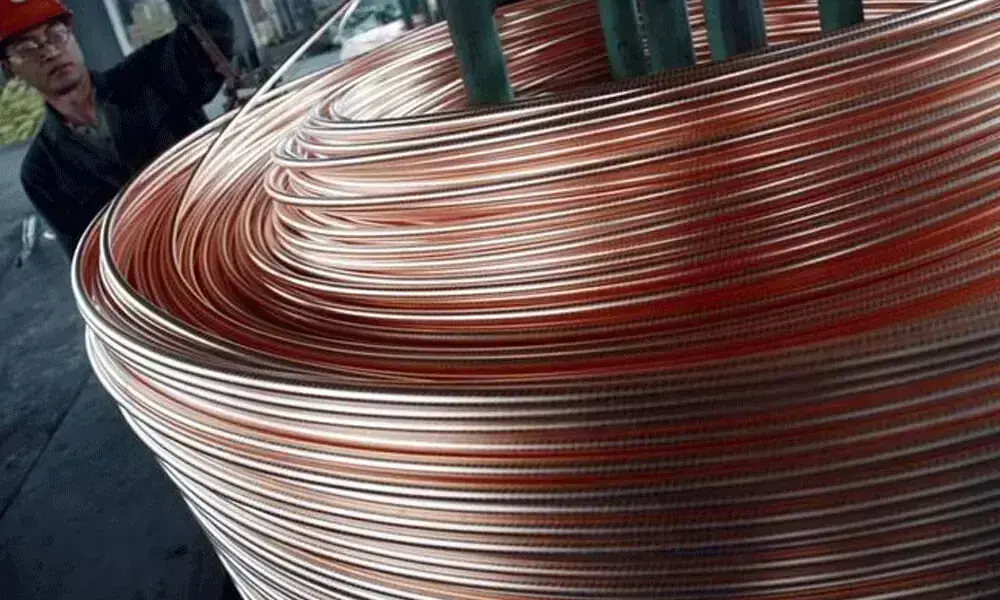

SINGAPORE: Copper and most of the wider base metal complex fell on Friday, as deteriorating risk sentiment from the Middle East war spurred inflation concerns and cast a shadow over the demand outlook.
Benchmark three-month copper on the London Metal Exchange lost 0.88% to $13,479.5 a metric ton by 0300 GMT.
The most-traded copper contract on the Shanghai Futures Exchange fell 0.63% to 103,650 yuan ($15,299.12) a ton. Copper, nicknamed “Dr Copper” due to its use as a bellwether of global economic health, fluctuated through the week and is now on track to end the week marginally higher by 0.2%.
The breakdown of peace talks and the escalation of fighting between the US and Iran have disrupted shipments through the Strait of Hormuz.
Oil prices rose on Friday, with Brent crude climbing nearly 12% this week.
Despite edging up on Friday, non-yielding gold was set for its biggest weekly loss in six weeks on bets rising inflation could keep rates higher for longer.
Higher interest rates weigh on growth-dependent industrial minerals by dampening economic activity.
However, a string of economic data for June published this week slightly offset some concerns about higher-for-longer US interest rates, softening sentiment somewhat.
Demand for copper was also supported by recent withdrawals from LME warehouses, and good buying interest in the world’s top consumer China.
The Yangshan premium, which tracks buying interest there, stayed at its highest since May 2025 on Thursday, at $95 a ton.
LME nickel lost 1.88% while the SHFE price fell 1.18%.
Nickel’s loss wiped out much of the previous day’s rally, when prices increased on concerns related to raw material supply.
Among other LME metals, aluminium lost 0.5%, zinc lost 1.09%, lead dipped 0.05% and tin dropped 1.7%.
Elsewhere on the SHFE, aluminium added 0.15%, zinc lost 0.41%, lead rose 1.8% and tin lost 1.39%.



















Comments