


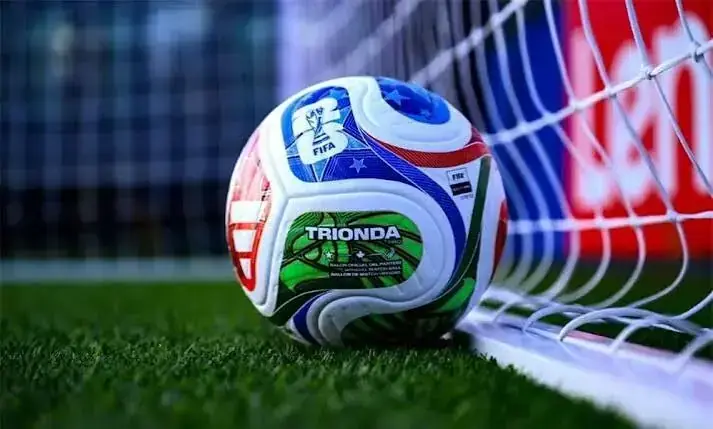
World Cup season is back. With it returns a wave of intense patriotism, athletic glory, and, of course, its fair share of controversy. The 2026 FIFA tournament features an unprecedented forty eight-team roster. Like any other competition with a coveted trophy on the line, emotions tend to run high bringing about either euphoric celebrations or crushing national heartbreak.
As defeated national teams pack their bags to head home, one nation remains silently ubiquitous despite its team never stepping onto the pitch. Nevertheless, it dictates the literal physics of every pass, every kick, and every goal.
As the finest players from all over the world battle for athletic dominance, the material object at the very heart of the tournament originates from the twelfth-largest city in Pakistan—Sialkot. This city is an unnoticed industrial powerhouse: a manufacturing hub that serves simultaneously as the world’s surgical instrument capital, a premier albeit surprising exporter of Scottish bagpipes, and the undisputed epicenter of global sporting goods.
Here, thousands of miles from the nearest World Cup stadium, Forward Sports has created the Trionda—the tournament’s official match ball. What a strange twist of fate: a country whose domestic football infrastructure is virtually absent from the world stage is the trusted source for crafting and assembling the most futuristic, sensor-embedded ball on Earth. Behind the star power of players like Mbappé, Messi, or Bellingham is a quiet foundation of Pakistani industrial engineering and craftsmanship. Every point on the scoreboard is delivered by a thermally bonded sphere engineered to track movement via a 500Hz internal motion sensor.
This chip enables the somewhat controversial automated VAR decisions—and was engineered by Adidas in partnership with tech firms in Munich, Germany. While Western labs claim the digital brain, it is the efficient assembly lines in Sialkot that give this marvel its physical form.
The tragedy of this global spectacle, however, is Pakistan’s own internal narrative or lack thereof. Caught in a cycle of national self-deprecation, Pakistanis have a habit of shrinking away from personal achievements, treating this significant contribution as a mere quirk of low-cost factory labour.
We look at the Adidas logo on the pitch and only see a foreign label, forgetting that the global icon relies on Pakistani craftsmanship to realize its most ambitious visions. It is time for a permanent shift in our collective psychology. Pakistan does not need a team on the pitch to claim ownership over this tournament.
We deserve to celebrate our involvement in this World Cup, just as loudly as the Norwegians with their row celebrations or the chanting Britons. We must learn to look at the Trionda not as a product we made for the West, but as a physical tribute to Pakistani genius. Every time the world’s greatest athletes strike that sphere, they are validating Pakistani skill, precision, and resilience.
Beyond the hard physics and high-tech sensors lies the tournament’s most profound, human triumph. A look at the production lines in Sialkot would show that the architects of this high-tech orb are increasingly Pakistani women.
In a society where economic independence for women is hard-won, the World Cup supply chain has become an engine of female empowerment.
Thousands of skilled women handle the meticulous engineering and quality control of the Trionda, about 15-20% of the total workforce. These women are rewriting their own financial destinies and dismantling stereotypes, one flawless sphere at a time.
Long after the final whistle blows in North America and a new world champion is crowned, Pakistan’s true victory will remain permanently etched into the literal fabric of this beautiful game. We put the “ball” in football, let’s own it.
Copyright Business Recorder, 2026






















Comments