


Finance minister chairs first review meeting on GM corn commercialization policy
- The committee is assessing GM maize's impact on productivity, climate resilience, farmer welfare, and food security
Pakistan's Finance Minister chaired a committee to review the commercialization of GM maize, focusing on scientific, economic, and policy evidence to inform recommendations for agricultural productivity and food security.
- International regulatory practices for GM maize.
- Potential economic impacts and benefits of GM maize.
- Coexistence mechanisms for GM and non-GM crop production.
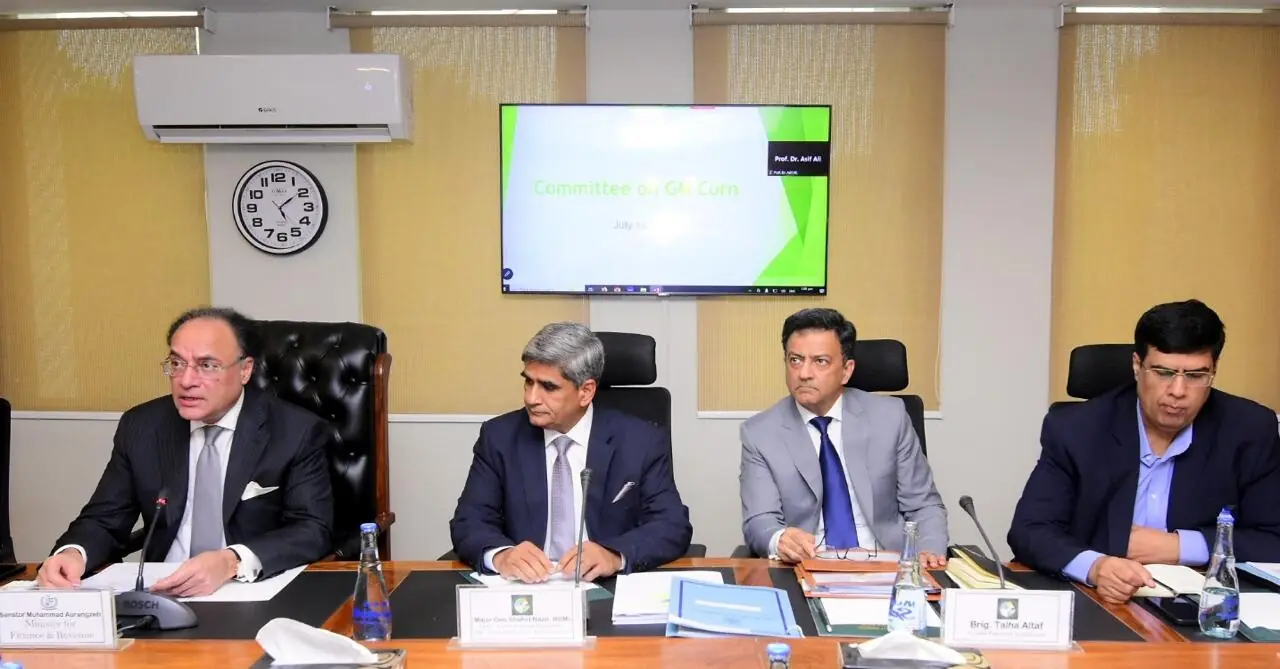

Finance Minister Muhammad Aurangzeb on Thursday chaired the first meeting of a committee constituted by the prime minister to conduct a science-based review of Pakistan’s policy on the commercialization of genetically modified (GM) maize.
The committee has been tasked with objectively examining the scientific, economic and policy evidence surrounding GM corn before making recommendations on its commercial adoption.
Opening the meeting, Aurangzeb said the committee should base its deliberations on facts, balanced analysis and scientific evidence while taking into account the views of all relevant stakeholders.
Officials from the Ministry of National Food Security and Research briefed participants on the National Agricultural Biotechnology Policy, its development process, international regulatory practices, biosafety assessments and the committee’s terms of reference. The ministry said the policy had undergone extensive consultations with stakeholders before its approval.
The committee reviewed international experience with GM maize, including regulatory frameworks, biosafety measures and coexistence mechanisms used in countries where GM and non-GM crops are cultivated simultaneously. Discussions also covered potential gains in agricultural productivity, climate resilience, farmer welfare, food security, industrial competitiveness and advances in agricultural biotechnology.
Members also examined the possible economic impact of commercializing GM maize, focusing on domestic demand, the needs of Pakistan’s poultry, livestock and industrial sectors, export opportunities and the requirements of non-GM export markets. They discussed certification systems, supply chain management and measures to support the coexistence of GM and non-GM production where appropriate.
Representatives from government institutions, regulatory bodies, the private sector, exporters and industry shared their views on the potential benefits, implementation challenges, regulatory preparedness and international market requirements linked to GM maize commercialization.
Aurangzeb said the committee’s recommendations must be guided by scientific evidence, objective analysis and Pakistan’s long-term national interest. He stressed that while policy consistency remained important, the committee had been formed to independently assess available evidence and consider all viewpoints before submitting its recommendations.
The finance minister said agriculture remained central to Pakistan’s economic transformation and sustainable growth, adding that evidence-based policies and the responsible adoption of modern technologies were essential to improving productivity, strengthening food security and raising farmers’ incomes.
He also stressed that implementation capacity, regulatory preparedness, environmental safeguards and market access should remain key elements of the policy framework.
The meeting was attended by the prime minister’s coordinator on agriculture and food security, the chief executive officer of the Pakistan Green Initiative, representatives of the business and export sectors, and technical and scientific experts.


















Comments