


Strategic petroleum reserves: PD engages foreign consultant for feasibility study
Pakistan's Petroleum Division is implementing directives to boost liquid fuel security and storage, including establishing Strategic Petroleum Reserves and revising policies to attract investment and ensure supply chain resilience.
- Strategic Petroleum Reserves (SPR) development and feasibility study.
- Revised Bonded Storage Policy to attract foreign investment.
- New crude oil inventory requirements for upgraded refineries.
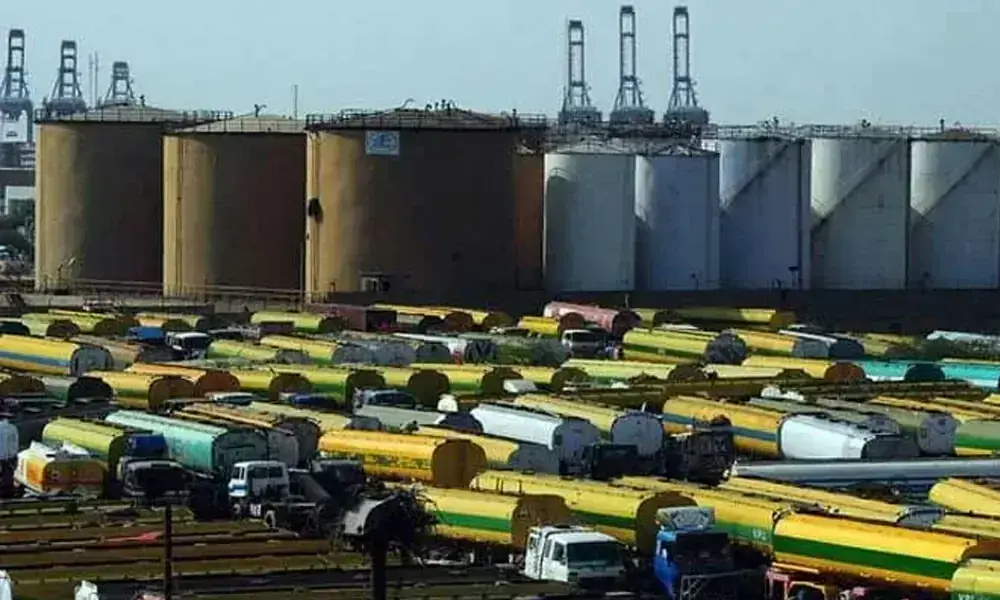
ISLAMABAD: The Petroleum Division has made significant progress on key directives issued by the Prime Minister during a high-level meeting held on April 22–23, 2026, aimed at strengthening Pakistan’s liquid fuel security and storage capacity, official sources told Business Recorder.
The PM had tasked the Petroleum Division with developing a comprehensive liquid fuel reserve framework to enhance crude oil reserves, including revisiting Oil Marketing Companies (OMCs) licensing requirements to increase mandatory storage days and overall national storage capacity. The initiative is intended to ensure uninterrupted refinery operations and improve energy security.
As part of the directives, the Ministry was also instructed to constitute a high-level committee to assess and optimise existing storage capacity, including unutilised OMC facilities, potential use of storage infrastructure at terminated Independent Power Producer (IPP) sites, and the feasibility of utilising depleted gas wells. A detailed, time-bound implementation plan was to be submitted within one month.
READ MORE: Pakistan plans oil reserves, storage push as Hormuz constraints expose vulnerabilities
According to the Petroleum Division, progress has been made on establishing Strategic Petroleum Reserves (SPR), with a technical committee reviewing available studies and recommending the engagement of an international consultant to undertake a comprehensive feasibility study covering all aspects of SPR development.
According to officials, the Request for Proposal (RFP) for the study was finalised and subsequently published by Pakistan LNG Limited (PLL) in both local and international newspapers. The bid submission deadline closed on July 1, 2026, with four firms participating in the process.
The technical evaluation of bids is scheduled for completion by July 17, 2026, while the opening of financial proposals is planned for July 27, 2026.
In parallel, the existing Bonded Storage Policy has been reviewed by a committee that included international consultancy firm KPMG. The review process incorporated feedback from both international industry stakeholders and domestic players, resulting in a refined policy framework.
A summary, along with proposed amendments to the policy, has been circulated among stakeholders for consultation before submission to the Economic Coordination Committee (ECC) of the Cabinet.
The proposed amendments aim to make the policy tax-neutral and attract foreign investment in storage infrastructure and re-export facilities, positioning Pakistan as a potential regional energy storage hub.
The Petroleum Division has also proposed amendments to the Refining Policy for brown-field refineries. Under the revised framework, refineries, after upgradation, will be required to maintain crude oil inventory equivalent to 14 days of their nameplate capacity, along with an additional five days of cover at sea at all times.
Officials believe these measures, once implemented, will significantly enhance Pakistan’s resilience against supply disruptions and strengthen the overall petroleum supply chain.
Further developments are expected following completion of the ongoing evaluation process and finalisation of policy approvals.
Copyright Business Recorder, 2026


















Comments