


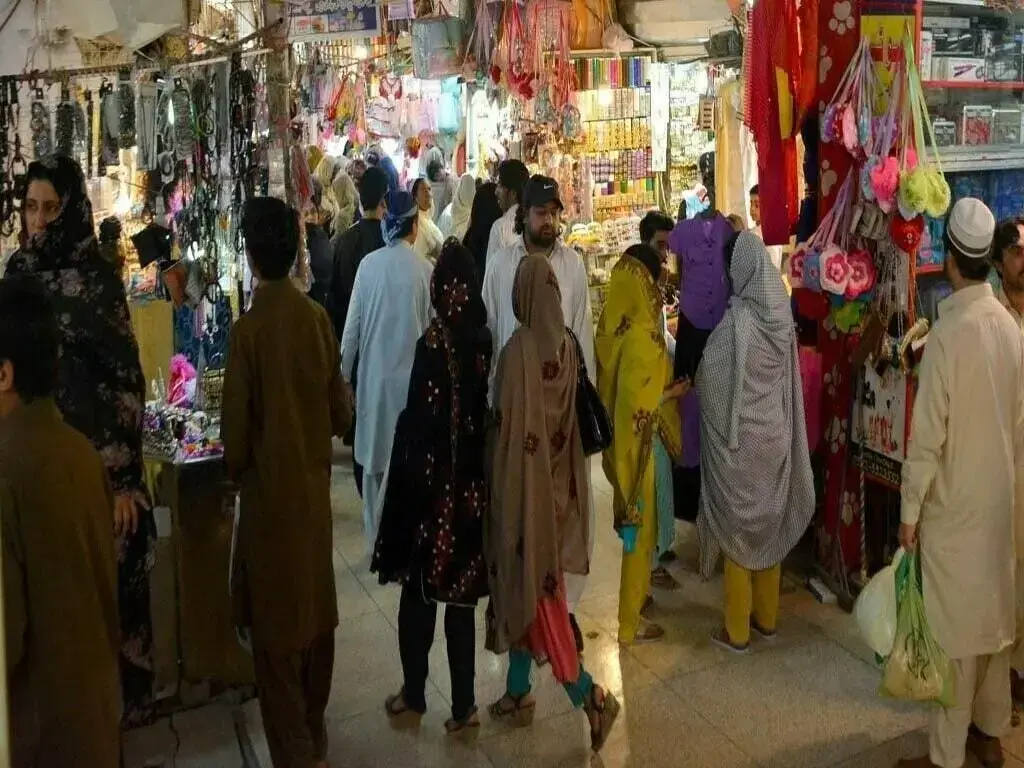
KARACHI: Wholesale grocery markets across Karachi remained completely shut on Wednesday after traders suspended business and halted supplies of essential commodities to other parts of the country in protest against what they described as an “arbitrary” administrative clampdown on wheat flour prices.
The strike brought commercial activity to a standstill in the city’s major wholesale markets, including Jodia Bazar, Lea Market, Dandia Bazar, Nanakwara, Landhi, Water Pump, Malir, Korangi and Liaquatabad. Trucks transporting food and grocery items also remained off the roads, disrupting supplies from Karachi to other provinces.
The protest was organised by the Karachi Wholesalers Grocers Association (KWGA). Its chairman, Abdul Rauf Ibrahim, accused the administration of targeting wholesalers and retailers through raids, arrests, heavy fines and the sealing of dozens of shops instead of taking action against flour mills.
He alleged that traders were fined amounts ranging from tens of thousands of rupees to much larger sums, adding that many were asked to deposit the penalties through an EasyPaisa account instead of receiving official challans or receipts.
He described the practice as unlawful and a form of harassment.
Rauf Ibrahim said the dispute had been worsened by conflicting government instructions on flour prices. According to him, the Karachi commissioner fixed the wholesale price at Rs122 per kilogram through a notification, while the Sindh chief secretary set the rate at Rs130 per kilogram. With two different official prices in circulation, traders were left uncertain about which rate to follow, he said.
Despite the conflicting directives, enforcement teams continued raiding markets and penalising traders for selling flour at prevailing market prices, he added.
The trade leader maintained that wholesalers only add a reasonable profit margin to the price at which they purchase flour from mills and should not be held responsible for higher retail prices.
He argued that when mills sell flour above the official rate, traders cannot be expected to absorb the losses. Instead, he urged the government to take action against flour mills, which he said were the real source of price increases.
The traders also criticised the government for fixing prices without consulting wholesalers, retailers, importers and other stakeholders involved in the supply chain.
They said the lack of consultation had created confusion and unnecessary confrontation.
The association demanded an immediate end to raids, the reopening of sealed shops, withdrawal of what it called unjust fines, and the introduction of a transparent pricing mechanism backed by a formal government notification.
Describing Wednesday’s shutdown as a symbolic protest, Rauf Ibrahim warned that the movement could be expanded to other cities and markets across the country if the traders’ demands were not addressed.
Copyright Business Recorder, 2026


















Comments