


Iran-Pakistan Pipeline: damages need proof, not slogans
Iran's large damages claim against Pakistan for the stalled gas pipeline faces scrutiny, requiring proof of actual loss, gas availability, and the pipeline's export-specific nature.
- Iran's $18 billion damages claim against Pakistan.
- Iran's actual capacity to deliver contracted gas.
- The dual domestic and export use of Iran's pipeline.
- Iran's domestic gas shortages and South Pars issues.
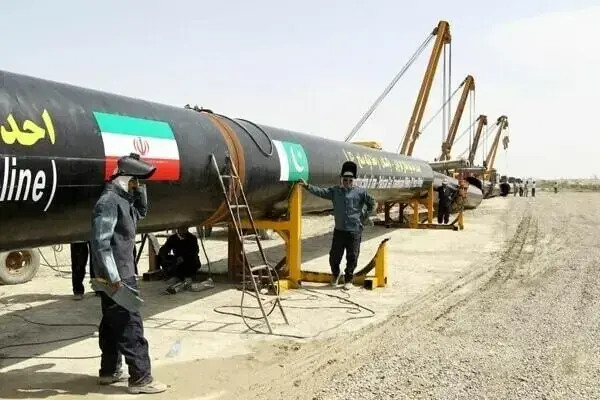

The Iran-Pakistan gas pipeline is again being discussed through the language of penalty, pressure and political embarrassment. Iran is reported to have warned of a large damages claim arising from Pakistan’s delay in constructing its section of the pipeline. That claim should not be accepted as a headline number. It must be examined as a commercial claim requiring proof of breach, readiness, causation, quantum and mitigation.
This is not an abstract issue for the writer. I was employed by BHP Billiton on the Iran-Pakistan-India/Iran-Pakistan pipeline project for several years and later served as a director of Interstate Gas Systems. I saw the project through its commercial, political and technical cycles. My assessment, based on that involvement and the public record now available, is that the project was ultimately signed on an unaffordable pricing formula and without the level of independent commercial advice, price-risk assessment and due diligence that a transaction of this scale required.
That background matters because the dispute should not be reduced to a simple line: Iran built its side, Pakistan did not build its side; therefore, Pakistan must pay whatever figure is now claimed. That is not how a serious damages analysis works. Iran may have a claim to argue. It does not follow that it has an entitlement to the full amount being floated in public debate.
The public record says the 2010 pipeline agreement envisaged supply of 750 million to one billion cubic feet per day for 25 years from South Pars to Pakistan. The route was reported at about 1,900 kilometres, with roughly 1,150 kilometres in Iran and 781 kilometres in Pakistan. Iran says it invested about US$2 billion in its section and made it ready to export. Local media figures cited in Reuters reporting have put Pakistan’s possible exposure as high as US$18 billion.
Those facts are relevant. They are not conclusive. For a damages claim, the central question is not whether Iran laid pipe. The central question is whether Iran could have delivered the contracted gas, whether Pakistan’s delay caused Iran an actual net economic loss, and whether the claimed investment was genuinely stranded by Pakistan rather than used for Iran’s own domestic gasification programme.
Readiness is more than a pipeline
Iran’s strongest public argument is that it completed infrastructure on its side. But pipeline readiness is not the same as commercial readiness. A seller claiming damages for non-offtake must show not only a completed transmission route but firm gas availability at the contractual delivery point.
That is where Iran’s claim becomes vulnerable. Iran has huge gas reserves, but reserves underground are not the same as exportable supply. South Pars is not a spare export reservoir; it is the backbone of Iran’s domestic energy system. Recent reporting has noted that South Pars accounts for the majority of Iran’s gas production, while Iran consumes most of its gas internally. Reuters reported that Iran’s gas production in 2024 was 276 billion cubic metres and that 94 percent was consumed inside Iran. It also reported that sanctions and technical constraints have meant most South Pars gas is used domestically.
Iran’s winter shortages are not occasional anecdotes. They are structural evidence. Government offices and schools have been closed during cold spells because of gas shortages. Power cuts and fuel switching have followed gas scarcity. These facts raise a direct question: during the period for which Iran claims loss, did Iran actually have firm incremental gas available for Pakistan; or did it need the same molecules for its own households, power plants, industry and reinjection requirements?
A claimant cannot rely on headline reserves and ignore operational deliverability. If Iran’s gas system was short in winter, if South Pars was under pressure, and if exports to existing customers were interrupted or reduced during periods of domestic stress, then Pakistan is entitled to require strict proof that the gas for Pakistan was available, processed, transportable and not required domestically.
The Iranian line was not an export-only stranded asset
A second major weakness in Iran’s damages narrative is the assumption that its pipeline expenditure was made solely for Pakistan and became stranded because of Pakistan. That proposition is too broad.
Global Energy Monitor identifies IGAT-7, Iran Gas Trunkline-7, as an operating Iranian pipeline that transfers South Pars gas to Hormozgan, Sistan, Baluchestan and Kerman provinces. It lists IGAT-7 as operational from 2010, with capacity of about 1,800 million cubic feet per day, and as part of Iran’s own gas trunkline network. This is critical. The same infrastructure Iran points to as evidence of performance also served Iran’s domestic objective of bringing South Pars gas to south-eastern Iran, including Iranian Balochistan.
The argument is not that the IP project was never discussed as an export pipeline. It plainly was. The point is narrower and legally stronger: Iran cannot automatically convert the full cost of a domestic trunkline serving Iranian provinces into Pakistan-caused damages. Any credible damages calculation must separate export-specific incremental cost from domestic-use infrastructure that Iran needed and used for its own national gas grid.
If an asset has domestic utility, it is not fully stranded. If it carries gas to Iranian provinces, its cost cannot simply be shifted to Pakistan. Iran would need to prove what portion of expenditure was exclusively incurred for Pakistan, what portion served domestic purposes, and what value Iran obtained from that infrastructure after Pakistan’s delay.
South Pars investment needs undermine the export-surplus assumption
Iran’s own investment plans further weaken a simple damages case. S&P Global reported in March 2025 that Iran had signed a US$17 billion contract with domestic companies to boost pressure in South Pars, following a difficult winter in which Iran had to cut off power to household and industrial users because of gas and fuel shortages. The same report described the need for 56 high-capacity compressors across seven pressure-boosting hubs.
Columbia University’s Center on Global Energy Policy has described Iran’s gas position as a paradox: vast resources but limited export capacity. It notes that Iran’s ability to expand supply is constrained by lack of access to compression equipment, pressure maintenance and enhanced recovery technologies, and that Iran has also pursued arrangements to import gas from Russia, signalling concern over production capacity and seasonal adequacy.
Those facts matter for causation. If Iran requires very large pressure-boosting investment to sustain South Pars output, then the existence of a contractual export obligation to Pakistan does not prove deliverability. A damages model based on assumed uninterrupted export volumes must be tested against reservoir pressure, processing capacity, seasonal demand, reinjection needs and actual export performance.
Damages cannot be a political figure
The reported US$18 billion figure is therefore not self-proving. It should be treated as a claim requiring detailed evidence, not as a debt. Iran would need to disclose the legal basis of the claim, the damages clause, the claimed period, the volumes allegedly available, the price assumptions, the cost of production, avoided costs, domestic use of the gas, alternative sales or swaps, and the value of the domestic pipeline network created on its side.
Gross contract revenue is not damages. Nor is the full cost of a multi-purpose trunkline automatically recoverable. The legally tenable test is net loss caused by Pakistan’s breach, after mitigation and after accounting for Iran’s own use of the infrastructure and gas. If Iran consumed the gas domestically, avoided shortages, reduced power cuts, supplied industry, supported petrochemicals or used the gas to serve its own provinces, that value must be credited. If the pipeline infrastructure was part of IGAT-7 and served domestic Iranian needs; that must also be credited.
Pakistan should also challenge any attempt to treat mechanical completion as conclusive performance. Commercial performance requires gas, pressure, processing capacity, metering, delivery readiness and sustained ability to supply. Iran’s domestic shortages, its South Pars pressure-maintenance requirements and its export interruptions are all relevant to whether it could have performed as claimed.
There is also an uncomfortable history on the Pakistani side. The pricing formula was not a minor detail. It was the project. A pipeline carrying unaffordable gas is not an energy asset; it is a fiscal liability. In my assessment, the agreement was signed without sufficient independent scrutiny of the pricing formula, long-term oil linkage, deliverability risk, infrastructure utility, and downstream consequences. That failure should be acknowledged. But it does not transform Iran’s entire headline claim into proven damages.
Pakistan’s line should be evidence, not emotion
Pakistan should not approach this issue with slogans, nor with panic. It should approach it as a commercial and evidentiary dispute. The questions are precise: What gas was available? What volumes were deliverable? What costs were avoided? What domestic value did Iran obtain? What part of IGAT-7 was export-specific? What part was domestic grid expansion? What was the actual net loss?
Iran can say Pakistan delayed. Pakistan can respond that damages require proof. The strongest defence is not denial. It is disciplined fact. Iran’s own domestic shortages, South Pars decline pressures, need for major pressure-boosting investment, winter import and swap arrangements, export curtailments, and domestic utility of IGAT-7 all weaken a claim framed as a simple Pakistan-caused loss.
The correct conclusion is narrow but powerful. Iran may have a contractual grievance. It does not have an automatic entitlement to a headline damages number. Any settlement, arbitration strategy or diplomatic negotiation must insist on strict proof of exportable gas availability, export-specific sunk cost, actual net loss and mitigation.
Pakistan should not concede a damages claim built on political arithmetic. A claim of this size must be tested molecule by molecule, asset by asset and dollar by dollar. On the public facts, Iran’s position is far less straightforward than the headline suggests.
Copyright Business Recorder, 2026




















Comments