


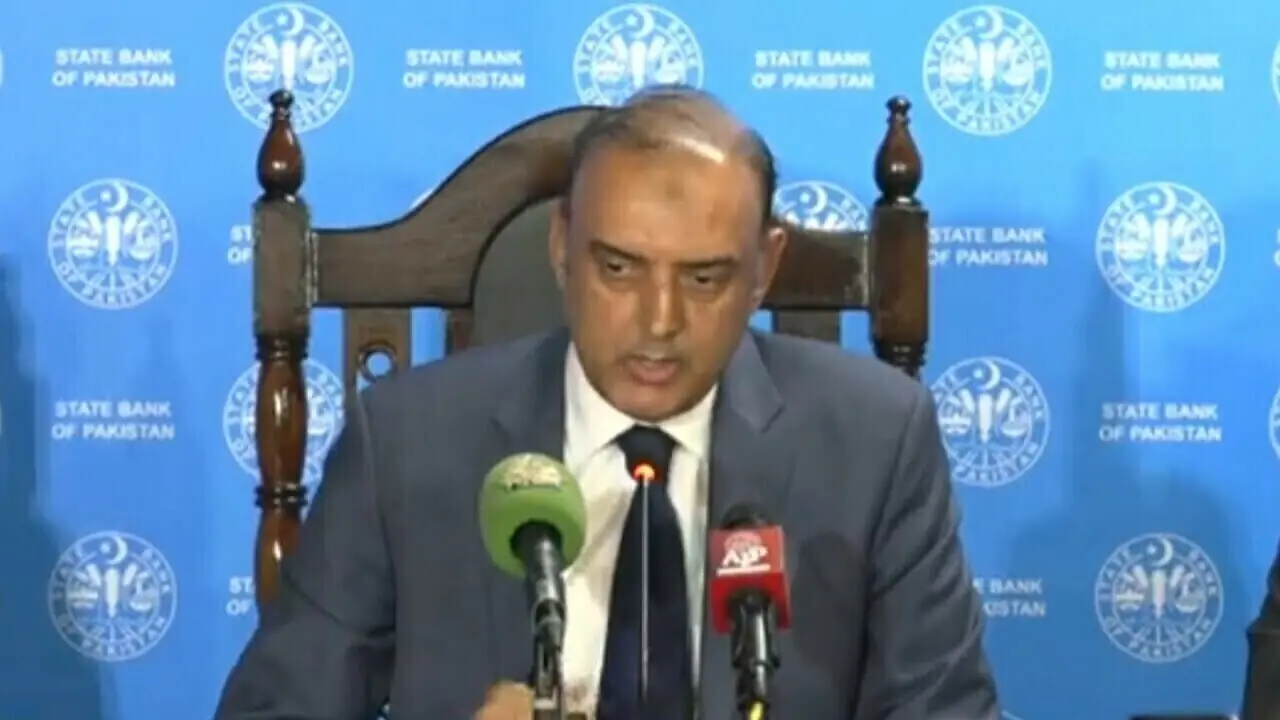
KARACHI: Pakistan’s banking industry must embrace digital transformation and expand lending to agriculture, small businesses, and housing if the country is to achieve sustainable economic growth, Governor State Bank of Pakistan (SBP), Jameel Ahmad said at Pakistan Banking Summit 2026 on Wednesday.
Speaking at the Summit, he outlined a forward-looking vision for the financial sector, emphasising that global economic forces, including geopolitical tensions, inflation, technological change, and climate risks, are reshaping the landscape in which banks operate. He added that these developments present significant challenges but also create new opportunities for innovation and growth.
The Summit was organised by Pakistan Banks Association at a local hotel. The Governor highlighted that digital transformation has become a cornerstone of SBP’s Vision 2028, with encouraging results already visible. More than 92 percent of retail financial transactions are now processed digitally, a dramatic increase from approximately 50 percent just a few years ago.
READ MORE: Pakistan’s digital transformation: SBP plans to route govt payments through Raast
This growing digital ecosystem now supports 268 million financial accounts and over 49 million uniquely registered Raast IDs, Pakistan’s instant payment system. Ahmad noted that the country has reached an important milestone by mandating the digitisation of all federal, provincial, and local government disbursements through secure digital wallets, calling it a step toward realising the Prime Minister’s vision of a cashless economy.
Jameel Ahmad urged banks to view digital transformation as a long-term strategic investment rather than a technology project. He recommended sustained investment in digital infrastructure, data analytics, and human capital, along with the development of products tailored for women, youth, SMEs, and underserved communities. He also called for stronger partnerships with fintechs and technology providers, greater use of AI and data analytics to personalise services and improve risk management, and enhanced cyber resilience and customer data protection.
He warned that without trust, digital adoption will remain limited, and maintaining public confidence in digital financial services is not only a business imperative but essential for preserving financial stability. Turning to financing, Ahmad described agriculture, small and medium enterprises, and affordable housing as critical drivers of employment, exports, and economic resilience that continue to face significant financing gaps.
The SBP has adopted a strategy combining regulatory reforms, digital innovation, risk-sharing mechanisms, and capacity building, moving away from directed lending targets toward creating an enabling ecosystem. In agriculture, the central bank is promoting value-chain financing, warehouse receipt financing, and investment in storage infrastructure, while the newly launched digital “Asaan Zarai Qarza” scheme aims to make agricultural credit faster and more accessible for small farmers, he said.
For SMEs, the results have been noteworthy, with outstanding SME financing more than doubling between June 2021 and December 2025, while the number of SME borrowers increased by approximately 75 percent. The government and SBP have set a target of increasing outstanding SME financing to Rs1.5 trillion by June 2028, while expanding the number of SME borrowers to 750,000.
Jameel Ahmad said these targets are ambitious but achievable, and their success will depend on the banking industry’s willingness to innovate and scale up financing models. He encouraged banks to move beyond traditional lending approaches and reduce reliance on government-supported schemes, stressing that sustainable financial inclusion requires commercially viable business models.
Despite a challenging fiscal year marked by the Middle East conflict and devastating floods, he pointed out that Pakistan’s economy showed exceptional resilience. He highlighted that average inflation in FY26 was 7.05 percent, slightly above target but expected to improve in FY27, while real GDP growth was approximately 3.7 percent, with stronger growth anticipated in the coming year.
The current account balance remained in surplus during July-May FY26, supported by record remittances, and foreign exchange reserves rose above USD 18.4 billion despite significant debt repayments. He said these economic achievements are important to highlight because the private sector cannot be expected to undertake long-term investments without a sustainable growth environment.
The Governor concluded by emphasising that Pakistan’s financial sector stands at a pivotal moment, with stronger foundations than ever before. He said the State Bank remains committed to providing an enabling policy and regulatory environment and counts on the banking industry to match this commitment with innovation, investment, and a strong focus on customer needs. Together, he said, they can build a financial system that is more inclusive, more competitive, and better prepared for the challenges and opportunities of the future.
Copyright Business Recorder, 2026






















Comments