



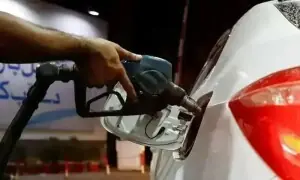
KARACHI: The Pakistan Business Forum (PBF) has urged the federal government to announce a minimum reduction of Rs30 per litre in petrol and diesel prices in the upcoming fortnightly review on Friday, saying the continued decline in international crude oil prices provides sufficient fiscal space to extend meaningful relief to industries, businesses and the general public.
PBF President Khawaja Mehboob ur Rehman on Wednesday expressed concern over the government’s decision to increase the Petroleum Development Levy (PDL) despite a sharp decline in global crude oil prices.
He said benchmark US West Texas Intermediate (WTI) crude is currently trading at around USD72 per barrel, while UAE Murban crude is also trading in the low-to-mid USD70.
These lower international prices should translate into a substantial reduction in domestic petroleum prices instead of being offset by higher taxation.
The PBF President further noted that Saudi Aramco, the world’s largest oil exporter, has reduced the Official Selling Price (OSP) of its flagship Arab Light crude for August shipments to Asia by US$11 per barrel, the biggest monthly reduction in more than two decades. The decision reflects easing market conditions, improving supplies and softer demand, making it all the more appropriate for Pakistan to pass on the benefit of lower oil prices to consumers and businesses.
“The government should ensure that the full benefit of declining international crude oil prices reaches the people. Artificially keeping petroleum prices high through additional levies will only prolong inflation, increase the cost of doing business and delay economic recovery,” he said.
He warned that high petroleum prices were not only increasing production costs but also disrupting the industrial supply chain. Rising fuel costs have substantially increased transportation expenses for raw materials and finished products, weakened industrial competitiveness, delayed deliveries and raised logistics costs for manufacturers and exporters.
The PBF President said exporters are already struggling with high electricity tariffs, expensive financing, rising input costs and an uncertain business environment. Maintaining elevated petroleum prices further erodes Pakistan’s competitiveness in international markets at a time when the country urgently needs higher exports, increased industrial production and stronger foreign exchange earnings.
PBF Chief Organiser Ahmad Jawad also expressed concern over the government’s decision to increase the Petroleum Development Levy (PDL) at a time when global crude oil prices have plummeted to a four-month low.
He said that instead of passing on the full benefit of declining international oil prices to consumers and businesses, the government had chosen to increase the tax burden, placing additional pressure on industry and the productive sectors.
Jawad cautioned that Pakistan’s annual trade deficit for FY26 had reached US$39.46 billion, an increase of 22 per cent over FY25, reflecting mounting pressure on the country’s external sector.
He noted that exports declined by 6 per cent to USD30.13 billion, while imports increased by 8.1 per cent to US$69.59 billion, widening the trade gap and highlighting the urgent need for pro-growth and export-oriented economic policies.
He said the latest trade figures reflected the growing challenges confronting Pakistan’s productive sectors. High financing costs, expensive energy, heavy taxation and an uncompetitive business environment continued to erode export competitiveness and discourage industrial expansion.
“At a time when exporters are struggling to compete in international markets, maintaining high petroleum prices through increased levies only adds to production and logistics costs, making Pakistani products less competitive.”
Jawad emphasised that high petroleum prices were not only increasing production costs but also disrupting the industrial supply chain, as manufacturers continue to face rising transportation expenses for raw materials and finished goods.
He said affordable fuel is essential for strengthening exports, improving industrial productivity and attracting new investment.
Officials of the Pakistan Business Forum also said the upcoming petroleum price review presents the government with a timely opportunity to provide meaningful relief to the people of Pakistan. This is the right time for the government to act.
Copyright Business Recorder, 2026













Comments